Every article, by subject.
Search the full text of every piece, or narrow to the area you are working in.
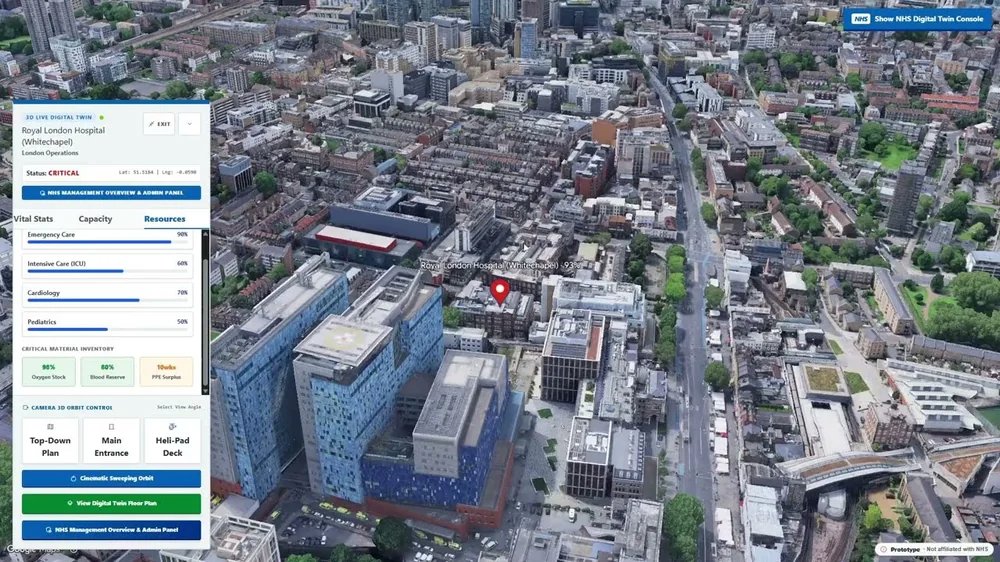
Giving an operations digital twin a voice, and doing it properly
A dashboard can tell you the state of the world. It cannot answer a question. Here is what it took to put a live voice assistant inside an operations twin: where the SDK seam should sit, why the API key must never reach the browser, and why grounding the answers was harder than the wiring.

Spatial intelligence and generated worlds: what Atlas changes for people who ship 3D
World Labs announced Atlas on 1 September 2026 — a single model that generates, reconstructs and simulates 3D space. Here is what it actually does, what it outputs, and which parts of a working 3D or XR pipeline it changes now rather than eventually.
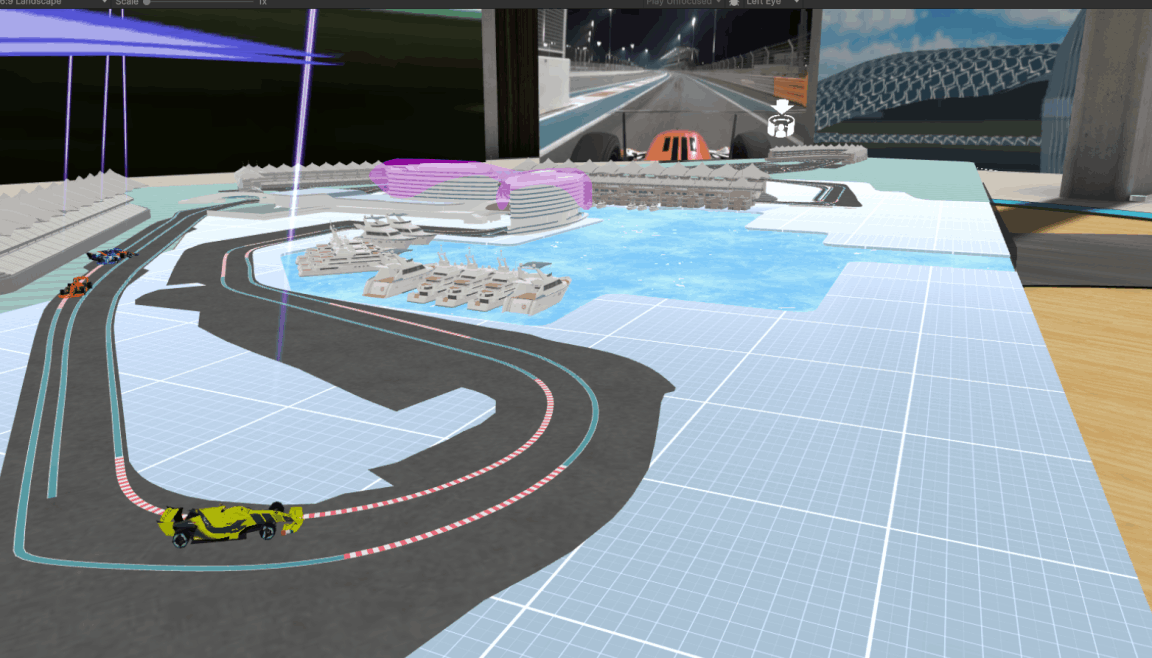
Modernising a legacy XR interaction stack without breaking production VR
A mature Unity XR project accumulates input systems the way an old house accumulates wiring. Here is how to modernise one incrementally, which layer to deliberately freeze, and why a single owner per transform turned out to matter more than the migration itself.
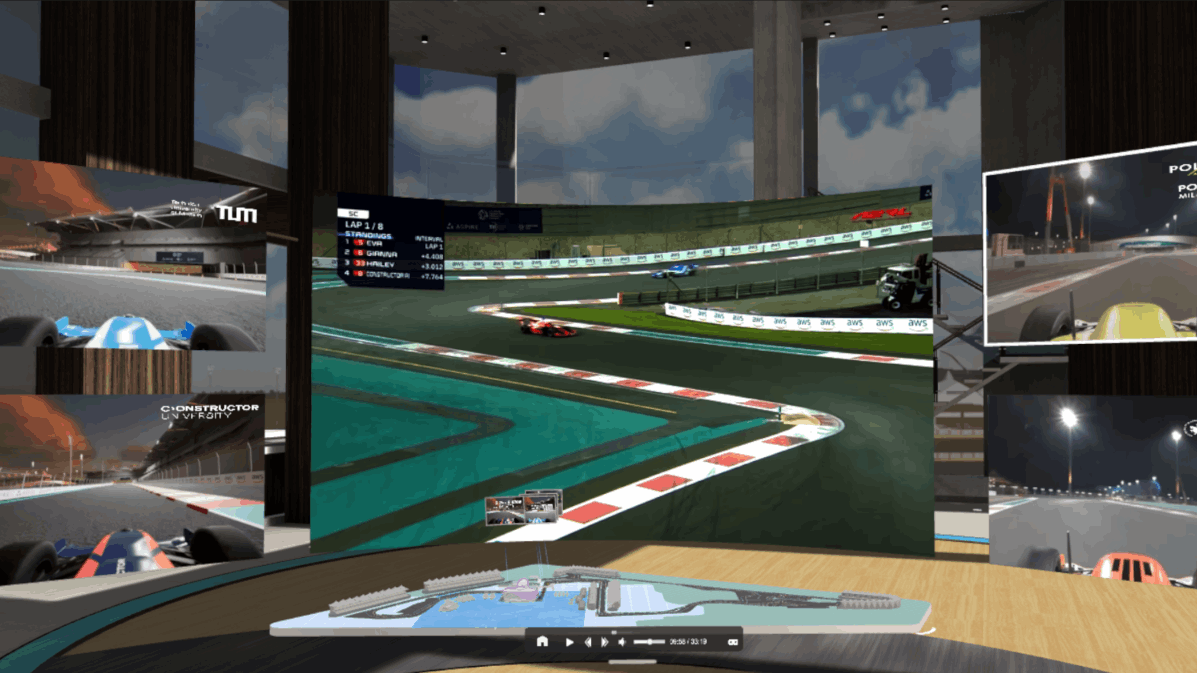
One decoder, many screens: multi-camera broadcast video on a standalone headset
Showing six live camera angles inside a VR headset does not mean decoding six video streams. Here is the mosaic architecture that makes it affordable on Quest hardware, and the validation problem it creates in exchange.
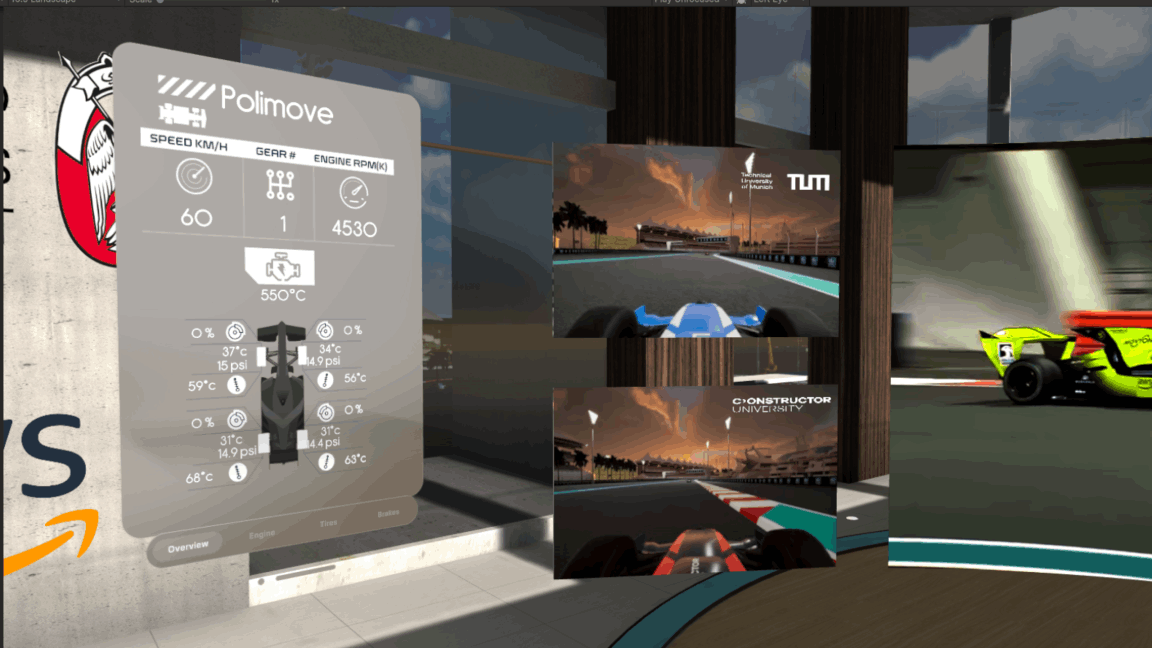
Synchronising broadcast video and live telemetry: choose one clock and mean it
Video at 30fps, telemetry at 6Hz, UI per frame, networking whenever it feels like it. Five subsystems with five update rates only cohere if one of them is declared the authority. Here is why that authority should be media time.
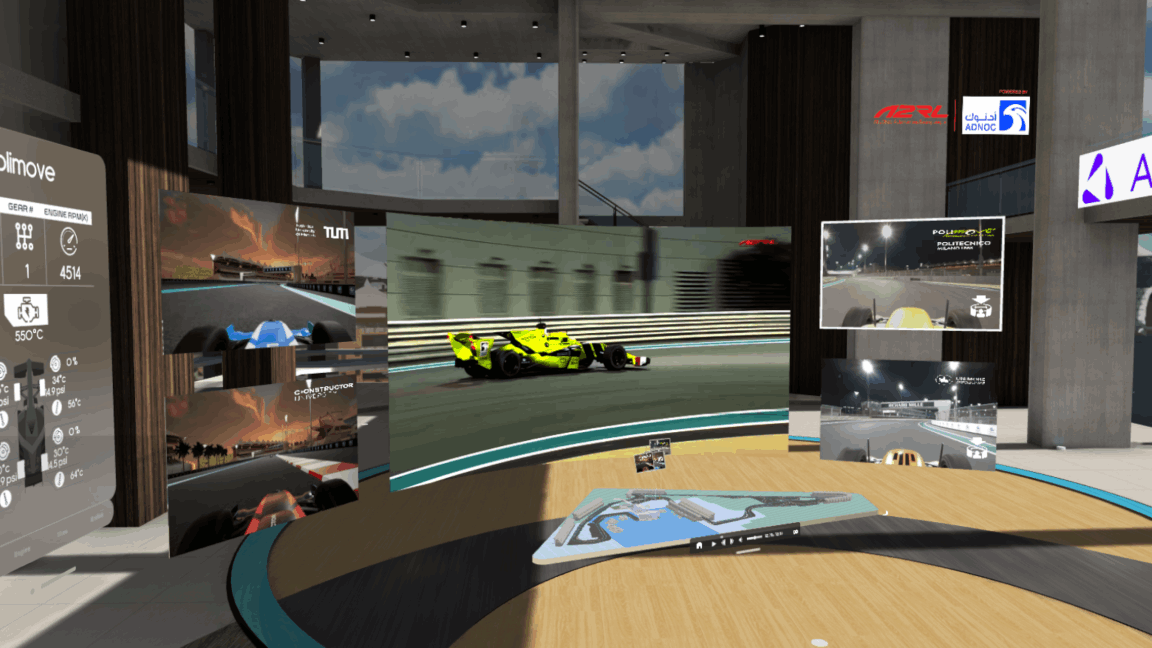
Why 8K video still looks soft on a Quest, and which lever actually helps
Source resolution, eye buffer resolution and angular resolution are three different things, and only one of them is what a viewer perceives. Here is where the pixels go on standalone hardware, and the order worth pulling the levers in.
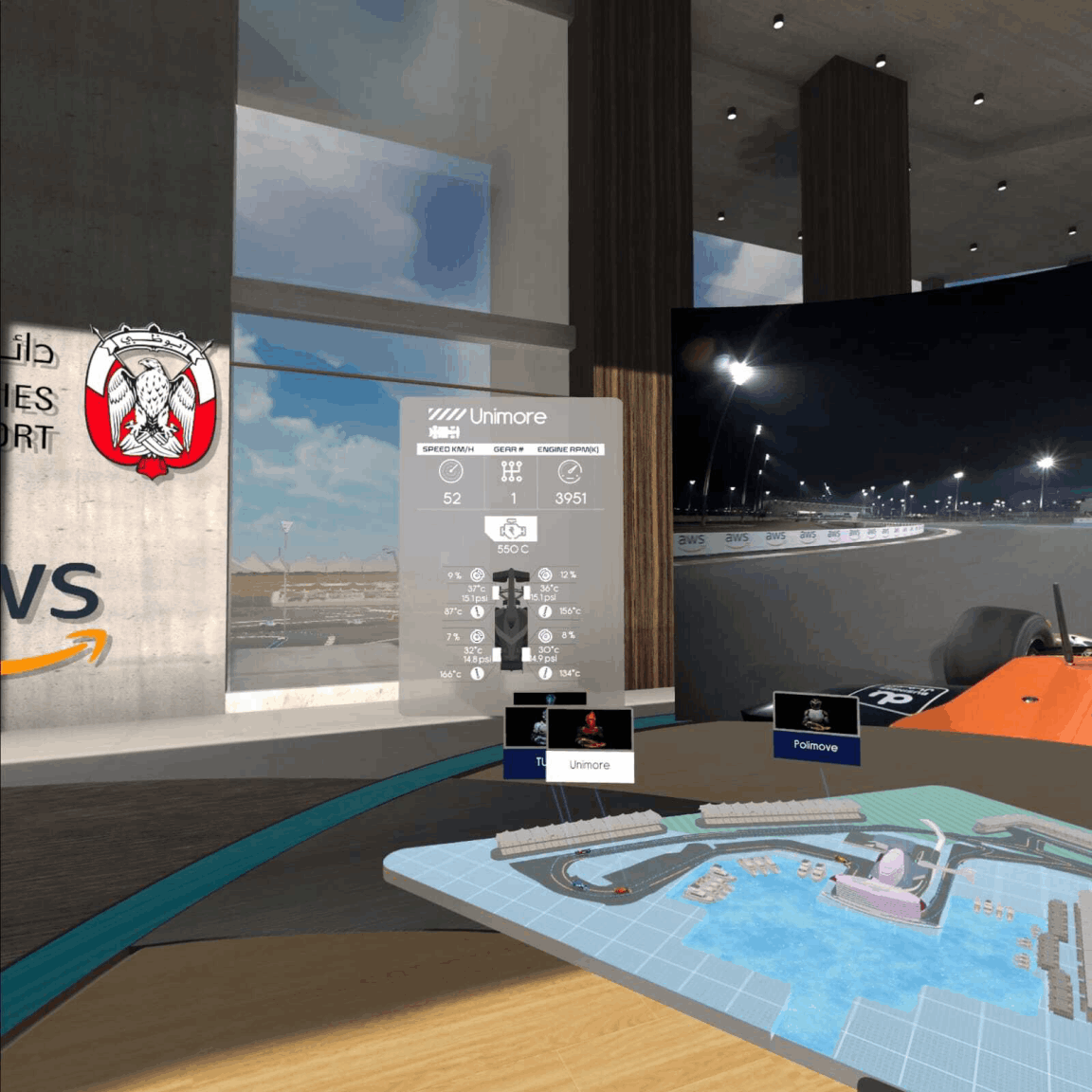
It looks right in Unity and wrong on the headset: passthrough and the compositor
A mixed reality scene that renders perfectly in the editor and incorrectly on device is usually not a Unity bug. There are two render orders in play, not one, and the second belongs to the headset compositor.

How automotive companies can use browser-based 3D before building a native XR app
The headset app is usually the second thing you should build. Here is what a browser build settles first, why most of its cost is asset work you would pay for anyway, and the five automotive jobs that pay back fastest on the web.
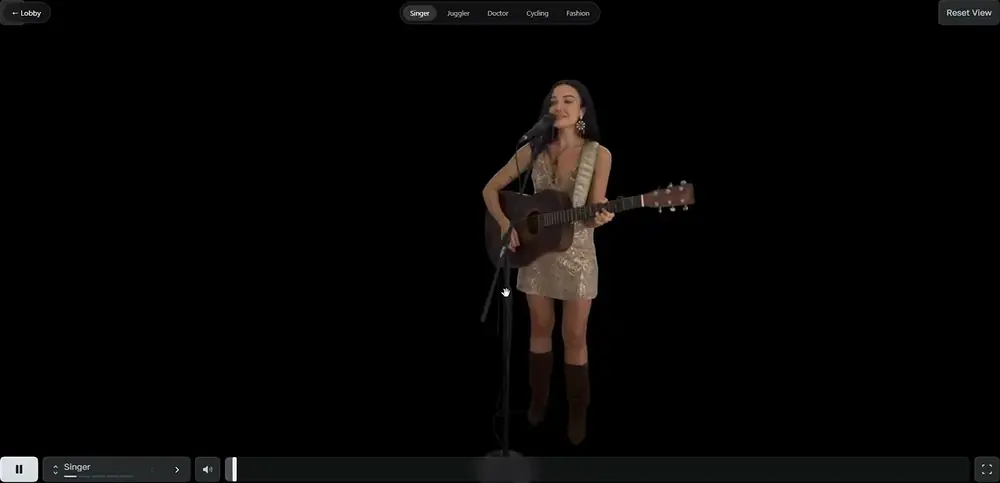
4D Gaussian splatting for business: where volumetric streaming actually adds value
A moving, photoreal scene you can walk around inside is a genuinely new medium. It is also the most expensive way to deliver almost anything. Here is the one question that decides whether it earns its cost, and the four places the answer is yes.

Volumetric video vs 360 video vs real-time 3D: what should businesses choose?
Three media that get pitched as competitors and are not. The choice comes down to how much freedom the viewer needs and how often the content changes — and the expensive mistake is buying freedom nobody uses.
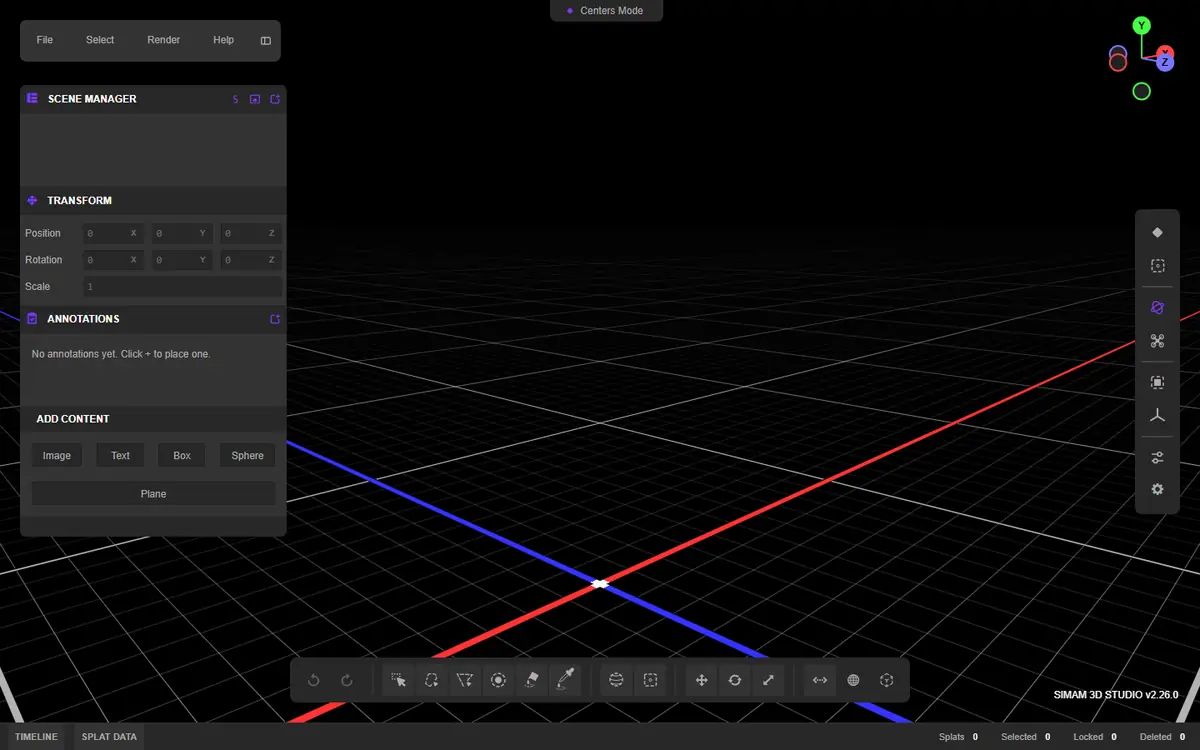
WebGPU, WebGL and WebXR: what business buyers actually need to know
Three names that get used as if they compete, and do not. Two are graphics APIs, one is a device API, and only one question about them belongs in your brief.
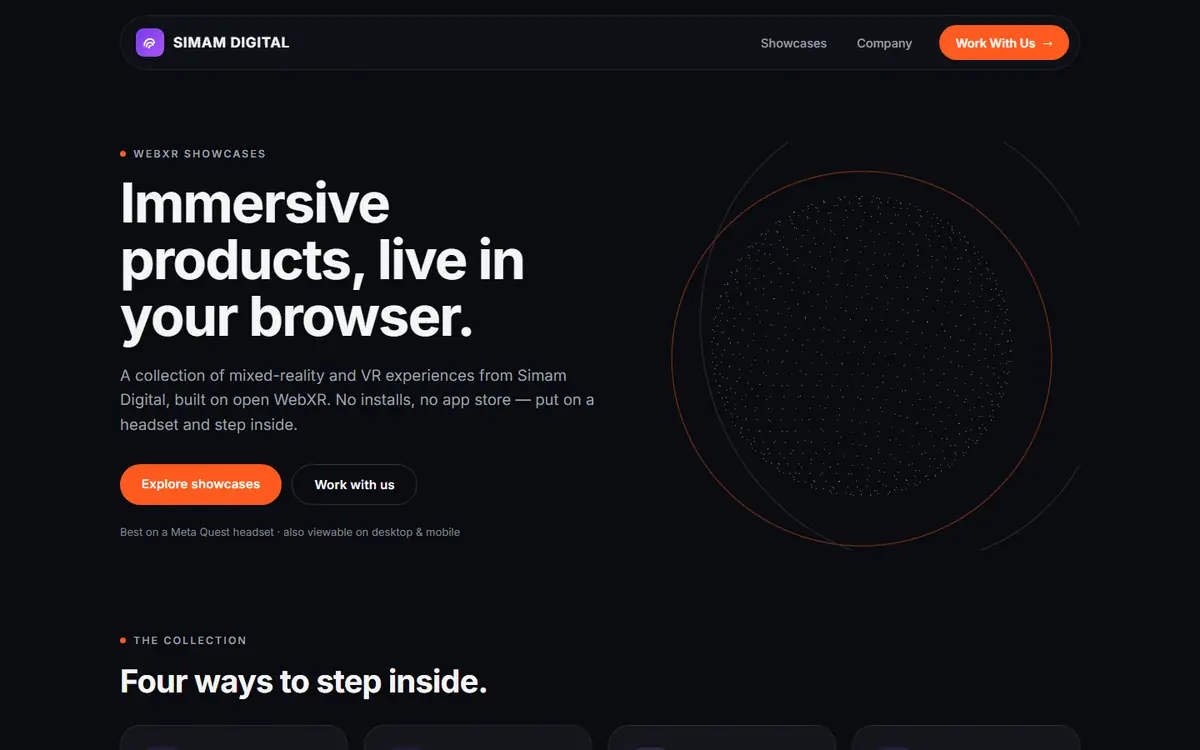
Why the browser is becoming a serious spatial computing platform
Four things that used to force an installed app have each been solved separately, and 2026 is the first year they are all true at once. What that changes, what it does not, and how to test the claim yourself in ten minutes.
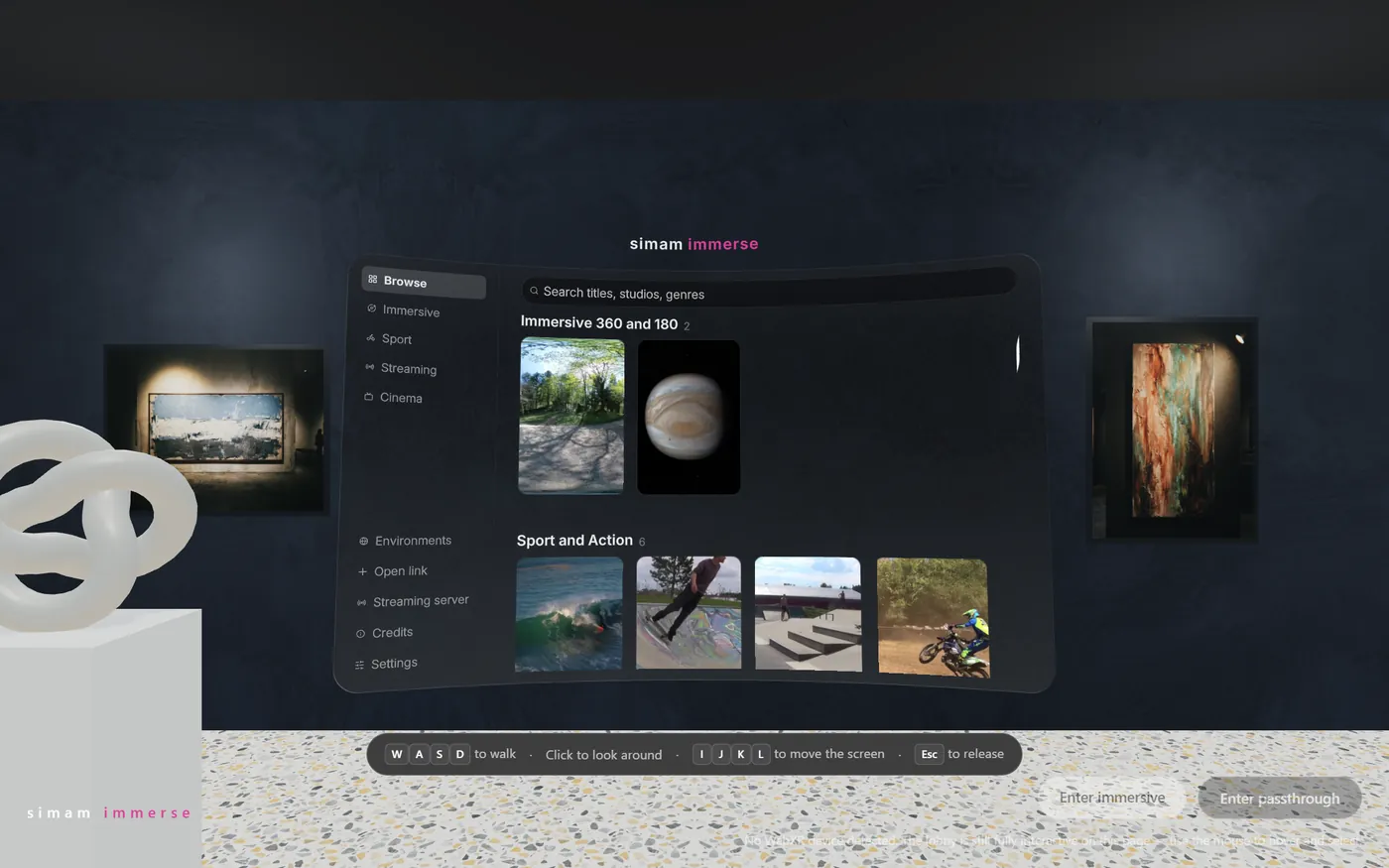
WebXR vs native XR: which is more cost-effective for enterprise projects?
The build cost is the part everyone compares, and it is rarely the part that decides. Here is where enterprise XR money actually goes, what each architecture is genuinely cheaper at, and the third option most comparisons still leave out.
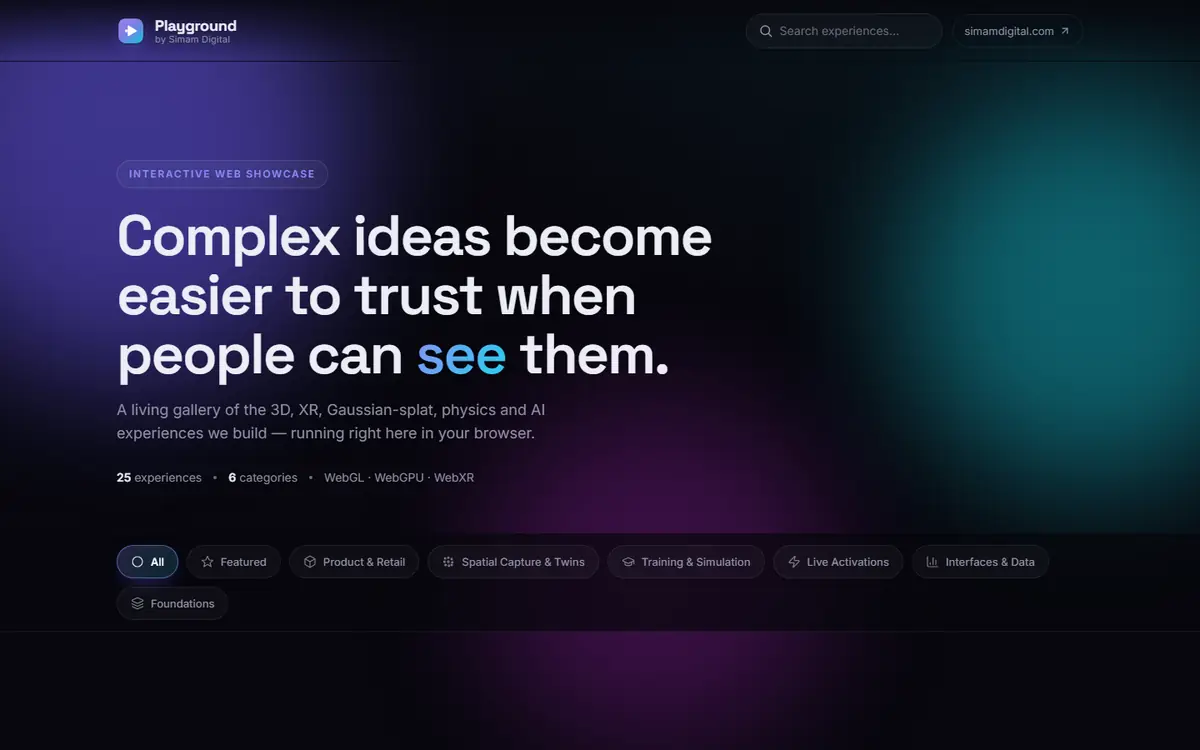
How much does a WebXR project cost in 2026?
Three tiers, what actually sits inside each one, and the seven factors that move the number more than anything on a feature list. With our published figures rather than a range invented to sound reassuring.
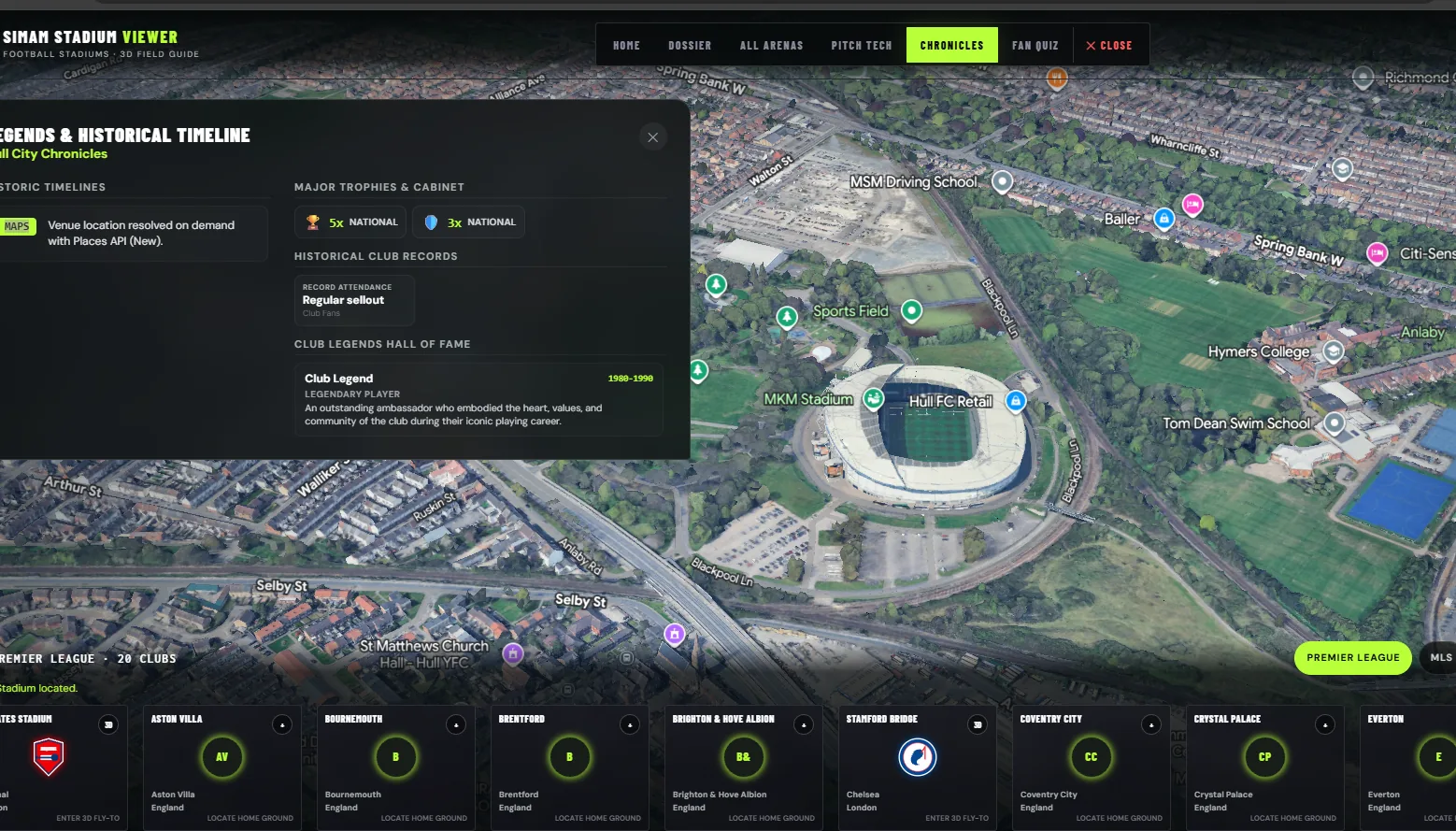
The business case for WebXR: how to validate an XR idea before spending six figures
Most failed XR programmes did not fail at the build. They failed because nobody agreed in advance what evidence would justify the next stage. Here is the ladder, the four questions a prototype has to answer, and the kill criteria to write down first.
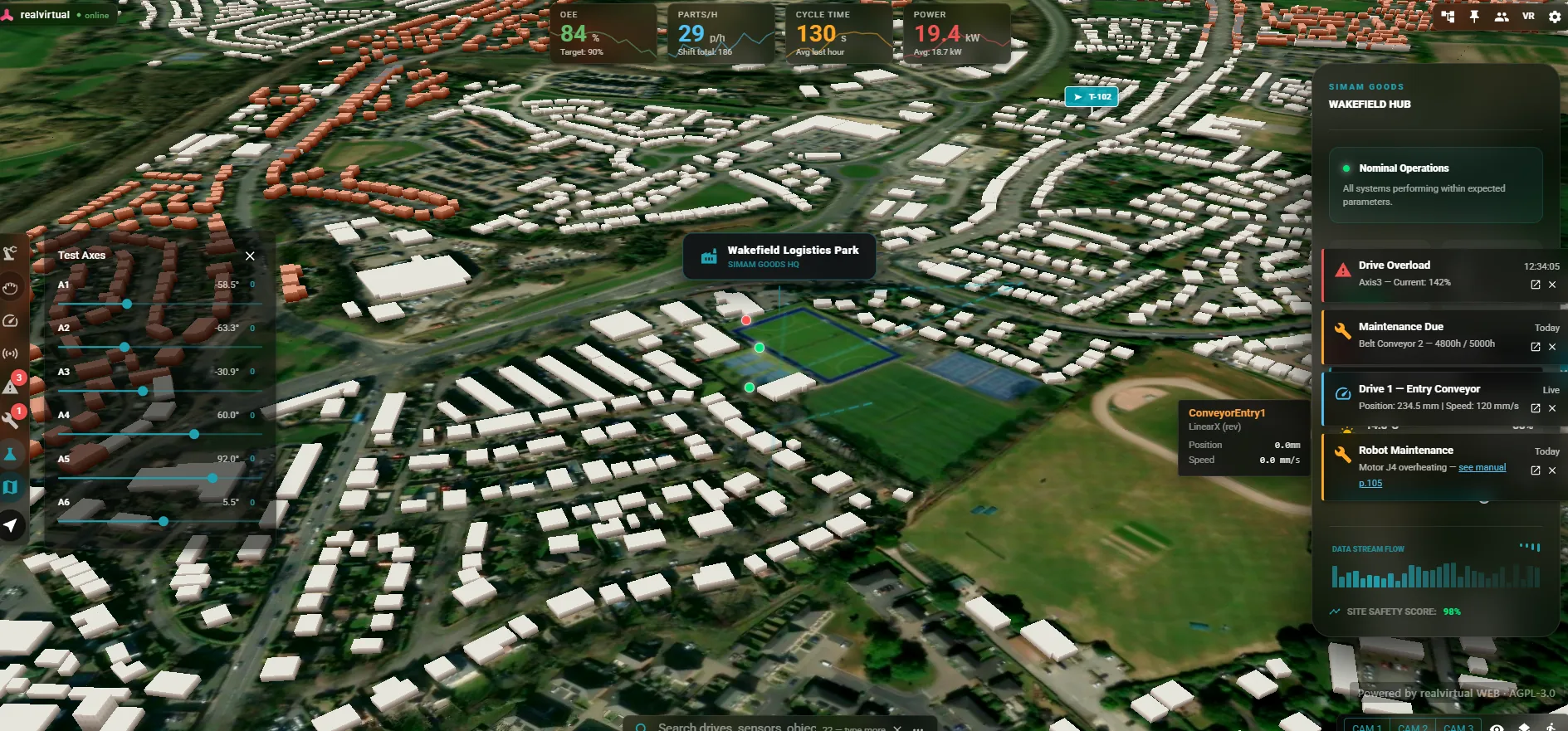
NVIDIA CloudXR for business leaders: stop optimising the digital twin for the headset
You have an enormous CAD, BIM or Omniverse environment and someone wants it on a Quest. The traditional answer is months of optimisation and a version your engineers do not recognise. There is now another one.
CloudXR vs local rendering: what should your digital twin run on?
Streaming from a server GPU trades a one-off optimisation cost for a permanent per-session one. Here is the arithmetic, with real hourly rates, and the three variables that decide it before fidelity ever comes up.

Building WebXR in Unity: yes, but not the way you expect
Unity has no official WebXR support, and it is still entirely possible. Here is what actually makes it work, the seven setup steps in order, and the secure-context trap that breaks Unity’s own Build And Run.
How to start a WebXR project
The stack to pick, the one command that scaffolds a working project, how to test without a headset on your desk, and the five things to get right before the content arrives.

3D virtual events in 2026: when the environment earns its cost
The 2026 event data does not say what the 3D pitch assumes. Here is the gap a browser-based 3D event actually fills, what it costs to deliver, and the numbers from one we built for six thousand attendees.

The ROI of immersive learning in 2026
What the headline numbers actually say, who commissioned them, the one figure you should delete from your deck, and the single variable that decides whether immersive training pays for itself.
WebXR vs Unity: what you are actually choosing between
One is a browser API and the other is a game engine, so the comparison as usually posed has no answer. Here is the decision underneath it, with the browser support numbers, Unity’s actual level of WebXR support, and the signal Meta just sent.
The state of Unity WebGL in 2026
Where Unity’s web target actually stands in 2026: WebGL2 as the floor, WebGPU still experimental, mobile browsers officially supported at last, and the two numbers that decide whether your build works on someone else’s device.
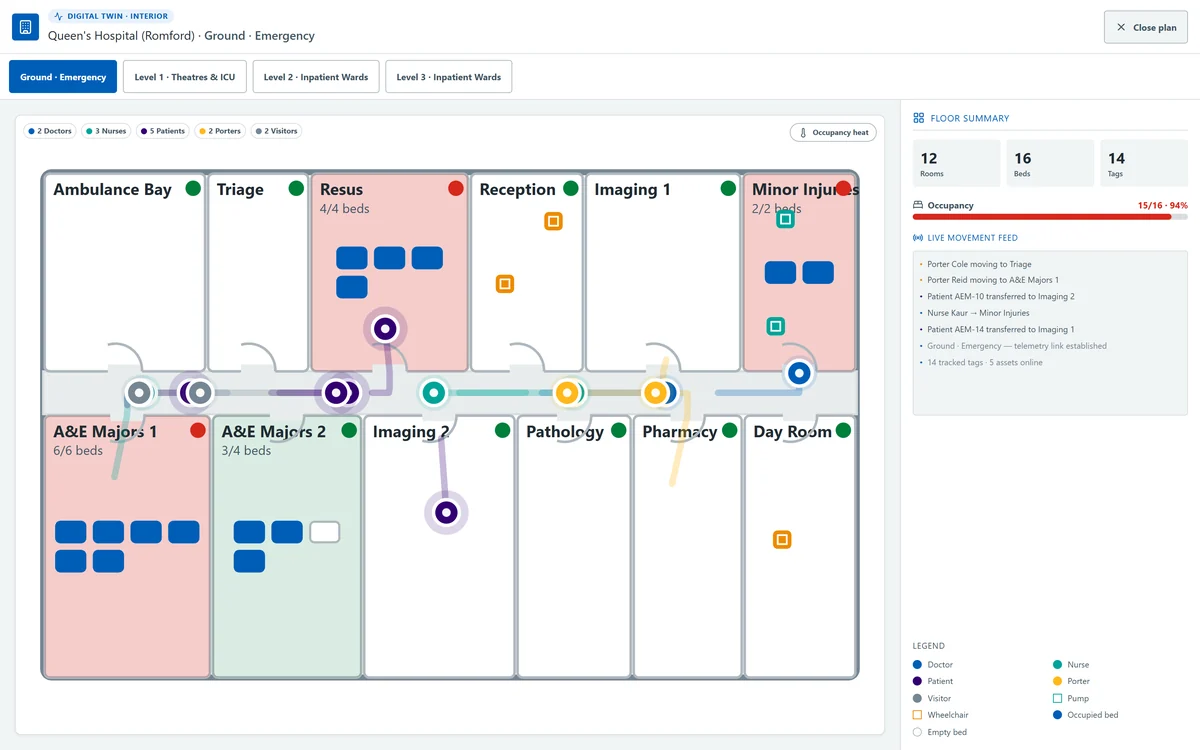
Digital twins for healthcare operations: what actually helps a hospital
What a hospital or health system needs from a digital twin: the operational language it has to speak, the difference between a leading and a lagging view, and what to prototype first.
From Unity to the immersive web: a practical migration guide
When to move a Unity XR project to the immersive web, how the architecture actually translates, and where a native game engine is still the right answer.

Ten local AI models every business should know about
Run AI on your own hardware: ten open-weight models worth knowing, what local LLMs cost, where they beat cloud AI, and how to try one this week.

How to build an AI voice agent that handles business calls
The architecture behind a production AI voice agent: pipeline, tools, conversational pathways, failure paths, human handover and the metrics that matter.

Get more from Claude and Codex without burning usage limits
Thirteen context engineering practices that cut token use and improve code quality: scope every task, start new chats, plan first, verify before merging.

How Gaussian splatting is actually delivering value
Where Gaussian splatting earns its cost: better bids, fewer site visits, capture once for many formats, and the accuracy trade-off to plan around.

From image to interactive 4D worlds: AI Gaussian splat pipelines
4D Gaussian splatting explained: how AI pipelines turn a single image into an explorable spatial scene, the tools involved, and what it is useful for.

A practical look at agentic workflow in a real product team
What an AI-native delivery process actually looks like: planning, context memory, scoped implementation, evaluation, CI/CD guardrails and governance.

Auditing development workflows with AI: where teams gain and lose time
Adding people rarely fixes a slow pipeline. How to audit where development time actually goes, and which AI tools remove friction rather than add it.

The state of the subscription app economy in 2026: a data-driven read
What 115,000 apps reveal about subscription growth in 2026: the AI retention paradox, hard paywalls, trial length, and why day zero decides everything.
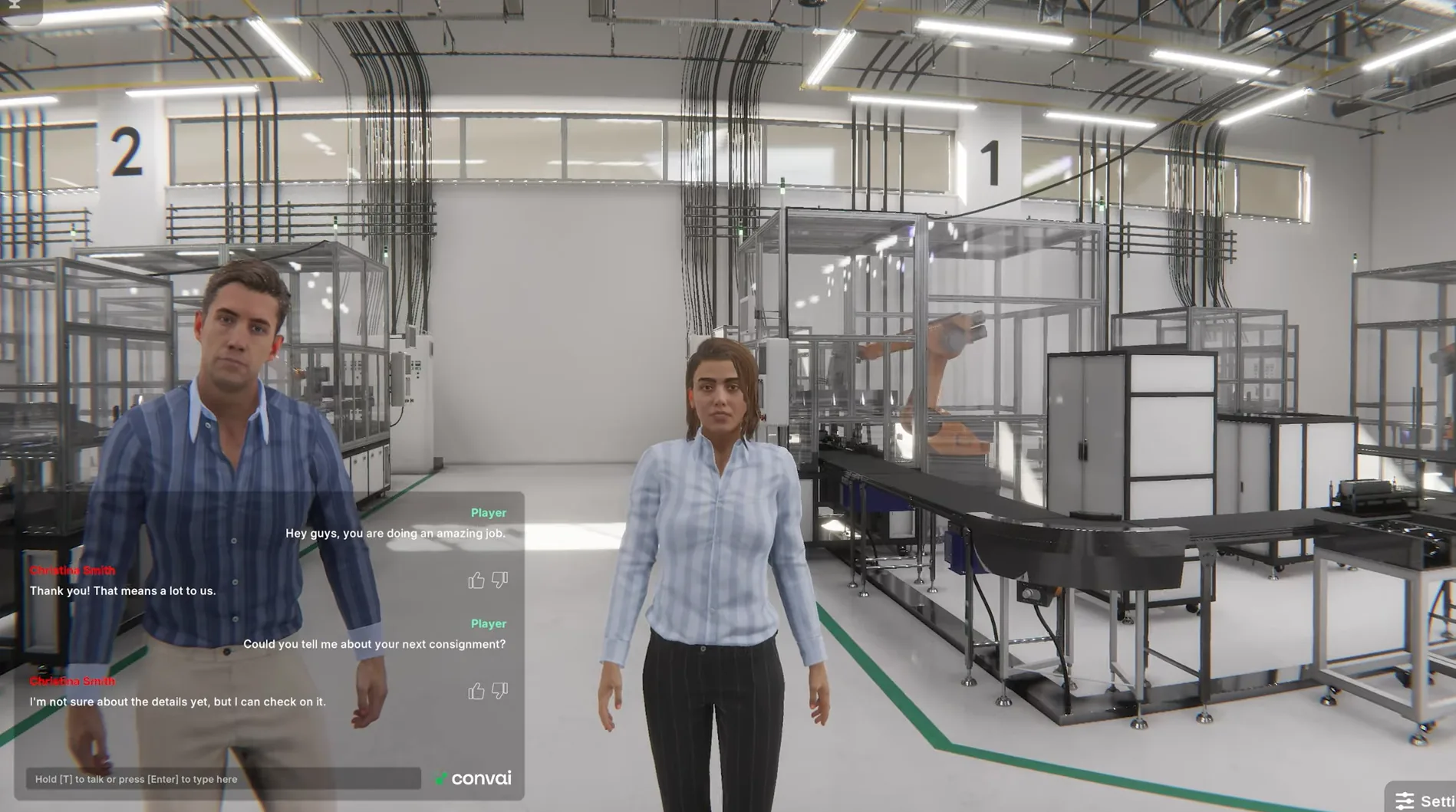
How to connect Unity to an MCP server for agentic workflow
Wire an AI agent into the Unity Editor over MCP: install, configure a client, expose tools, and let it inspect scenes and run C# instead of guessing.
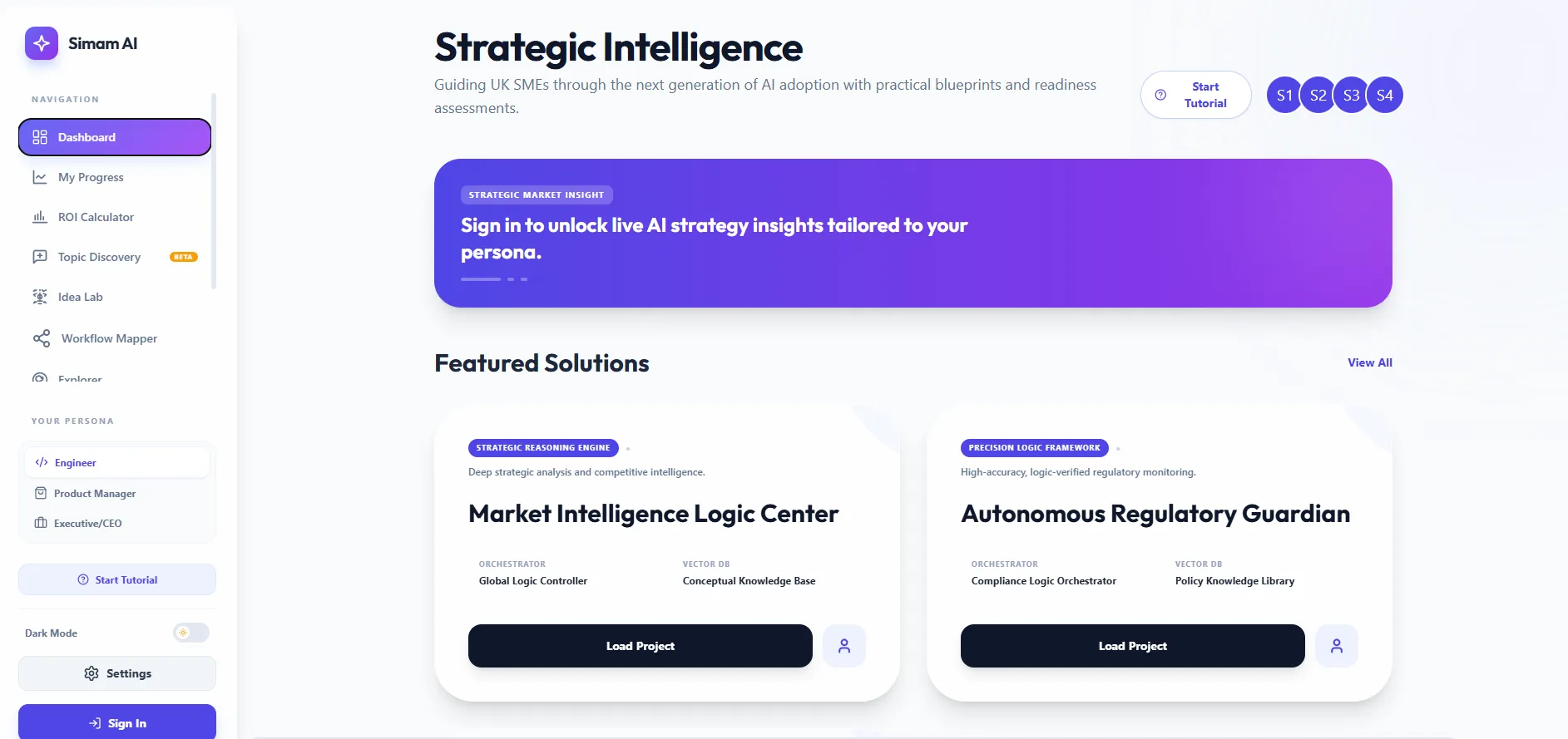
The state of practical AI in 2026: from chat windows to working systems
A grounded 2026 view of enterprise and SME AI: agents, workflow integration, governance, evaluation and the product opportunities worth pursuing now.
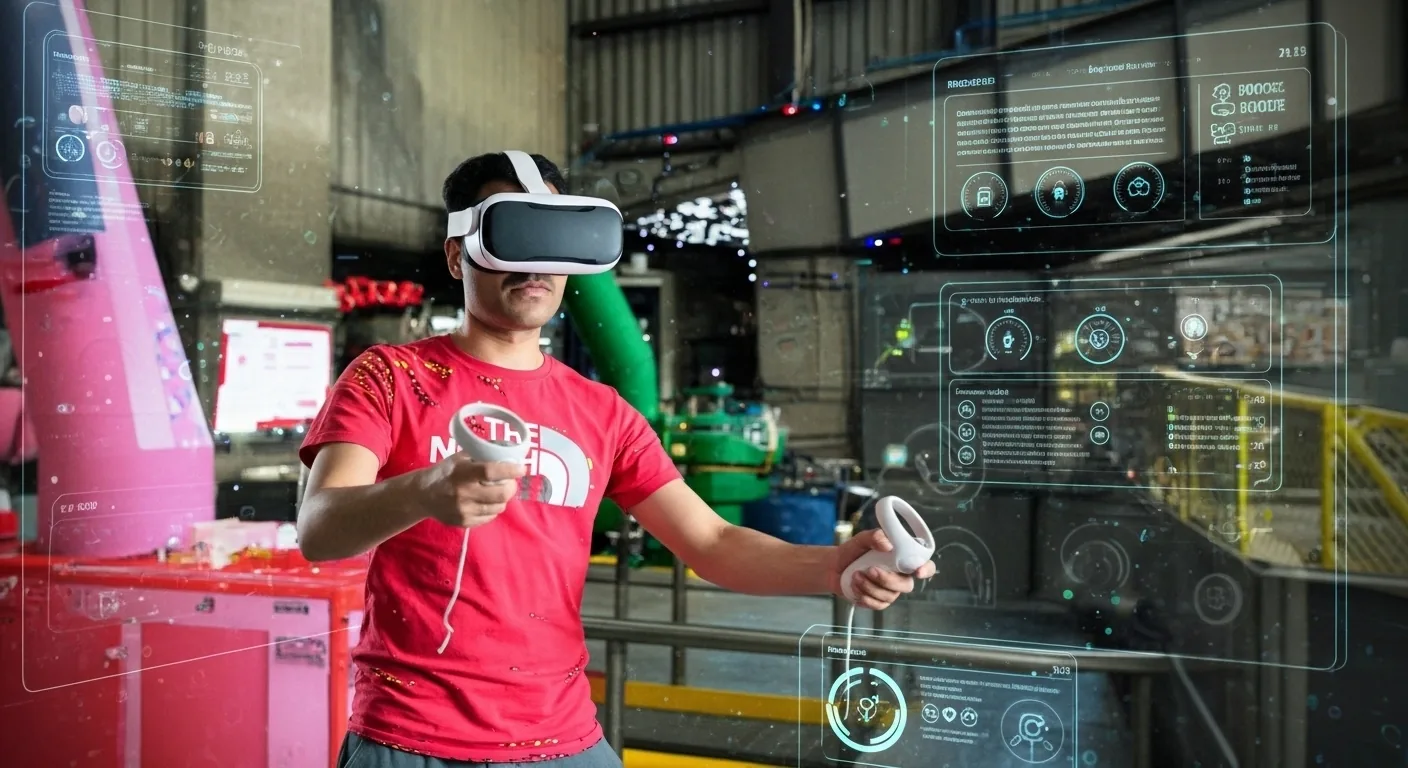
The state of XR and spatial computing in 2026
An honest 2026 assessment of XR, Android XR, WebXR, mixed reality, enterprise applications and where spatial projects can still create value.
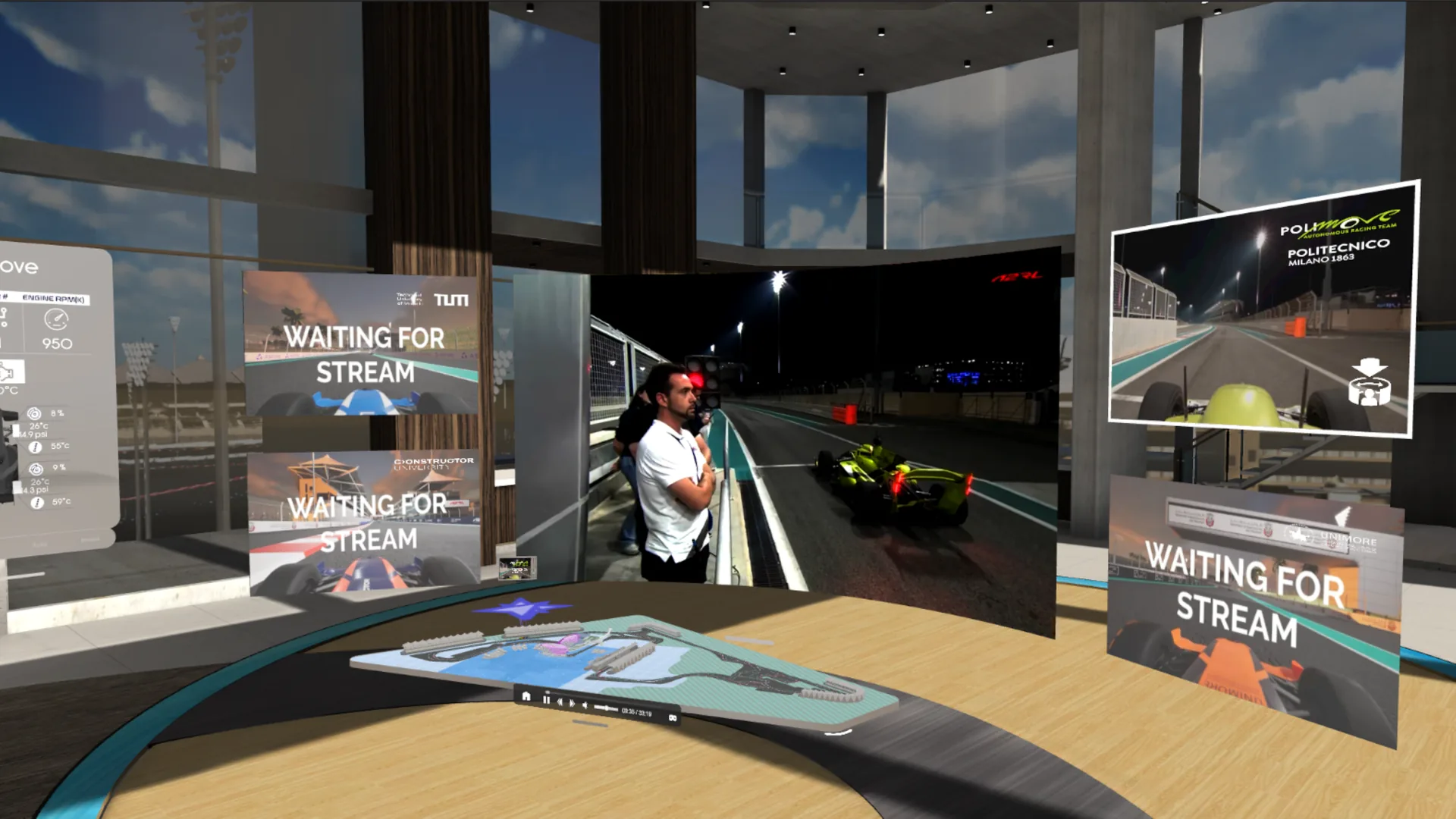
Meta Quest development in 2026: where VR projects still make commercial sense
A practical 2026 guide to Meta Quest development, covering training, simulation, events, multiplayer, consumer VR risk and cross-platform delivery.
Best AI Automation Ideas for Small Businesses in 2026
Practical AI workflows for local businesses, agencies, and operators that want useful automation without a huge software programme.
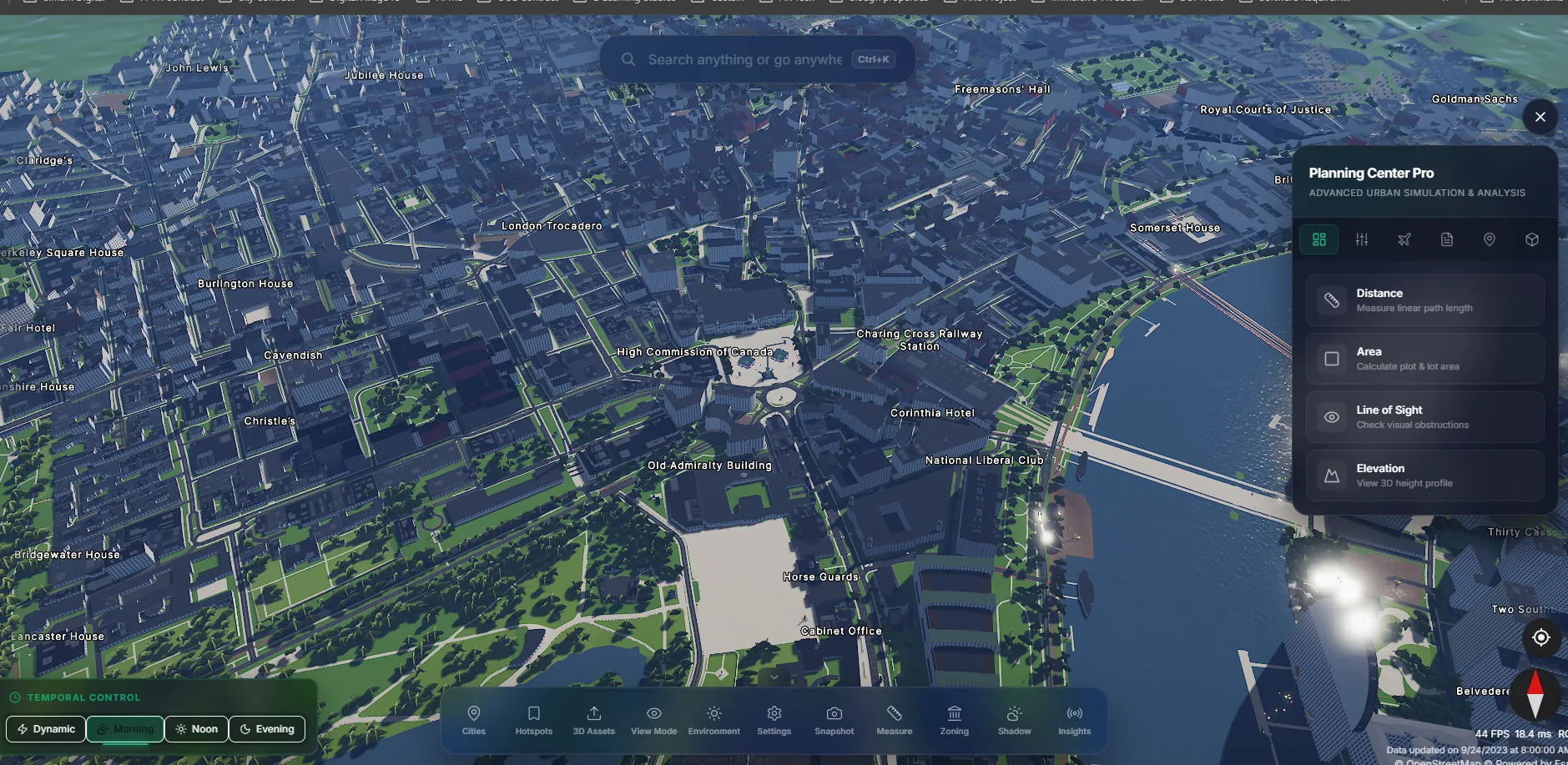
Best Digital Twin Use Cases for Construction, Property and Operations
A buyer-friendly guide to digital twins, virtual site planning, dashboards, spatial views, and operational visibility.
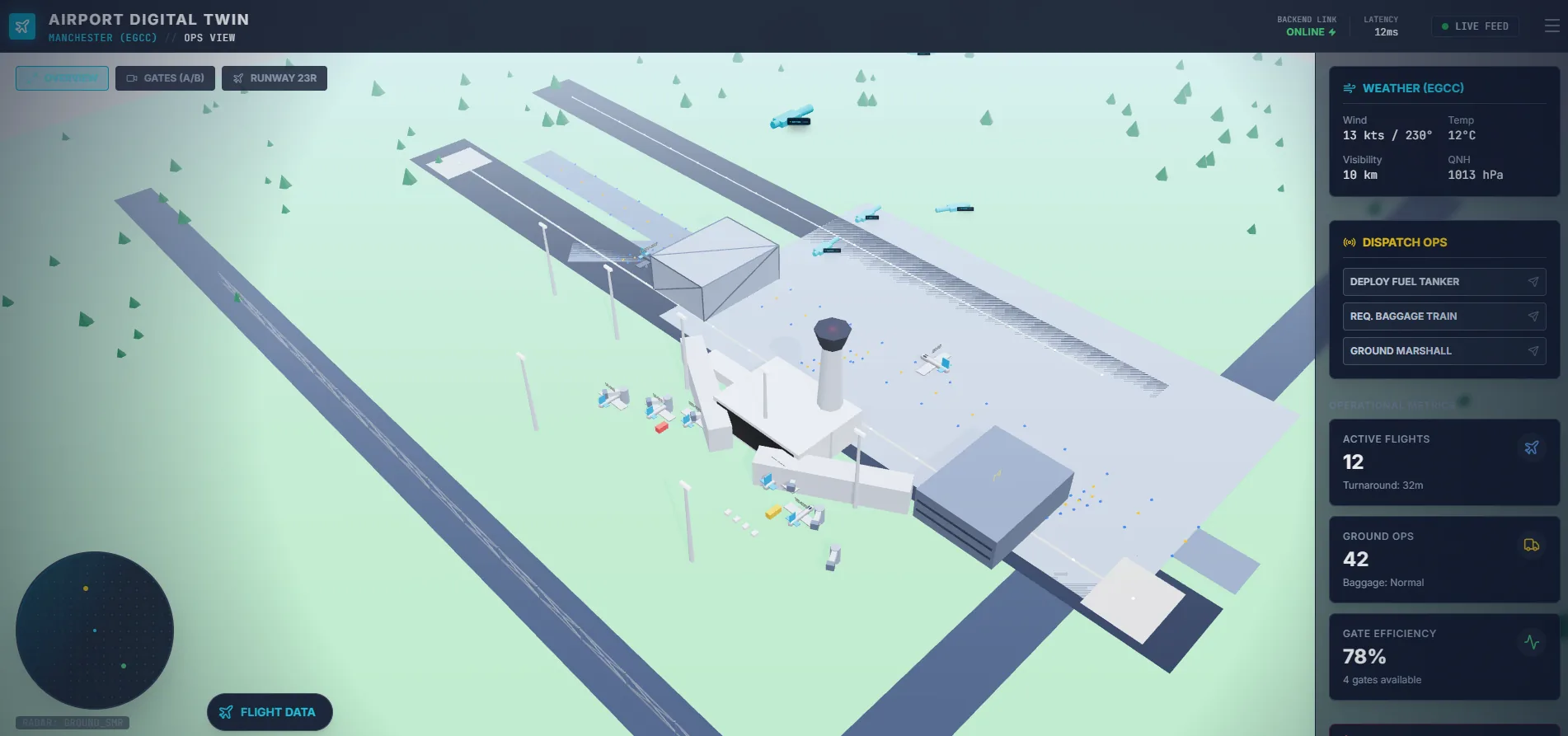
How Much Does a SaaS MVP, AI App, or Digital Twin Prototype Cost?
Clear starting bands for prototypes, MVPs, production builds, retainers, and the scope choices that change software cost.
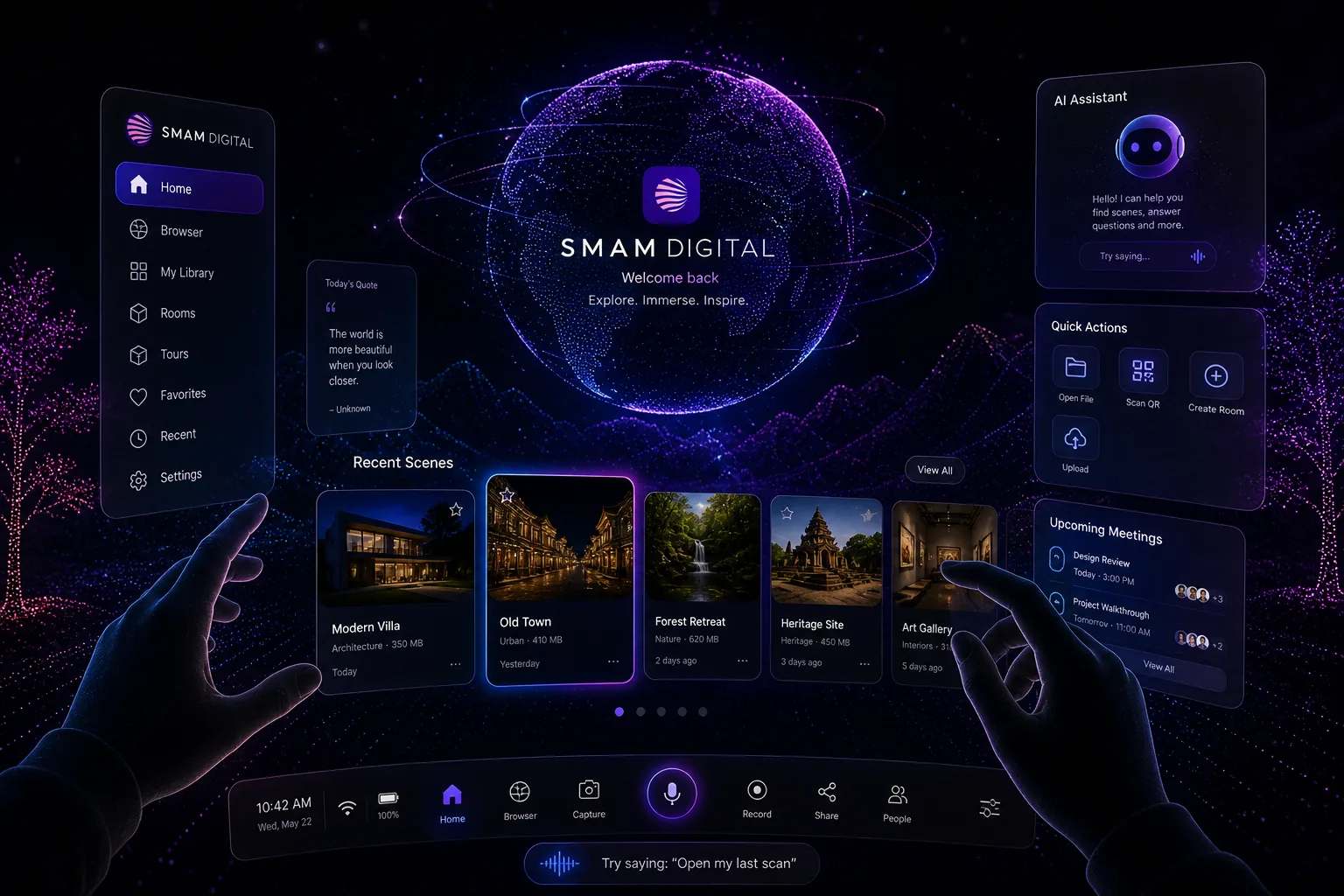
Best 3D Gaussian Splat and Virtual Tour Workflows
A practical workflow for spatial capture, SuperSplat-style editing, branded viewers, property tours, and construction review.
Spatial.io Alternatives: Unity WebGL, PlayCanvas and Arrival.space
Why Unity WebGL is the strongest route for white-label virtual worlds, custom multiplayer, and branded interactive spaces that teams can control.
3D Gaussian Apps for Industry, Sites and Spatial Tours
How Gaussian splats, SuperSplat-style workflows, and custom pipelines become practical applications for construction, engineering, property, tourism, and brand storytelling.
World Twin: One Place for Assets, Context and Decisions
Why spatial operating layers, dashboards, maps, and digital twins help teams understand real-world operations faster.
Why Prototype SaaS Platforms Before the Full Build?
How dashboards, beta platforms, and clickable product slices reduce risk before larger software investment.

Why XR Training Is the Future of Workforce Development
In today's fast-moving industries, traditional training methods often fall short - they're time-consuming, difficult to scale, and fail to fully engage employees. That's where Extended Reality (XR) training comes in.
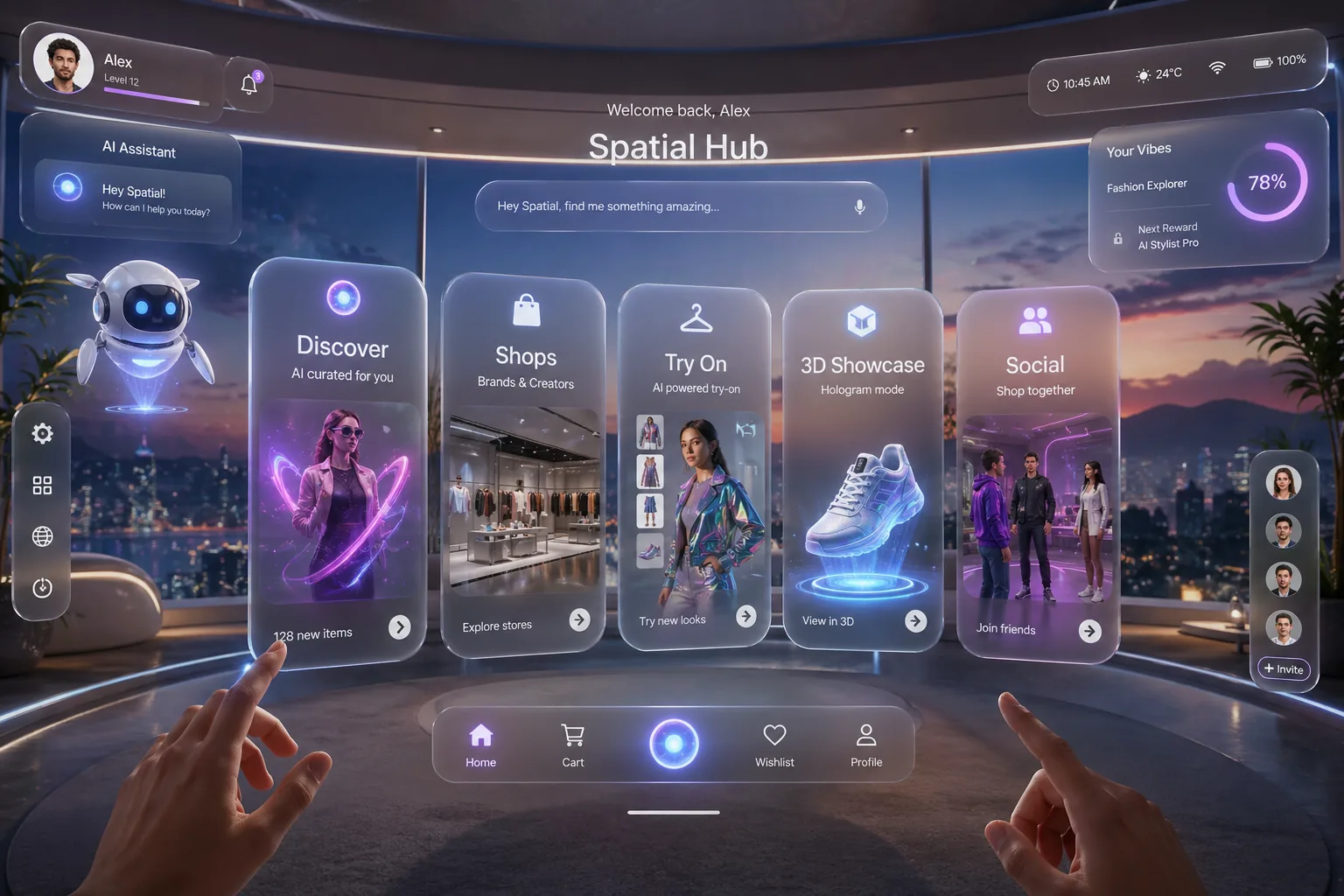
Leveling Up Your Business with Virtual Reality
Gone are the days when Virtual Reality (VR) was just for gaming and novelty demos. Today, VR is one of the most powerful tools in a company's digital transformation arsenal.

3D Immersive Conferences
Since 2020, the world of conferences and events has transformed. But the future isn't just more webinars - it's immersive 3D conference experiences that blend interactivity, networking, and visual presence in entirely new ways.
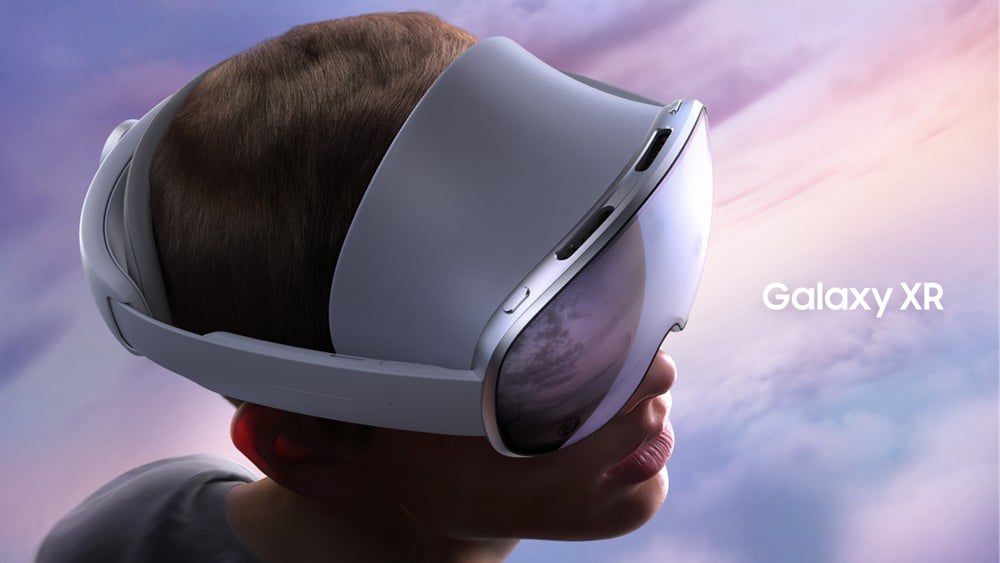
Why Companies Should Keep an Eye on Samsung XR
While Meta and Apple have dominated headlines in the XR space, Samsung is quietly making a comeback - and smart businesses should pay close attention.
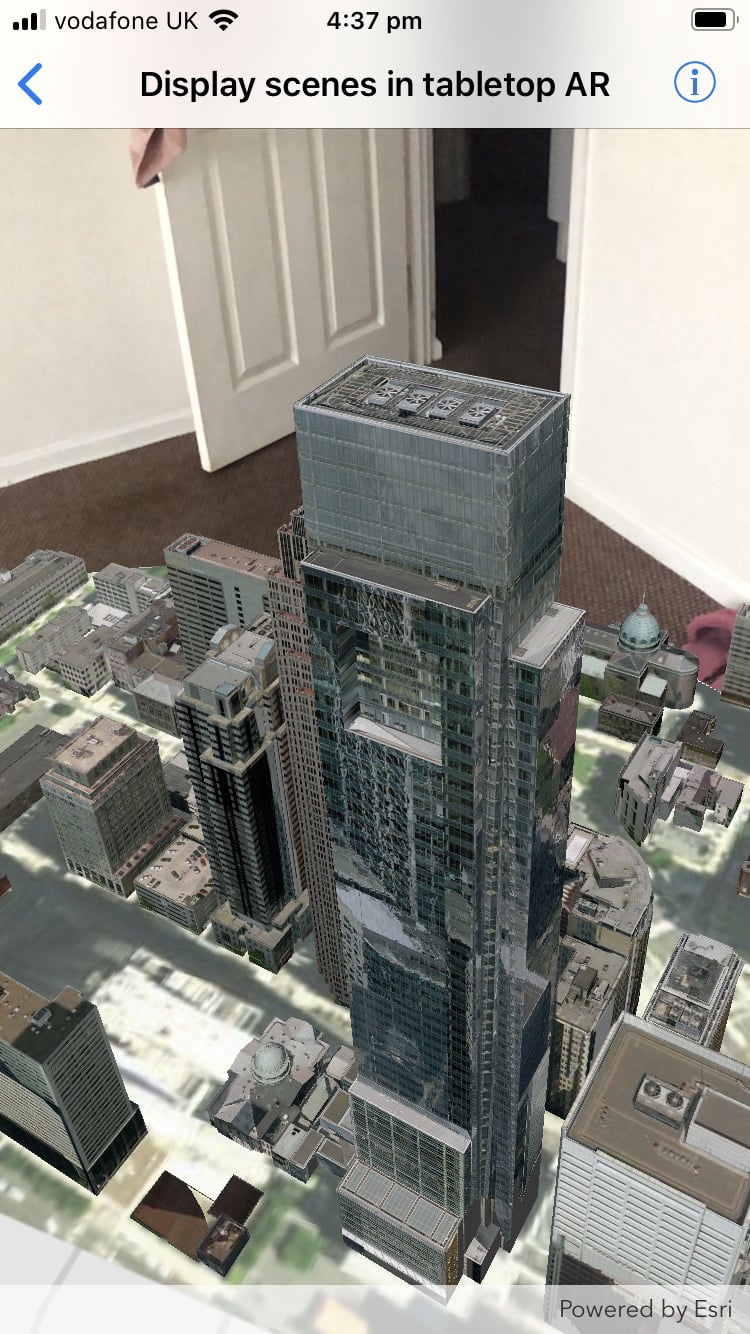
AR vs VR: Which Technology is Right for Your Business?
Confused about AR vs VR? This comprehensive guide compares augmented reality and virtual reality technologies to help you choose the right solution for your business needs.
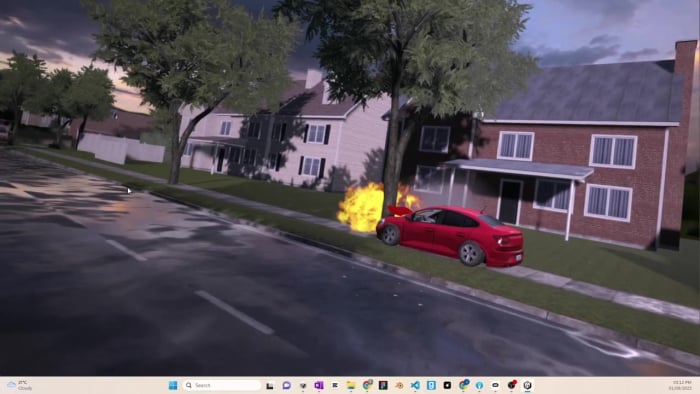
ROI of VR Training: How Virtual Reality Reduces Training Costs
Discover how VR training delivers 40% cost savings and 80% better retention. Learn the real ROI of virtual reality training with data-driven insights and case studies.
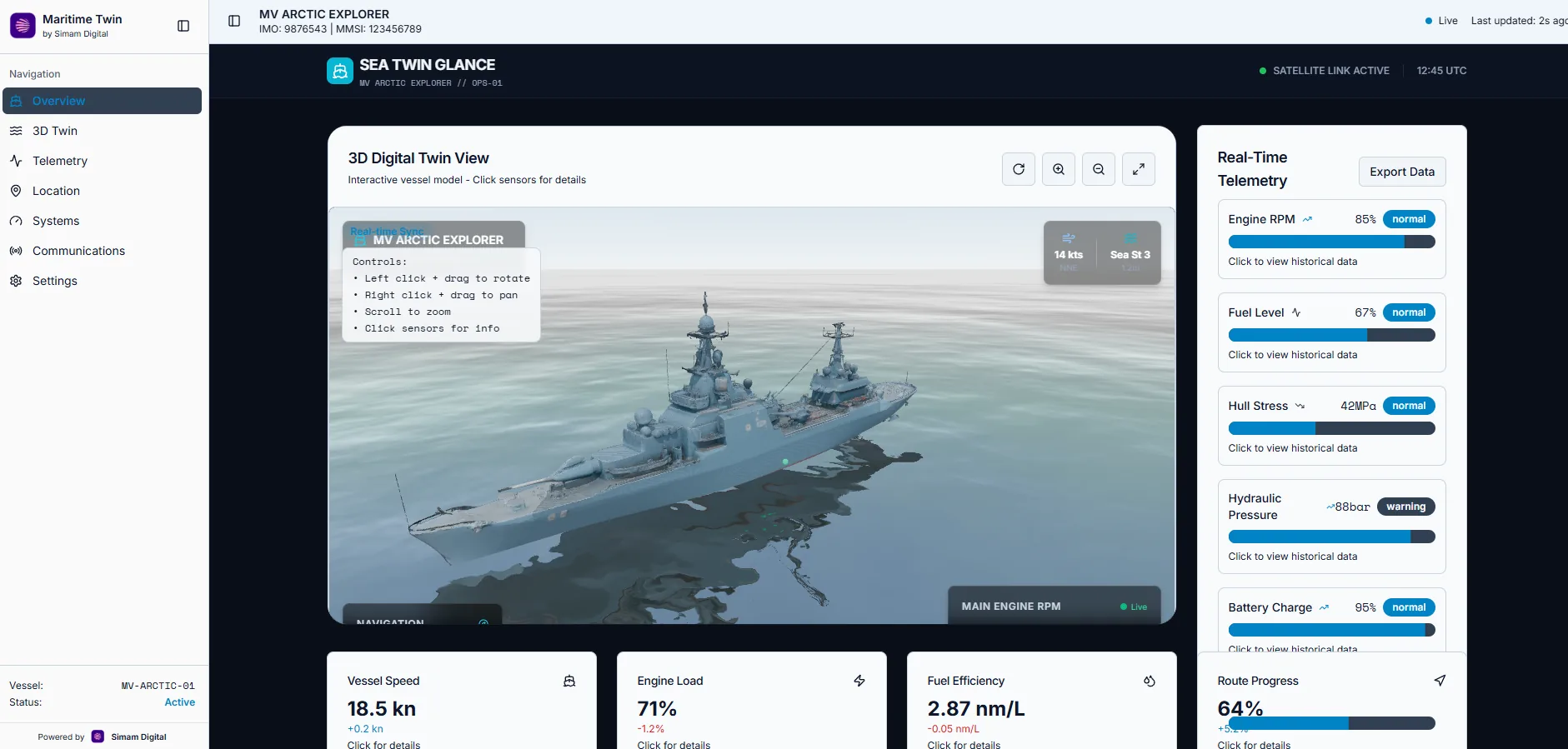
What Is a Digital Twin? A Complete Guide for Business Leaders
Digital twins are transforming industries. This complete guide explains what digital twins are, how they work, and why business leaders are investing in this game-changing technology.
How to Build an AI SaaS Application in 2026
Learn how to build a successful AI SaaS application. Complete guide covering architecture, tech stack, AI integration, and best practices from real-world projects.
AI SaaS Development Cost Guide 2026
Complete AI SaaS development cost guide. Learn pricing for MVP vs full-featured apps, ongoing costs, and how to optimize your AI SaaS budget.
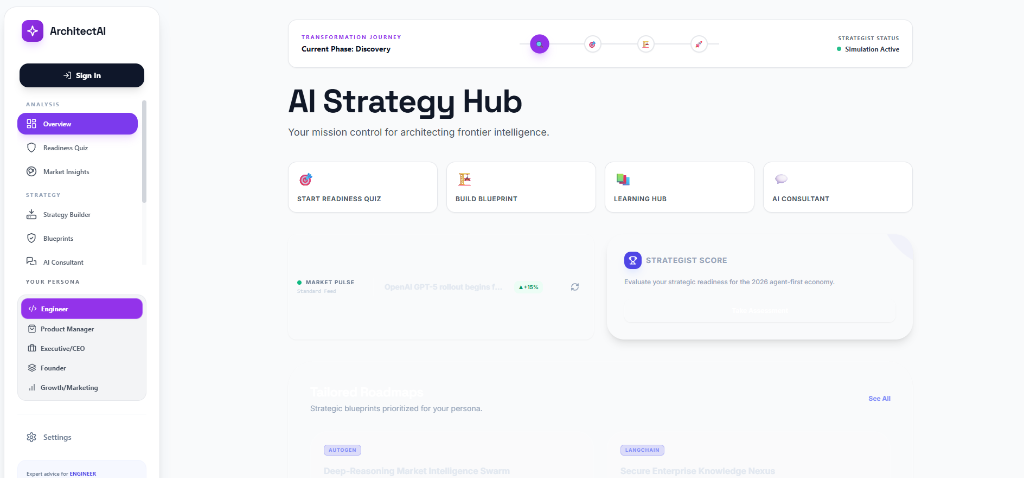
Best Tech Stack for AI SaaS in 2026
Discover the best tech stack for AI SaaS applications. Compare frameworks, AI APIs, databases, and hosting solutions with real-world examples.
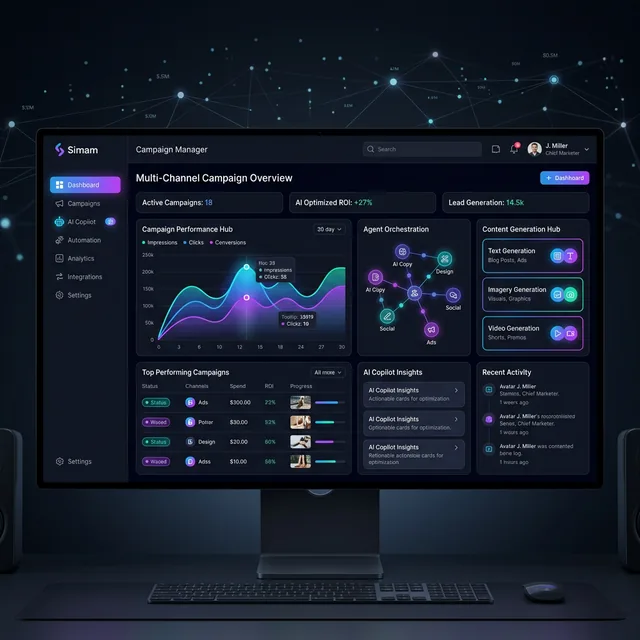
AI SaaS vs Traditional SaaS: What Changes?
What changes in architecture, cost, testing, support, data, and customer trust when SaaS becomes AI-first.
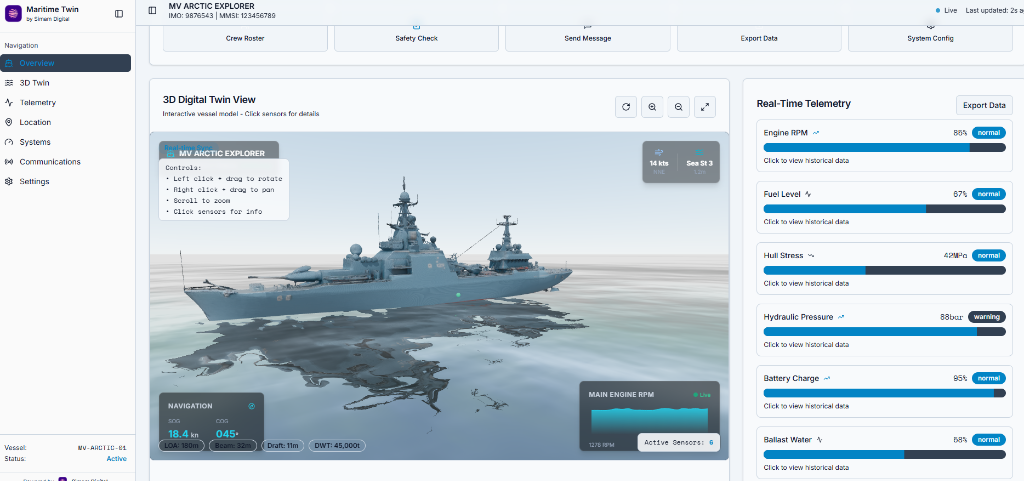
Best AI Tools for Construction, Events, Maritime and Training
Industry-specific AI use cases for operations, safety, digital twins, training, and reporting workflows.
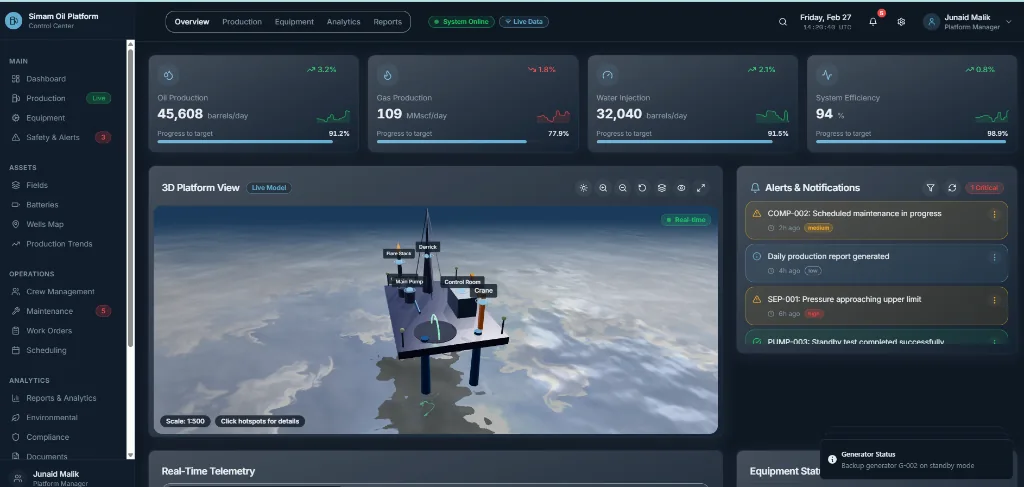
Digital Twin vs Simulation vs 3D Visualization
A plain-English guide to choosing the right industrial 3D solution for communication, training, planning, or operations.
Unity vs WebGL for Browser-Based 3D Experiences
How to choose the right runtime for interactive 3D campaigns, product demos, games, and virtual events.
How to Rescue a Vibe-Coded App Before Launch
A launch-readiness checklist for AI-built prototypes that need production architecture, security, UX, and deployment.