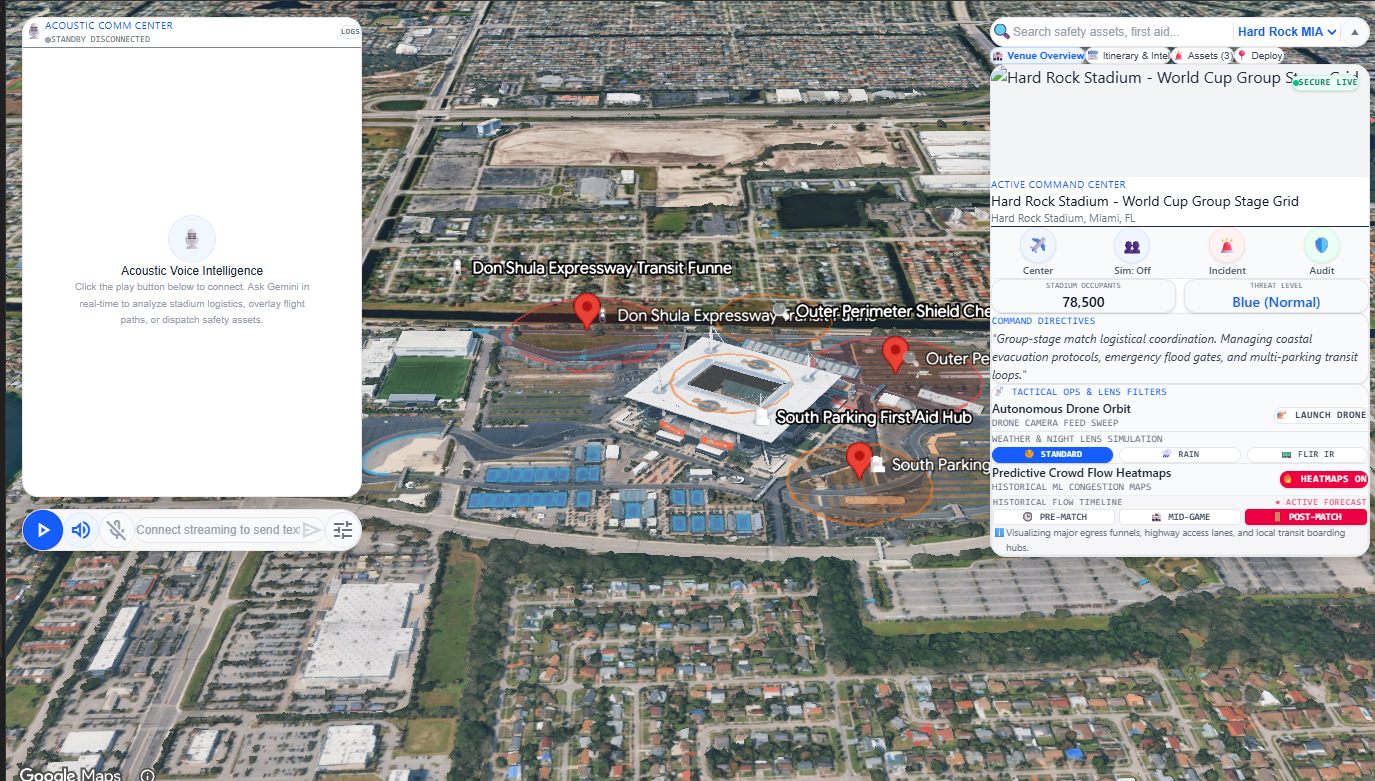
From impressive scan to useful application.
A photorealistic capture earns attention because it feels like a place. An industrial application earns repeat use because it helps somebody review, explain, compare, or act. The difference is the product layer around the scene.
That layer may include asset identity, issue markers, guided viewpoints, dates, documents, role-based access, progress comparison, training tasks, or a client content library. It can be a lightweight campaign experience or part of a broader operational platform.
Where the technique fits.
Construction and infrastructure
Record visual context around works, access, compounds, corridors, assets, or completed stages. Teams can use captures for remote orientation and stakeholder discussion, while validated survey and BIM data remains the authority for measurement.
Property, hospitality and retail
Create a strong sense of presence for interiors, resorts, venues, showrooms, and unusual spaces. A guided experience can connect rooms to availability, stories, specifications, or enquiries.
Training and safety
Place procedures and questions inside a recognisable environment. This can make familiarisation more contextual without requiring a fully modelled simulation for every scenario.
Heritage and public engagement
Preserve the appearance of a place and layer interpretation, narration, or comparisons over it. Browser delivery lowers the friction for public access.
Brand and event experiences
Use captured locations or objects as the stage for a launch, interactive story, or spatial portfolio. Custom controls and white-label presentation matter here.
The technical boundaries matter.
Splats primarily represent appearance. They do not inherently contain clean surfaces, object semantics, physical behaviour, or certified dimensions. Dynamic scenes, reflective surfaces, repetitive textures, and changing light can also create artefacts.
The practical approach is hybrid: use splats where visual realism matters, conventional geometry for interaction and collision, GIS/BIM/CAD for structured or measured information, and a web application to orchestrate the experience.
What a pilot should prove.
- Can the selected capture route produce stable visual quality?
- Does the scene load acceptably on the buyer's target devices?
- Can users navigate without instruction?
- Which annotations or workflows make the scene useful?
- What data is authoritative, and what is illustrative?
- Can the delivery model scale across multiple captures?
A pilot that answers these questions is more valuable than a large gallery of technically impressive but disconnected scenes.
What this means for a buyer.
Start with the business decision, audience, and evidence the project must produce. Simam Digital can turn that into a focused discovery, prototype, MVP, or production roadmap across AI applications, SaaS platforms, digital twins, real-time 3D, XR, and interactive systems.