Simam AI Lab Our applied AI research division is now open. Visit the lab

Software that makes a hard decision easier.

Simam Digital builds operational software, practical AI, digital twins, training simulations, and spatial applications for teams who need something working, not a slide deck. Five things we build, what each one costs to start, and the proof behind them are below.

SkyCostainNetwork RailA2RLAvalaraVLGEFocal Point VRMyriad Global Media
World Twin operational visibility platform screenshot
Operational dashboards and SaaS platforms
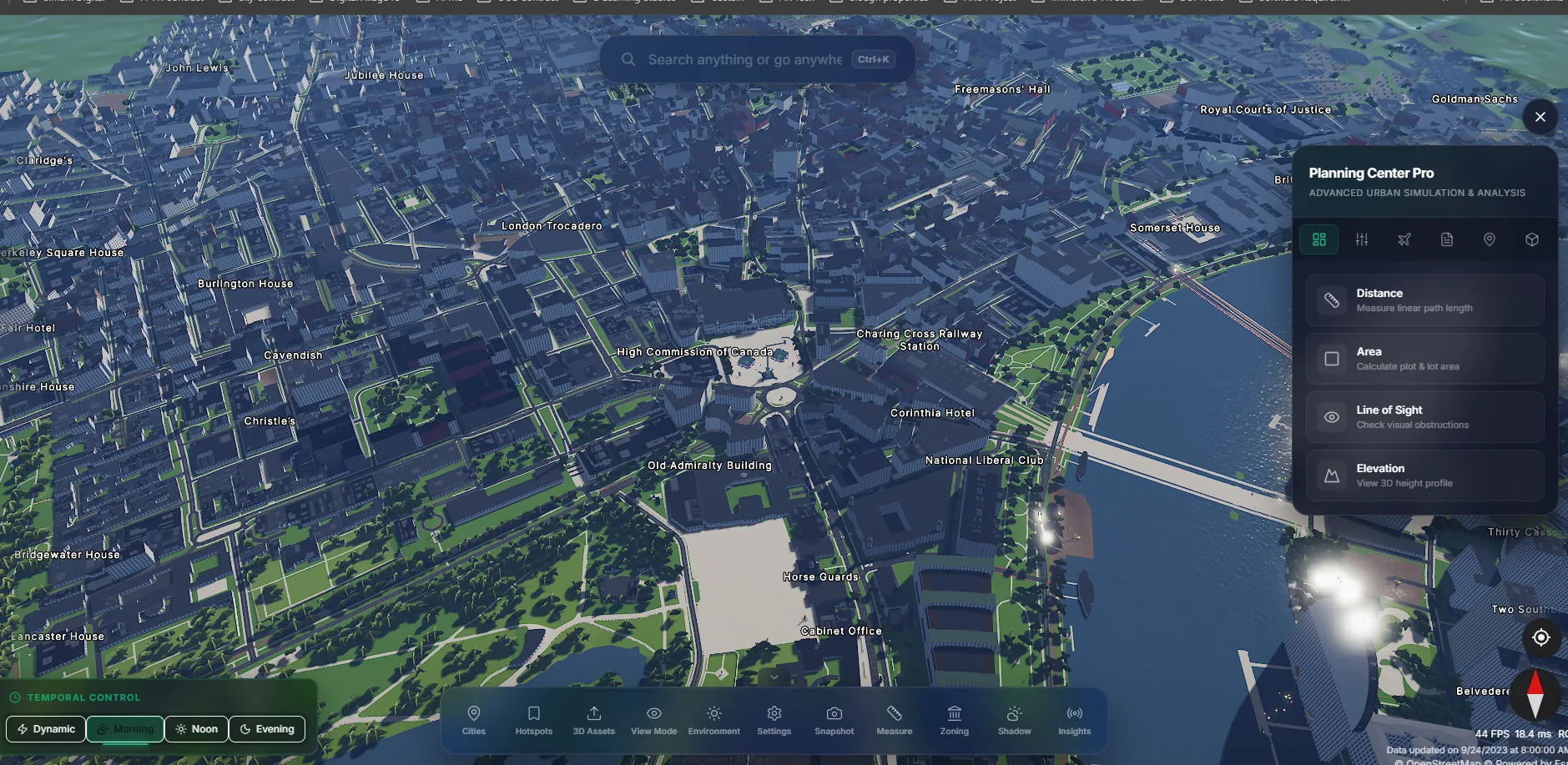
Digital twins for assets, sites, and workflows
AI workflows, XR training, and spatial applications

Five things we build.

Every engagement starts with a decision someone needs to make faster, more safely, or with more confidence. These are the five areas where we do that work, with honest starting points and real examples.

Operational software

Industry software, SaaS platforms and internal tools.

Most operations run on a spreadsheet nobody trusts and three systems that do not talk to each other. We replace that with one place where the people doing the work can see status, act on it, and leave a record.

The build starts from the decision, not the database. We agree who uses it, what they need to see at the moment they need to see it, and what happens after they click. Everything else follows from that.

Best for: operations and delivery teams, founders replacing manual process, and companies whose reporting takes longer to assemble than to read.
  • A working user, role and permission model rather than a single shared login
  • The core screens built against your real data, not lorem-ipsum placeholders
  • Integrations to the systems you already pay for, or a clean import path if the data is messy
  • Deployment, a short handover, and code you own outright
Practical AI

AI implementation and automation that survives contact with real work.

A chatbot is not an AI strategy. The useful version picks one repeated task, connects it to trusted information, defines what it is allowed to do, and keeps a person responsible for anything consequential.

We start narrow on purpose. One workflow, measured properly, tells you far more than five half-connected pilots, and it gives you something you can defend internally when someone asks whether it actually worked.

Best for: SMEs and teams losing hours to enquiry triage, document search, quoting, reporting, or moving the same information between systems.
  • One workflow built end to end: input, AI step, human review, system update, audit trail
  • Permissions and guardrails so the assistant only sees and does what its role allows
  • An evaluation set of real examples, including the awkward ones, so quality is measurable
  • Before-and-after numbers on time saved, correction rate and adoption
Digital twins

Digital twins and operational visibility.

“Digital twin” covers everything from a 3D model with a live feed to a full operations platform, which is why so many of these projects start with data collection and never reach a decision. We go the other way round.

A useful twin names the person, the moment and the action: the engineer checking access constraints before a possession, the operator finding every asset affected by an alert, the board member who needs to understand a change without reading the technical pack.

Best for: construction, infrastructure, property, maritime, logistics and airport teams coordinating assets across more than one system.
  • A spatial base and asset identity model that survives the data actually being messy
  • Live feeds where they exist, honest representative data where they do not yet
  • Role-based views, so a site engineer and a director are not handed the same screen
  • A production roadmap: which feeds must go live, which actions need an audit trail
Training & simulation

Training, simulation and XR that changes behaviour.

Classroom training struggles with anything that is dangerous, expensive, or rare. Simulation handles all three: people can make the mistake, see the consequence, and repeat the scenario until the response is automatic.

The design question is always what behaviour needs to change. Once that is settled, the scenario, the environment, the level of fidelity and the delivery platform stop being technology arguments and become straightforward decisions.

Best for: safety, L&D and operations teams covering high-risk procedures, inductions, or situations that are hard to rehearse in the real world.
  • Scenario design tied to a measurable learning outcome, not just a walkthrough
  • Built for the delivery route that fits you: Meta Quest, desktop, or straight in the browser
  • A facilitator view for running sessions and seeing how people performed
  • Completion, error and confidence data you can put in front of a training budget holder
Spatial & interactive

Spatial capture, Gaussian splats and live interactive experiences.

Gaussian splatting can rebuild a real place from photographs and render it with a convincing sense of light and depth. But a raw capture is raw material, not a product. The value appears once the scene is cleaned, optimised, branded, navigable and connected to something a visitor can act on.

The same applies to live work. A fan zone, a launch activation or a playable campaign has to hold up in front of a real audience, on real hardware, with a queue forming behind it.

Best for: agencies, property and construction marketing, heritage and visitor attractions, and brand teams running launches or events.
  • A capture plan built around the viewing job, then reconstruction and training of the scene
  • Cleanup and optimisation so it loads on a phone, not only on your desktop
  • A branded viewer with guided cameras, annotations, lead capture and analytics
  • For live work: the on-site app layer, screen moments and technical delivery on the day
Showreel

A minute of what we actually ship.

Museum and heritage XR, digital twins, real-time 3D and interactive applications — all client or in-house work, none of it stock.

Platforms you can open right now.

We build our own products as well as client work. These are live, they are honest about what stage they are at, and you are welcome to click through them before deciding whether we can build yours.

In development

Splat Studio

Gaussian splat tooling for agencies, brands, construction and property: clean a capture, optimise it, and publish it as a branded tour.

Preview

Industrial twin platforms

Oil, maritime, factory and infrastructure views built for operational review, monitoring and getting stakeholders to the same understanding.

Showcase

Virtual factory & site viewers

Spatial software for factory layouts and site walkthroughs, so teams can understand a place before committing to the full system.

The proof lives on the case studies page.

Fourteen studies covering autonomous racing VR, connected highways, construction command centres, WebGL commerce at Avalara, VR safety training, and industrial twin prototypes — each with the challenge, the build, and what happened next.

View all case studies

Bring us the problem, not the spec.

Tell us the operational problem, training challenge or product idea, plus who it is for and roughly when you need it. You will get a straight answer on the smallest sensible first step and what it costs.

Start a project brief

Worth reading before you scope anything.

Practical guides for teams comparing options ahead of a prototype, MVP, digital twin, AI workflow or spatial viewer.