Fragmented operations
When teams switch between spreadsheets, maps, trackers and dashboards, we build one operational view that connects the context, so less of the day goes on moving between systems to answer one question.
We build focused SaaS prototypes, dashboards, digital twins, and AI-assisted workflow tools for teams that need a clearer view of assets, incidents, locations, performance, and decisions.
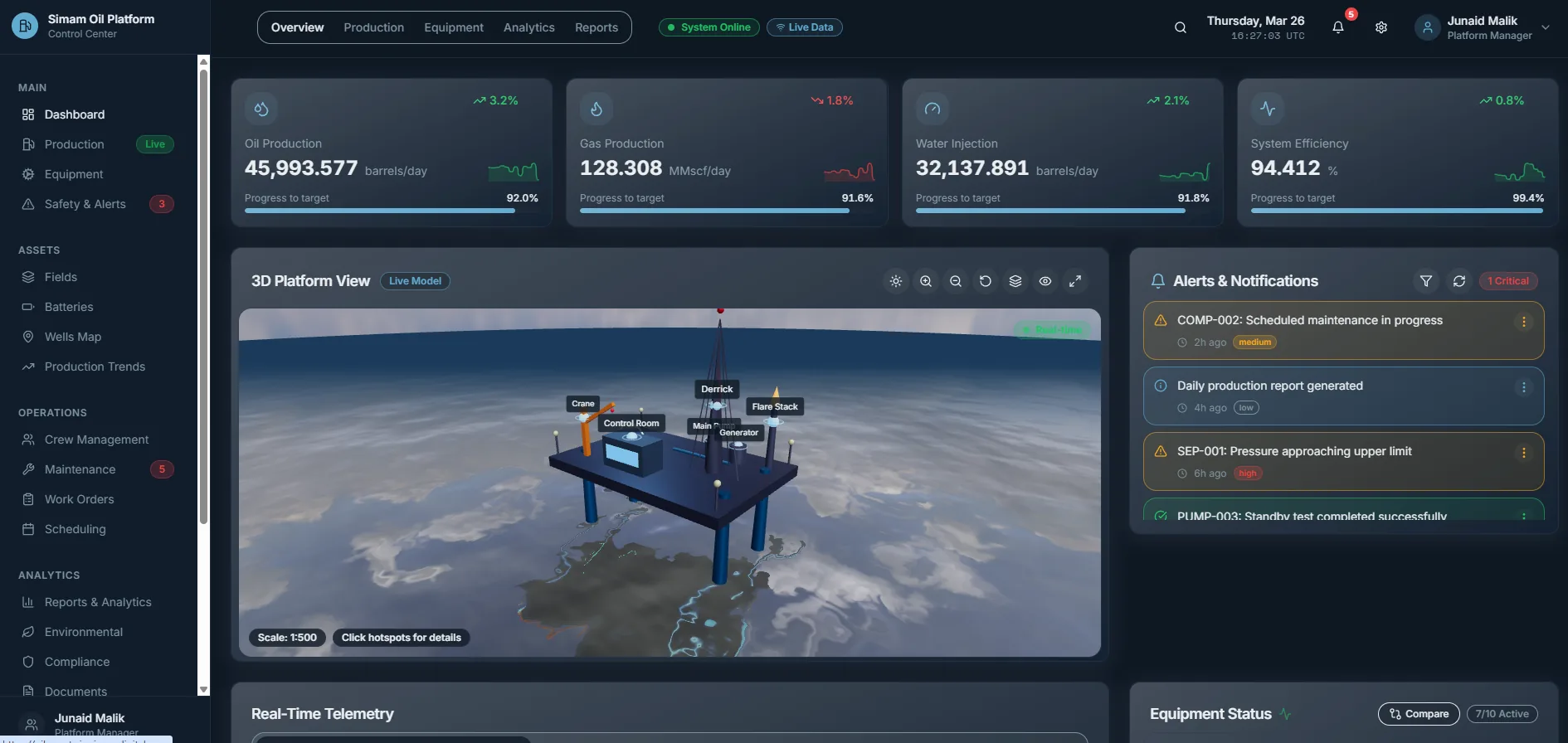
When teams switch between spreadsheets, maps, trackers and dashboards, we build one operational view that connects the context, so less of the day goes on moving between systems to answer one question.
When physical assets, sites or infrastructure are hard to understand, we create spatial interfaces and twin views that make status visible, so a problem on one site among many is found without going to each in turn.
When tracking and alerting are scattered, we design monitoring environments that make issues, priorities and next actions easier to see, so the first half hour of an incident goes on the response rather than on working out what is happening.
When a roadmap is difficult to explain, we build prototypes that show what the platform could become, so the people who sign it off can see it rather than be talked through it, before the full investment.
When teams need to review operational states, we build simulation-led views that support planning, so a change can be tried against the real layout before anybody commits crews, money or downtime to it.
When manual work slows the team down, we design dashboards, tools and AI-assisted workflows around the real process, so somebody who does not read drawings or query a database can still get the answer themselves.
Each of those is what the thing is designed to do, not a measured saving. Where a number exists we publish it on the case study that produced it, with how it was measured.
Spatial dashboards, site views and operating context, running, so you can see how the thing behaves before you read another word about it.
A spatial software layer for sites, assets, dashboards, and decision support across industrial and infrastructure use cases.
Industrial insight platform direction for operational review, scenario visibility, and a clearer shared view of activity.
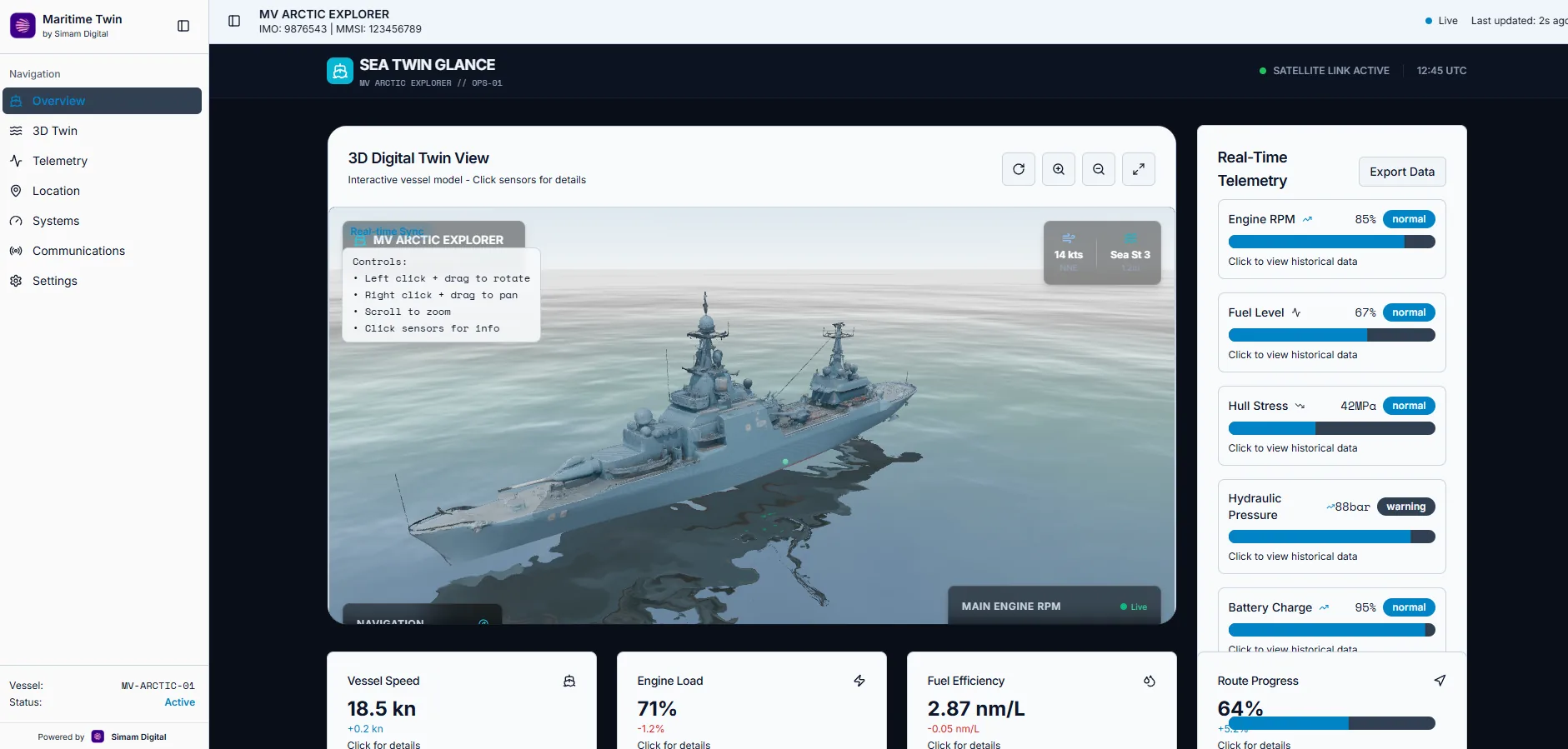
Built a spatial dashboard combining location intelligence, KPIs, and situational views so operators could plan and monitor from one interface.
Created a simulation-led visual platform for faster operational review, decision support, and scenario understanding.
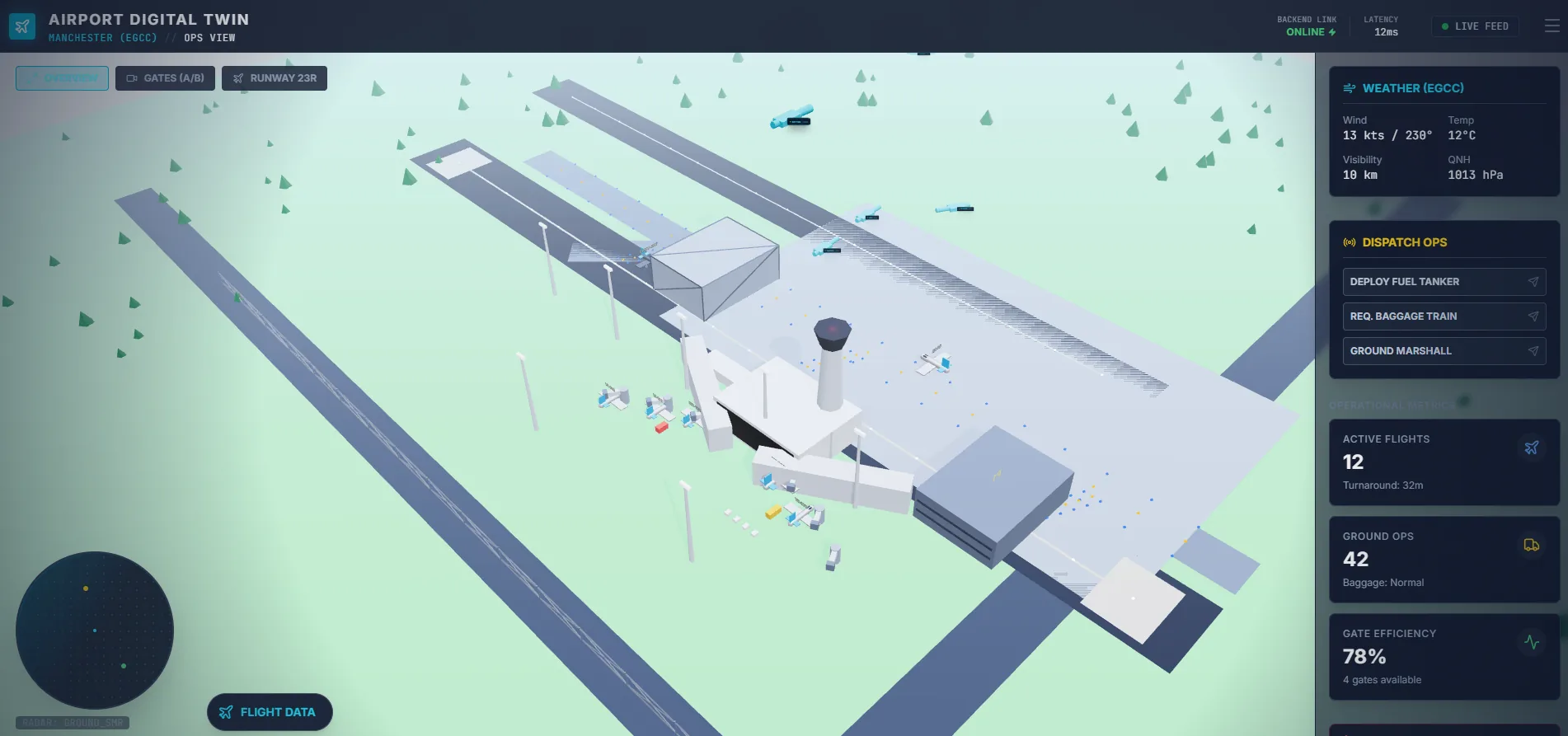
Scoped and designed a spatial SaaS prototype to help airport stakeholders understand assets, passenger flow, and roadmap requirements.

Designed and implemented a web-based monitoring environment for tracking, alerting, and clearer operations decision paths.
A focused process for teams that need useful software, not a vague innovation demo.
We identify users, decisions, data sources, pain points, and the workflows that need to become clearer.
We create dashboards, spatial views, digital twin screens, or workflow tools that stakeholders can react to.
We shape the data model, API integration, ingestion workflows, and user flows needed for the pilot.
The prototype becomes a stronger basis for budget, stakeholder buy-in, and staged product delivery.
Not about the technology. The five we are asked before anybody books a second meeting.
No, and it is not trying to. It sits over them and connects the context they each hold a piece of. Records export as CSV or JSON and scenes as standard 3D files, which is enough to load into a CMS, an ERP or an asset system you already have. Where you want a direct connection rather than a file, we build that as part of the work.
On Google Cloud, AWS or Azure, in UK or Irish regions, and we will use whichever of the three your own policy already covers. If it has to run inside your tenancy instead, say so at the start and we will scope it that way rather than move it later.
No. We start from an export, a sample or a copy, which is faster for you and means nothing has to be approved before there is anything to look at. A live connection is a later decision, scoped once you have seen what it would be connecting to.
Two people and not a project team: somebody who knows where the data lives and what it means, and somebody who can say yes. Most of the delay on work like this is not technical.
The prototype in step two is the decision point, and it is deliberately before the data work. You react to a working interface rather than a proposal, and if it is the wrong shape that is the cheapest possible moment to find out.
Let us scope a focused dashboard, twin, or SaaS pilot around your real workflow.
Every project is bespoke and quoted after we understand it. You deal with the engineer who would do the work, and we reply within one working day.
No obligation, and nothing to pay to find out.