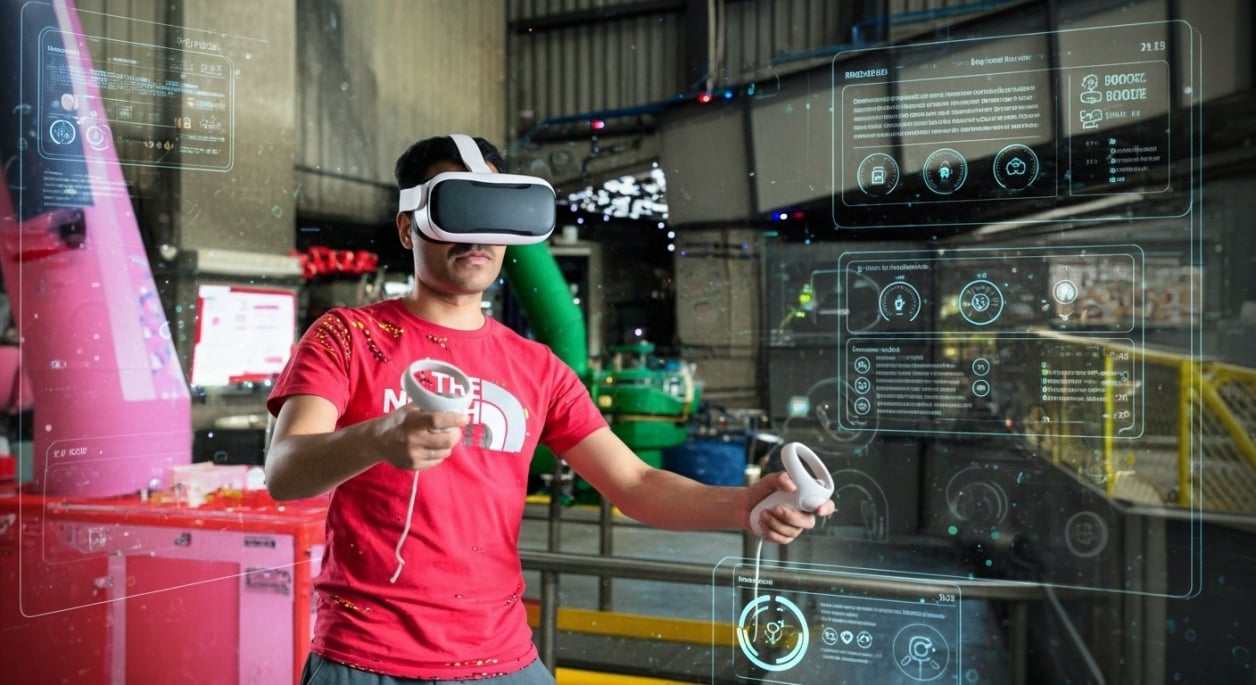
VR Training ROI Analysis
💰 ROI of VR Training: What It Costs, and When It Beats the Classroom
A side-by-side comparison with classroom training, a worked UK example, and an honest note on when immersive training is not worth the money
VR Training ROI Analysis
A side-by-side comparison with classroom training, a worked UK example, and an honest note on when immersive training is not worth the money
Let's look at the hard data from companies that have
implemented VR training:
Walmart:
• Trained 1 million+ employees
using VR
• 10-15% improvement in test scores
• 30% faster training completion
•
Deployed 17,000 VR headsets across stores
UPS:
• Reduced training
time by 25%
• 40% improvement in hazard identification
• Eliminated need for dedicated
training vehicles
• Saved millions in equipment and facility
costs
Boeing:
• 75% reduction in training time
• 40% improvement
in first-time quality
• Eliminated need for physical mockups
• Faster time-to-competency
for technicians
PwC Study Findings:
• VR learners complete training
4x faster
• 275% more confident applying skills
• 3.75x more emotionally connected to
content
• 4x more focused than e-learning students
1. Travel & Logistics (30-50%
savings)
• Eliminate travel costs for centralized training
• No hotel
accommodations or per diems
• Train employees at their location
• Reduce carbon footprint
and travel time
2. Instructor & Facility Costs (40-60% savings)
•
Reduce dependency on live instructors
• No classroom rental or dedicated facilities
•
Scale training without adding staff
• Train 24/7 without scheduling
constraints
3. Equipment & Materials (50-70% savings)
• No
physical equipment wear-and-tear
• Eliminate consumable training materials
• Simulate
expensive or dangerous equipment
• Reuse scenarios infinitely at no extra
cost
4. Employee Downtime (25-40% savings)
• Faster training
completion times
• On-demand training reduces scheduling conflicts
• Less time away from
productive work
• Immediate application of skills
5. Error Reduction & Safety
(Incalculable value)
• Practice high-risk scenarios safely
• Reduce
workplace accidents and injuries
• Lower insurance premiums
• Avoid costly mistakes in
real operations
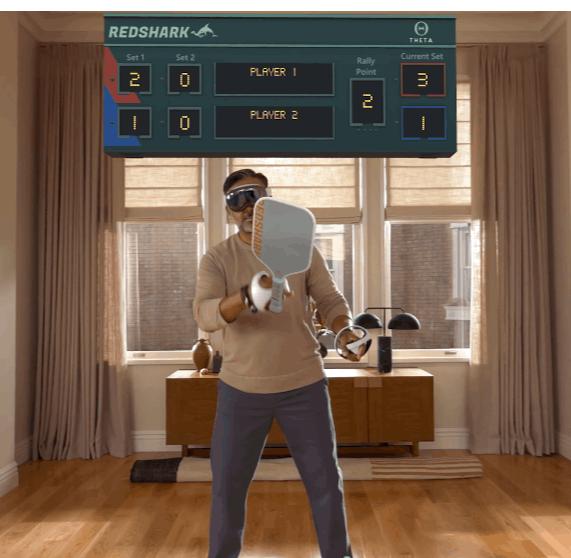
Hands-on VR training simulation
Realistic training scenarios
Cost savings are just part of the story. VR training
delivers superior learning outcomes that compound over time:
80% Retention
Rate
Compared to 20% for traditional lectures and 10% for reading, VR's
immersive nature creates lasting memories and muscle memory.
4x Faster
Completion
Focused, distraction-free learning environments mean employees
complete training in a quarter of the time.
Higher Engagement
VR
training completion rates average 90%+ compared to 20-30% for traditional
e-learning.
Consistent Quality
Every employee receives identical,
high-quality training regardless of instructor availability or skill
level.
Measurable Performance
Built-in analytics track every action,
providing detailed insights into skill gaps and learning progress.
Safe Failure
Environment
Employees can make mistakes and learn from them without real-world
consequences, building confidence and competence.
The honest comparison is not "which is better". It is "which one suits this particular learning outcome". Most organisations end up running both.
| Classroom | VR | |
|---|---|---|
| Up-front cost | Near zero | Build plus headsets, from £5,000 |
| Cost per repeat | Full cost again, every time | Close to zero |
| Scheduling | Instructor, venue and staff all free on the same day | Whenever the learner has 30 minutes |
| Consistency | Varies by instructor and by day | Identical every run |
| High-risk scenarios | Described, or staged at cost | Rehearsed safely, as often as needed |
| Assessment data | Attendance sheet, maybe a quiz | Every action, timed and scored |
| Updating content | Rewrite slides, rebrief instructors | Update the build, everyone gets it at once |
| Discussion and nuance | Strong — people can argue and ask | Weak — the scenario is fixed |
| Break-even | n/a | Typically 2–18 months, depending on headcount |
Where classroom still wins. Policy, theory, ethics,
negotiation, anything where the value comes from people disagreeing in a room. If the learning outcome
is "understands the rule", a slide deck is cheaper and just as effective. VR earns its cost when
the outcome is "can perform the action correctly under pressure".
The number that
decides it is headcount × repeat frequency. One cohort of eight people trained once will
never repay a build. Sixty people trained annually, as in the worked example below, repays it in months.
Run your own figures before committing to either.
Here's a simple framework to calculate your potential
ROI:
Step 1: Calculate Current Training Costs
• Instructor fees
•
Facility rentals
• Travel & accommodations
• Equipment & materials
• Employee time
(hours × hourly rate)
• Lost productivity during training
Step 2: Estimate VR
Training Costs
• Initial development (one-time)
• VR headsets (one-time or
rental)
• Maintenance & updates (annual)
• Employee time (reduced hours × hourly
rate)
Step 3: Calculate Savings
• Annual traditional cost - Annual VR
cost = Annual savings
• Factor in improved retention and reduced errors
• Calculate
break-even point (typically 6-18 months)
Example Calculation:
A UK business with 60 field staff running an annual safety refresher
Traditional, per year: £37,440
• Instructor: £1,200/day × 12 days = £14,400
• Venue hire: £3,600
• Travel and accommodation: £6,000
• Staff time: 60 × 8 hours × £28/hour = £13,440
VR, year one: £13,040
• One production scenario built: from £5,000
• 6 headsets at £400: £2,400
• Updates and maintenance: £600
• Staff time: 60 × 3 hours × £28/hour = £5,040
VR, year two onwards: £5,640/year — the build and the headsets are already paid for
Year one saving: £24,400
Saving every year after: £31,800
The £7,400 of one-off cost is recovered in about 4 months
Over three years: £112,320 traditional against £24,320 with VR — a saving of £88,000, or a return of just over 360%
Note what is and is not our fee. Only the scenario build, from £5,000, is what you would pay us; the headsets, the updates and the staff time are yours either way. Additional scenarios cost less than the first because they reuse the same framework. Full pricing is on the pricing page.
Ready to realize these ROI benefits? Here's how to
start:
1. Start with a Pilot Program
Choose one high-value training
scenario to prove ROI before scaling.
2. Identify High-Impact Use
Cases
Focus on training that's expensive, dangerous, or difficult to deliver
traditionally.
3. Measure Everything
Track completion rates, test
scores, time-to-competency, and cost savings from day one.
4. Scale
Gradually
Expand successful programs across departments and
locations.
5. Iterate Based on Data
Use analytics to continuously
improve training effectiveness.
Best Candidates for VR Training:
•
Safety & compliance training
• Equipment operation
• Emergency response procedures
•
Soft skills & customer service
• Onboarding & orientation
• Technical skills development
🤝 How Simam Digital Can Help
Here's how we maximize your VR training ROI:
📊
ROI analysis and business case development
🎯 Custom VR training solutions tailored to
your workflows
📱 Multi-platform deployment (Quest, PCVR, mobile)
📈 Built-in
analytics and performance tracking
🔄 Iterative development based on learner
feedback
🛠️ Ongoing support and content updates
💼 Proof-of-concept development
to validate ROI
📩 Want to calculate your VR training ROI?
Let's build a custom
analysis for your organization and show you the numbers.
View our case studies for
more: 📋
Contact us today
or email us at: sales@simamdigital.com
Senior XR Engineer & Founder, Simam
Digital
https://www.linkedin.com/in/junaid-malik/
