Simam AI Lab Our applied AI research division is now open. Visit the lab
Heritage, museums and visitor sites

Nine hundred years happened here. Tell it here.

A place people can walk through in a browser, with its story told at the spot each part of it happened. No app, no account, and it opens on a phone in a classroom, a living room or the car park outside.

We call it a 3D Visitor Guide.

Both examples below are our own. Neither was commissioned by the place it shows, neither implies any partnership with it, and the pictures of the past in them are AI illustrations rather than photographs or historical records.

The problem is almost always the same.

A building holds far more story than it has room to tell, and the telling is stuck by the door while the story is scattered through the place.

A cathedral, a hall or a historic site

Your building has nine hundred years of story and about four interpretation boards to tell it on. Most of what happened here happened somewhere specific, and a board by the door cannot point at the spot.

A museum or a trust

What you hold is bigger than what you can display, and the thing people most want to understand is usually a place rather than an object in a case.

A council or a tourism board

People decide whether a town is worth the trip from a phone, days before they would ever reach a visitor centre.

Two we have built.

Open either on a phone. We would rather show you two real ones with their working measured and their limits written down than a longer list you cannot inspect.

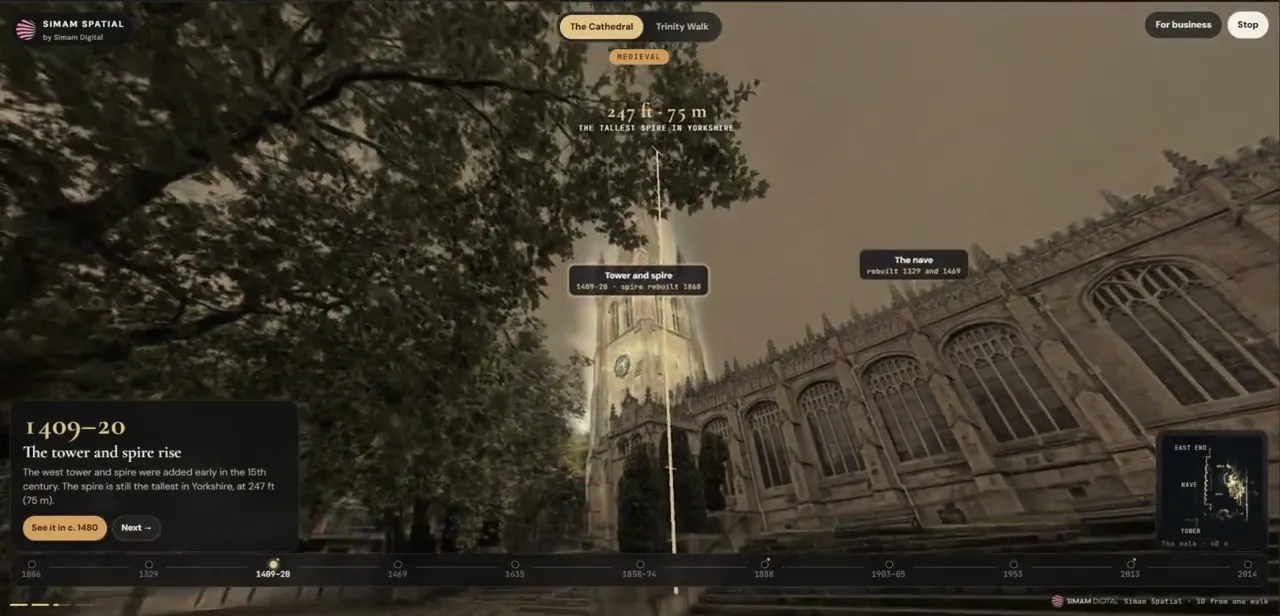
Wakefield Cathedral rebuilt in 3D with its spire lit and its history told on screenOur own capture, filmed by us

Wakefield Cathedral and Trinity Walk

Two short walks through Wakefield became a precinct you can move through, with nine hundred years of the place told along the route. It opens on the real walk and dissolves into the 3D on the same frame, which is the moment people tend to understand what they are looking at.

What to notice. The story is told where it happened. You are not reading a panel about the spire, you are stood under it.

Seventy seconds of walking, captured on an ordinary camera.

Nobody who walked with us is shown. Other people and every shop name are blurred, in the footage and in the 3D.

Open it →
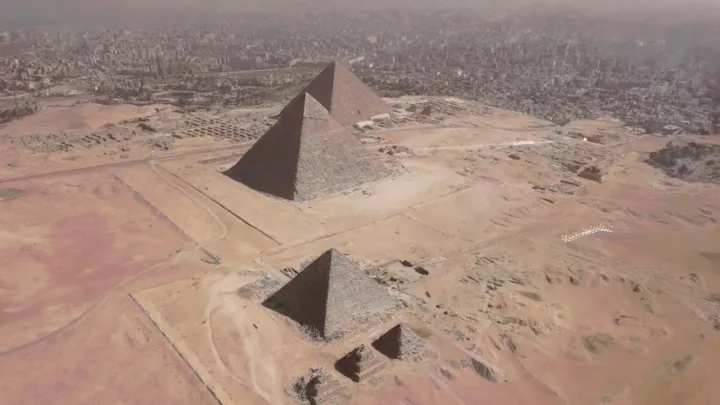
The Giza plateau rebuilt in 3D with a timeline raising each pyramidOur own build, from stock footage

Giza, rebuilt

The plateau rebuilt in 3D from a single drone clip, then raised pyramid by pyramid along a timeline, with pictures of the past beside each stage.

What to notice. A timeline is the right shape for a place whose interest is how it changed, which is most heritage sites.

One hundred and ninety five frames from a sixty five second clip, about a million splats, and 35.4 dB measured on frames the reconstruction never saw during training.

The temples, the ramps and the crowds are AI illustrations rather than records, and the figures in them are drawn about three times life size. The demo says so on screen and so do we.

Open it →

What a guide is actually used for.

  • A guide people open before they travel, so they arrive knowing what they came for
  • The story told at the spot it happened, rather than on a board by the entrance
  • A route through a site for anyone who cannot walk it, including before an accessibility visit
  • A record of the building as it stands now, kept for whoever looks after it next
  • Something a school can open in a classroom in another county

What we will not pretend.

Heritage work attracts overclaiming, so here is the line before you ask for it.

A picture of the past is an illustration

Where we show a building as it once stood, that image is made, not found. It is labelled on screen every time. It is a way of helping somebody picture a thing, and it is not evidence of what was there, and we will not let it be presented as evidence.

A capture is not a survey

A reconstruction records how a place looks, not how big it is. Neither of the two below had its scale measured against anything, so neither carries a measurement and nor does this page. Where a dimension matters, a surveyed figure rules and this does not replace it.

People are not part of the record

Anybody who happens to be in shot is blurred, in the footage and in the finished scene. If the brief needs people in it, that is consent to be arranged first rather than a setting to switch on.

Your building stays yours

The scene and its files are yours. It can live on your own domain, and if you stop working with us you keep what was made rather than losing it with a subscription.

Tell us about the place.

What it is, what people usually fail to understand about it, and who you are trying to reach. We will come back with what it would take and what it would cost, in the same reply, with nothing to pay to find out.