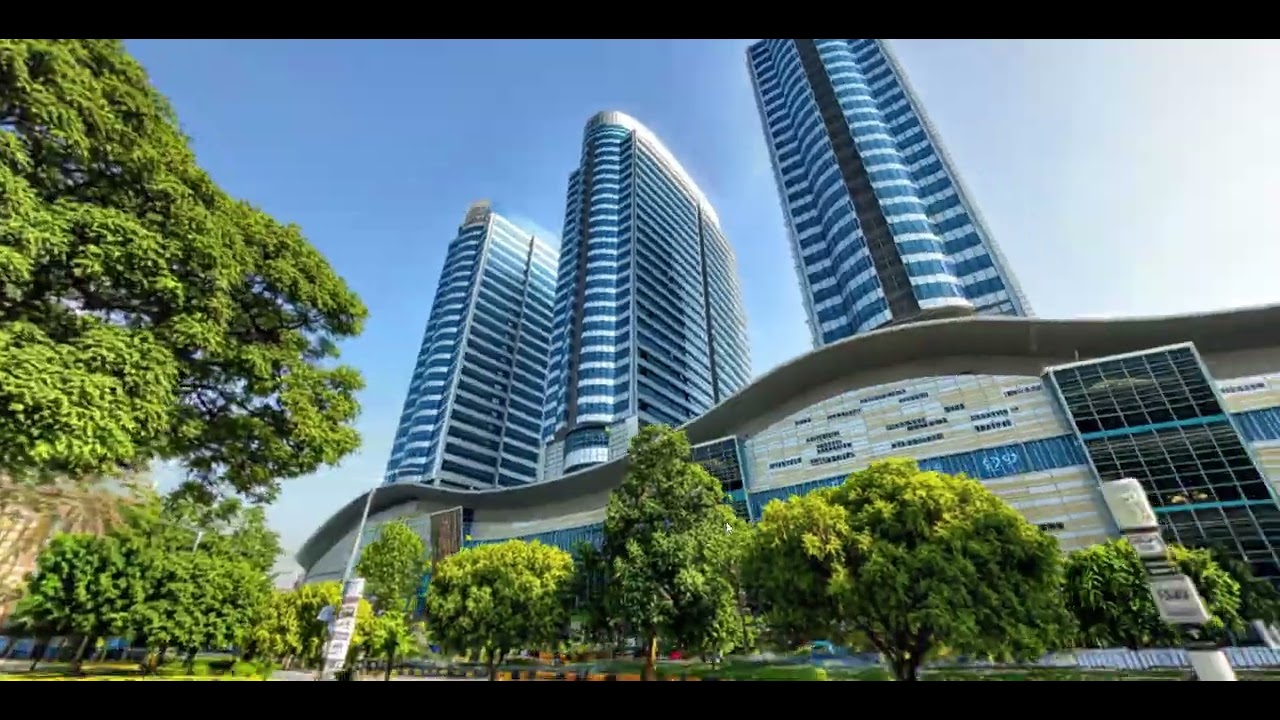
Construction: better data, better bids.
Bidding traditionally runs on a limited site visit, incomplete documentation and a folder of photographs that never quite show the thing you need to check three weeks later.
A handheld capture during a short inspection window can be reconstructed into a navigable environment the whole team explores afterwards. The practical effect is better measurement context, more confident planning, and subcontractor estimates built on the same shared picture rather than on someone’s recollection.
That is the honest mechanism. Not “3D is impressive”, but “everyone pricing this job is looking at the same site”.
Capture becomes a record, not an image.
Capture the same site at different stages and you have a time series: what the ground looked like before, what went in, what is now hidden behind finished surfaces.
That supports progress tracking and work validation, and it answers the question that costs the most money later — what is actually behind that wall. For more on how this feeds an operational model, see our digital twin guide.
Broadcast, media and events.
In broadcast the value is release from fixed camera positions. A reconstructed moment can be explored from viewpoints no camera occupied, which matters for sports replay, event coverage and simulation — The Weather Channel, for instance, has used captured real environments for flood simulation rather than abstract models.
For media, events and marketing the economics are about reuse: capture a set, a venue or an activation once, then repurpose it across an interactive web experience, a VR environment and spatial content, instead of commissioning each separately.
Why adoption is rising now.
Five things changed at roughly the same time: capture got faster and more accessible, processing pipelines improved, fidelity crossed the line from impressive to useful, AI started removing manual cleanup, and the major platforms — Apple, Meta, NVIDIA — began supporting spatial formats directly.
None of those alone would have moved the needle. Together they moved capture from a specialist commission to something a site team can do on a Tuesday.
Where it pays, by sector.
| Sector | What it is used for | Where the money is |
|---|---|---|
| Construction and inspection | Site verification, equipment inspection, progress tracking | Fewer site visits, less rework, reduced surveying overhead, faster decisions |
| Broadcast and live production | Replay, coverage, virtual camera moves | Capture once for several formats; fewer reshoots and location dependencies |
| Real estate and marketing | Explorable spaces instead of static media | Longer engagement and fewer unqualified viewings |
| Simulation, robotics and twins | Real environments as simulation-ready assets | Smaller simulation-to-reality gap, better training data, more realistic testing |
Cost, speed and the trade-off nobody mentions.
A lower barrier to entry
Camera or drone capture plus an automated reconstruction pipeline replaces what used to require specialist rigs and specialist operators. That is most of the cost reduction.
Faster time to value
Traditional 3D workflows run in days or weeks. Splat reconstruction produces something usable in hours. When a decision is time-sensitive, or site access closed yesterday, that difference is the whole argument.
Visual fidelity, not survey accuracy
And here is the trade-off to plan around: Gaussian splatting optimises for how a place looks, not for how precisely it measures. It is excellent for understanding an environment and poor as a substitute for survey-grade measurement.
Treat it as a complement to existing workflows. Teams that position it as a replacement for survey get an unpleasant surprise; teams that use it for context, communication and decision confidence do not.
Common questions.
Is Gaussian splatting accurate enough to measure from?
For context and rough dimensioning, yes. For anything with a tolerance attached, no — it prioritises visual realism over geometric precision. Use it alongside survey data rather than instead of it, and be explicit with stakeholders about which of the two a number came from.
How does it compare with photogrammetry?
Photogrammetry produces a mesh with measurable geometry and struggles with reflective, transparent and fine detail. Splatting produces a far more convincing view of exactly those difficult materials, much faster, without clean geometry underneath. Different tools for different questions.
What does a capture actually take?
A phone or camera walk-through for a room or facade, a drone flight for a site or structure, then automated reconstruction. The skill is in coverage and consistent lighting rather than in equipment, which is why the barrier has dropped so sharply. Our capture basics guide covers the practicalities.
Can we put a splat on our own website?
Yes. Splats are viewable in a browser and drop into WebXR and Unity applications, which is why they suit client-facing use. You can see examples in our Gaussian gallery and edit your own in our free splat editor.
Where should a first project start?
Somewhere access is genuinely constrained and a decision is genuinely expensive — a site you can only visit once, a structure due to be covered up, or a venue you would otherwise photograph badly. That is where the value is easiest to see and hardest to argue with.
What this means for a buyer.
Gaussian splatting is a data and workflow improvement dressed up as a visual one. The right first question is not “how good does it look” but “which decision would be better if we could go back to that site”. Simam Digital runs capture, reconstruction, editing and web delivery, and builds the viewers and twins that sit on top. For the application-by-application view, see Gaussian splat applications for industry.
Sources and further reading
A version of this article was first published in Tech Alchemy, the Simam Digital newsletter on LinkedIn.