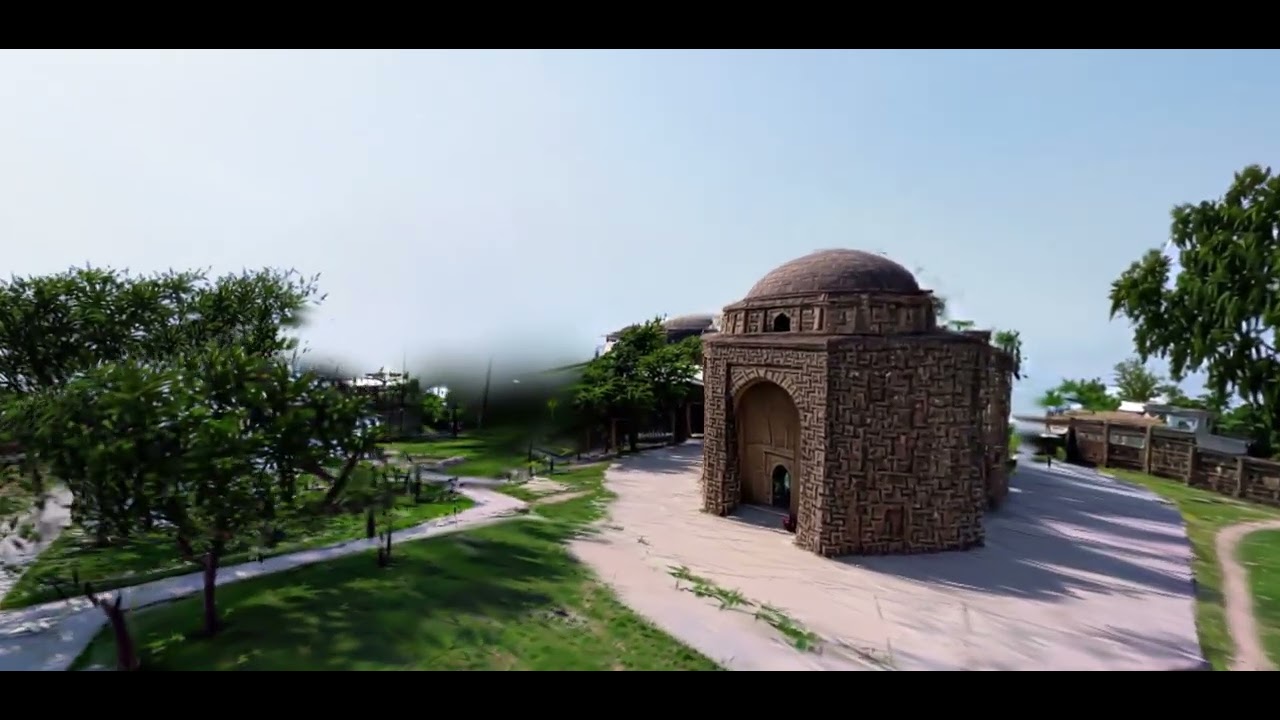
From static reconstruction to spatial generation.
Volumetric workflows used to mean multi-camera rigs, specialist software, extensive cleanup and a great deal of storage. That put them out of reach for anyone without a studio budget.
AI-assisted pipelines now handle the parts that used to require physical capture: depth inference, viewpoint generation, temporal interpolation, motion reconstruction and scene completion. The result is closer to image in, spatial scene out — in minutes.
What 4D Gaussian splatting actually is.
Standard Gaussian splatting reconstructs a static environment: you can move the camera, but nothing in the scene moves.
4D extends the representation into time. That makes moving volumetric humans, animated reconstruction, interactive replay and time-based spatial playback possible — the difference between walking around a frozen moment and watching one unfold from wherever you choose to stand.
How an AI-generated 4D scene is made.
Image or prompt
      |
AI video generation
      |
Multi-view synthesis
      |
Depth estimation
      |
Gaussian reconstruction
      |
4D temporal processing
      |
WebXR / Unity XR
Each step invents information that previously had to be physically captured: camera movement, scene depth, viewpoints nobody stood at, and the transitions between frames. That is the whole trick, and also the whole caveat — generated detail is plausible rather than measured.
The tools people are actually using.
The practical stack blends generative tools, node-based workflows and reconstruction systems. A common route runs through ComfyUI with a reconstruction node chain:
Image / video input
      |
Depth estimation
      |
Reconstruction
      |
PLY Gaussian output
      |
WebXR / Unity viewer
Node-based tooling is what makes this workable, because you can chain image generation, frame interpolation, AI video generation, temporal smoothing, depth reconstruction and Gaussian export without writing a bespoke pipeline each time.
A realistic worked example: generate or import an image, use a video model to produce camera movement, feed the resulting sequence into reconstruction, export a .ply, and open it in SuperSplat, a WebXR viewer or Unity.
| Stage | Typical tools |
|---|---|
| Creation | Reconstruction pipelines, Gracia AI, 4DV, Reality Capture, 360 camera workflows |
| Editing | SuperSplat, Blender, PlayCanvas tooling |
| Streaming | Chunked LOD streaming, progressive detail loading |
| Viewing | WebXR, Unity XR, Quest, desktop browsers, digital twin platforms |
Streaming is the part that decides whether it ships.
A scene with millions or billions of Gaussian points is not something you hand to a browser in one download. Serious viewers use LOD chunking, streamed loading and progressive detail reconstruction — the same discipline that any large 3D web application needs, and the same one people skip when they are excited about the capture.
This matters commercially more than it sounds. The difference between a demo and a product is almost always whether it loads on a phone on 4G.
What it is actually useful for.
- Sports and broadcast. Free-camera replay, volumetric athlete analysis, immersive viewing angles.
- Education and training. Scenario reconstruction, procedural learning environments, walkthroughs of places that are expensive or unsafe to visit.
- Simulation and twins. Rapid environment generation and operational playback against a real place.
- Media and entertainment. Volumetric storytelling, immersive cinema, spatial performance.
The honest summary of 2026: reconstruction and browser delivery are usable now; fully generative 4D scenes are excellent for prototyping and showcase work, and still improving for anything that has to be faithful to a real place.
Common questions.
What is the difference between 3D and 4D Gaussian splatting?
3D reconstructs a static scene you can move around inside. 4D adds the time dimension, so the contents of the scene can move — people, vehicles, machinery. 4D is substantially heavier to produce, store and stream.
Can AI really turn one image into a 3D scene?
It can produce a convincing explorable scene from one image, which is genuinely useful for concepting, pitching and prototyping. It is inferring the parts it could not see, so it is not a record of a real place. Do not use a generated scene where accuracy matters.
Does this run in a browser?
Yes. Splats export to formats that WebXR viewers and Unity read directly, which is why they suit client-facing work — you send a URL rather than an application. Large scenes need chunked streaming and level-of-detail handling to stay usable on mobile.
Is 4D splatting production-ready?
For showcase, prototyping, marketing and internal review, yes. For large-scale delivery with strict performance budgets it is still maturing, mostly around streaming and file size rather than visual quality. Scope a pilot before committing a campaign to it.
How does this fit with a digital twin?
A splat gives a twin something photoreal to sit against, which makes it far easier for non-technical stakeholders to read. The twin still needs the data model, live telemetry and workflows underneath — the capture is context, not the system.
What this means for a buyer.
The real change here is friction. Getting from an image or a short video to an explorable spatial environment used to be a studio project and is now an afternoon. Simam Digital builds the capture, editing and delivery side of this — including a free splat editor and the Gaussian gallery. If you want the commercial case rather than the pipeline, start with where Gaussian splatting actually pays off.
Sources and further reading
A version of this article was first published in Tech Alchemy, the Simam Digital newsletter on LinkedIn.