Nobody knows where they stand
“Are we behind?” is a feeling, not a starting point. Without a score against named areas there is nothing to prioritise and nothing to argue about at a management meeting.
Most agency lead magnets gate a thin PDF behind a form. We wanted the opposite: give away genuinely useful tools with no sign-up and no friction, and let the usefulness do the qualifying. Someone who completes a readiness assessment and reads their action plan has already told us their gaps and their priorities — which is a far better start than an email address.
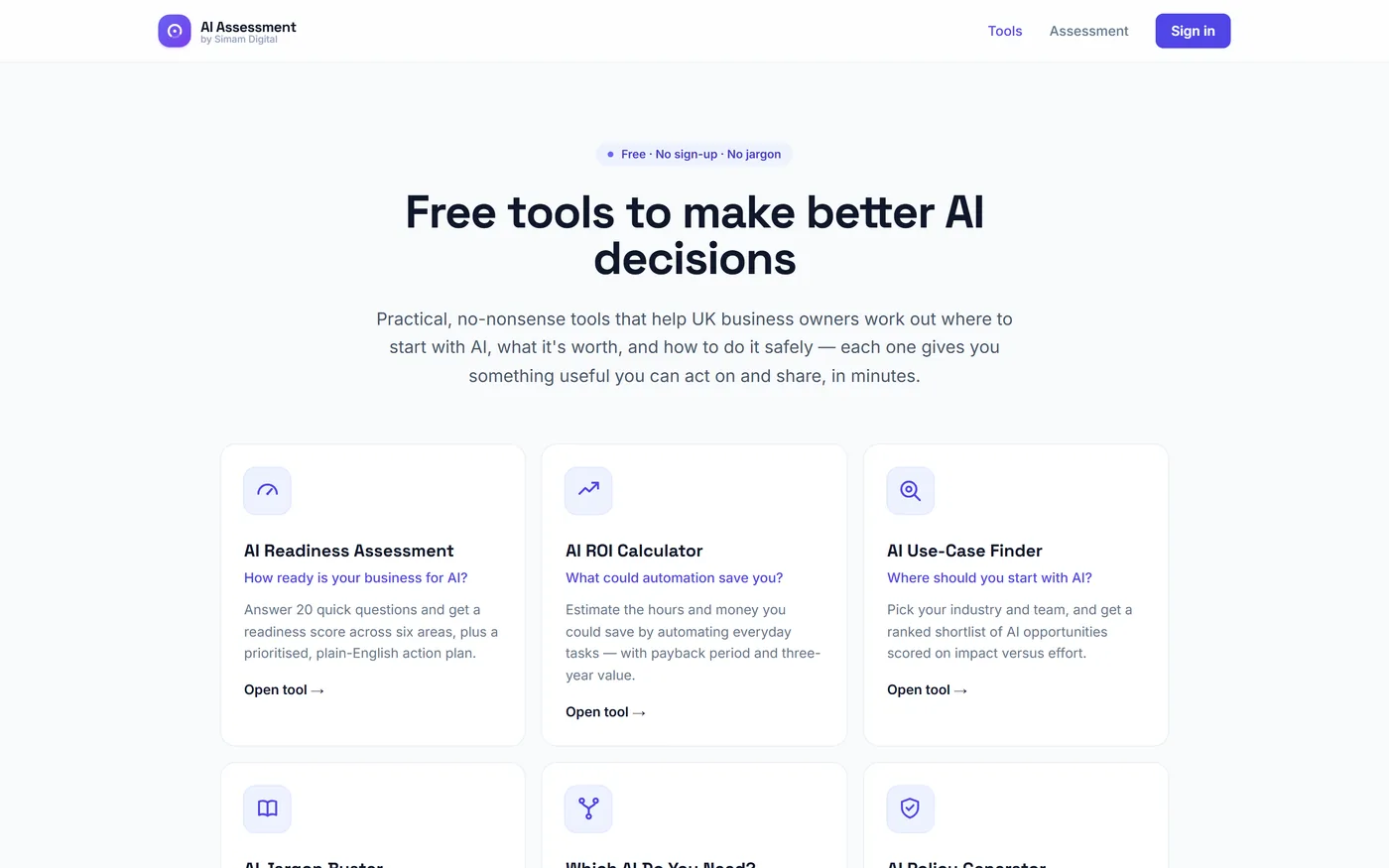
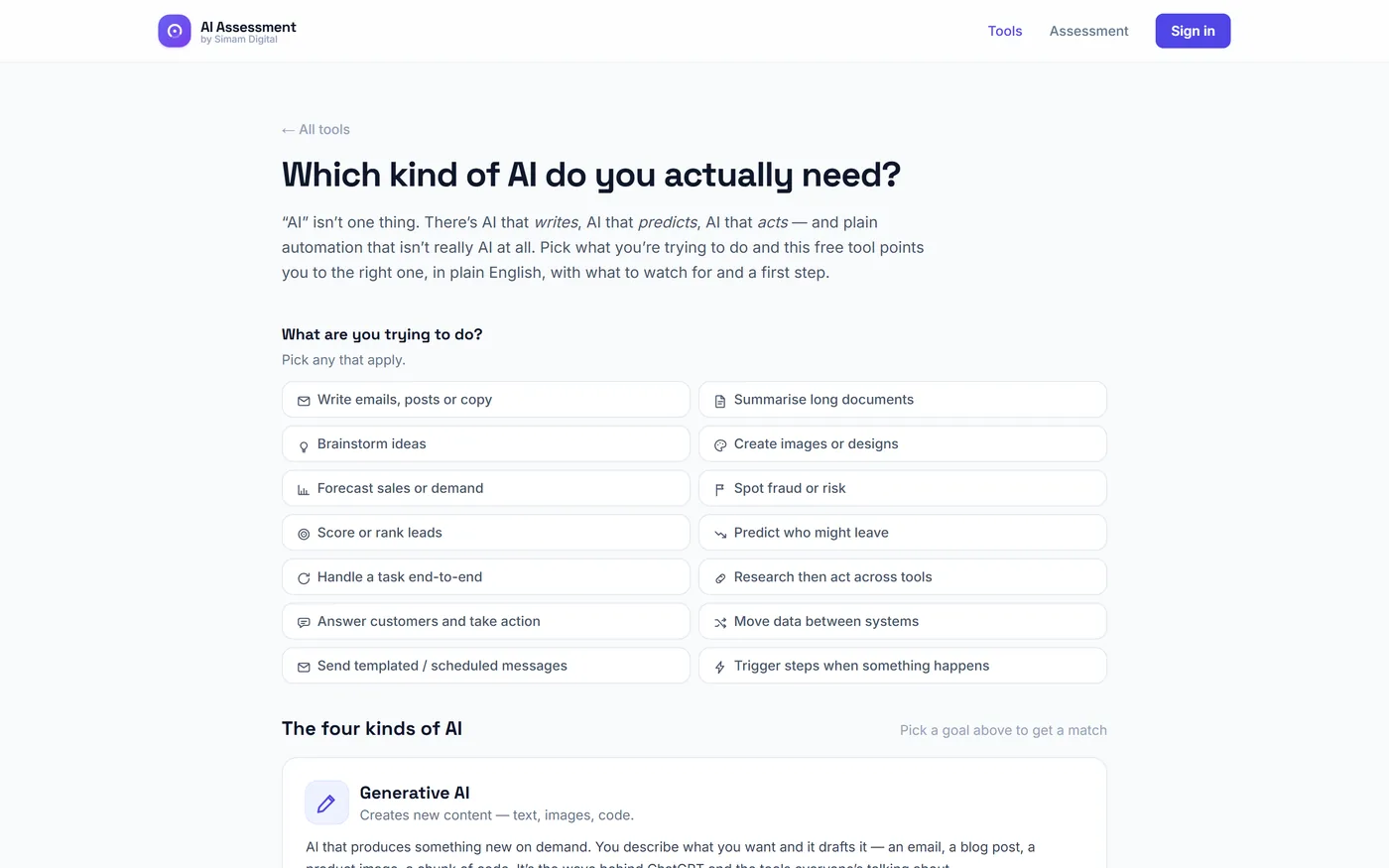
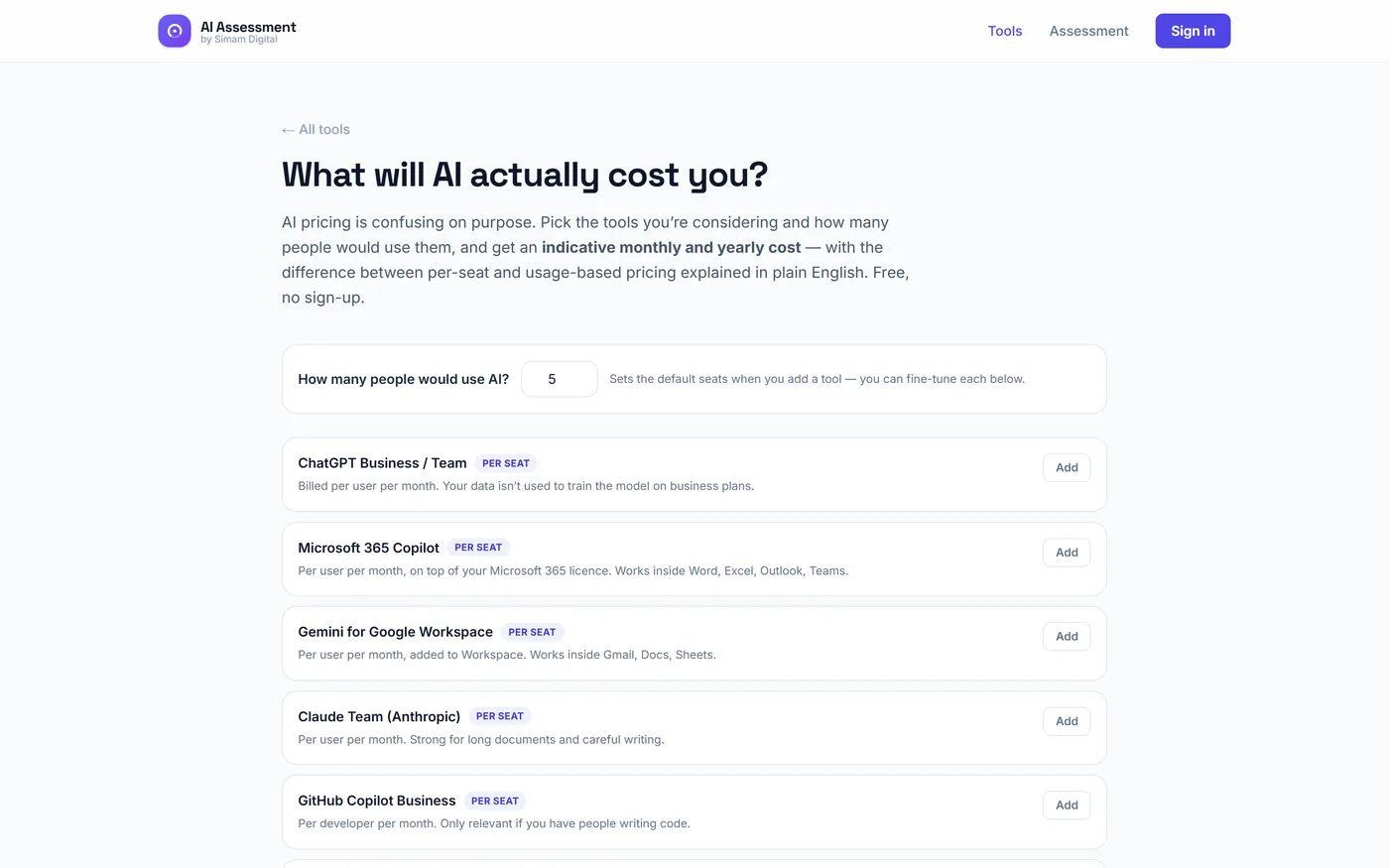
Every frame below is a real screenshot of the live tools, captured on 18 August 2026. The readiness result is a genuine completed run, driven through all twenty questions.
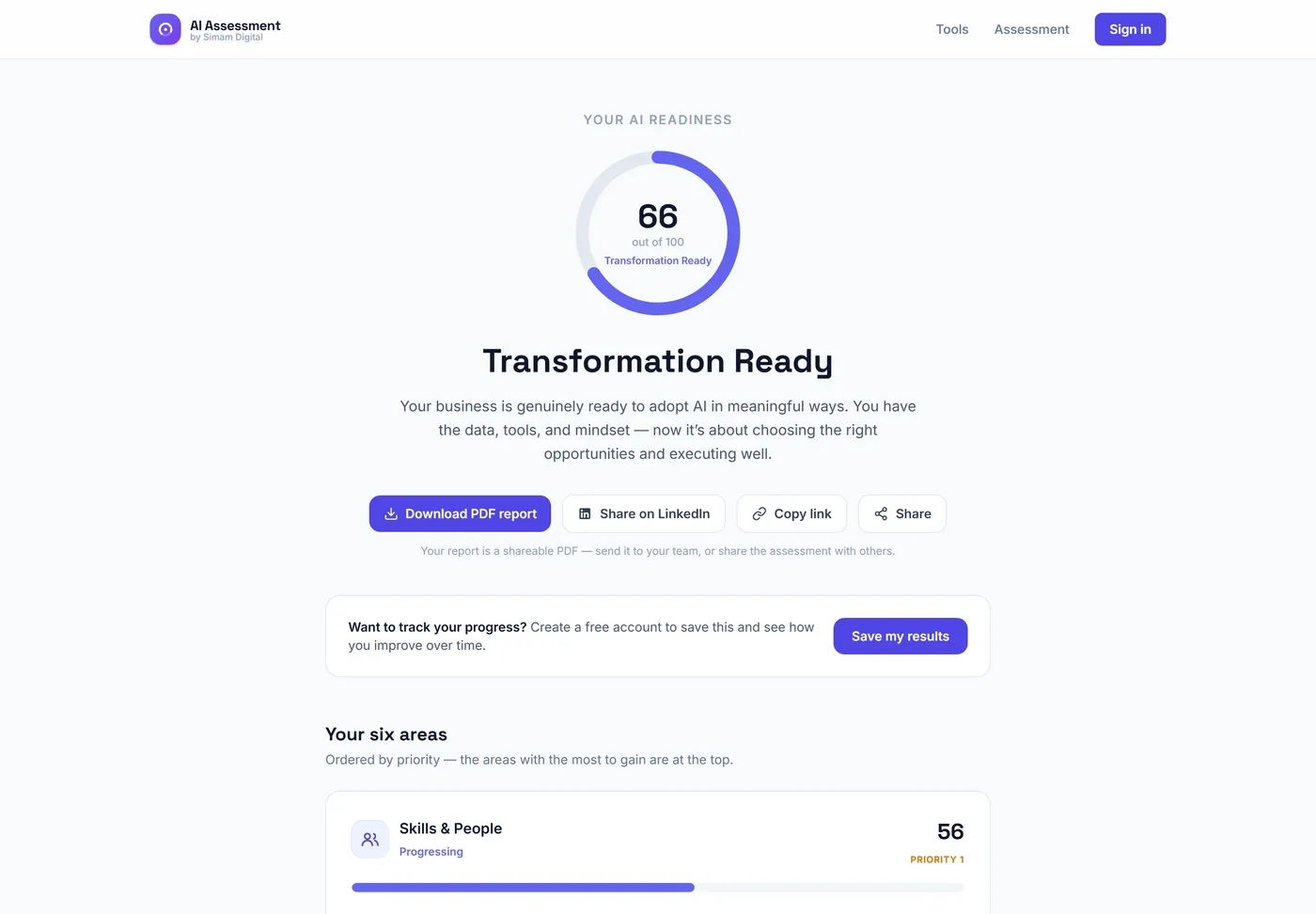
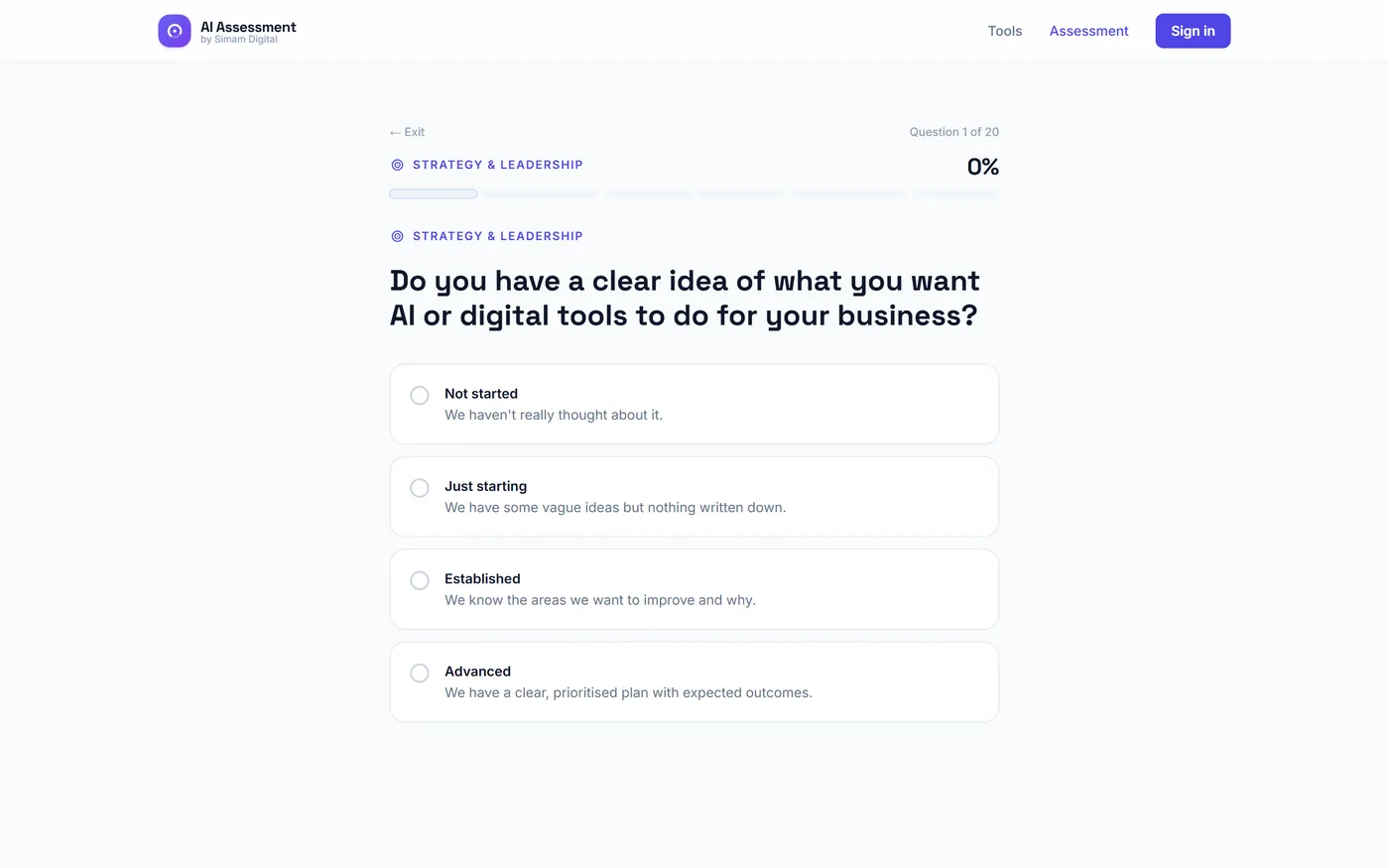
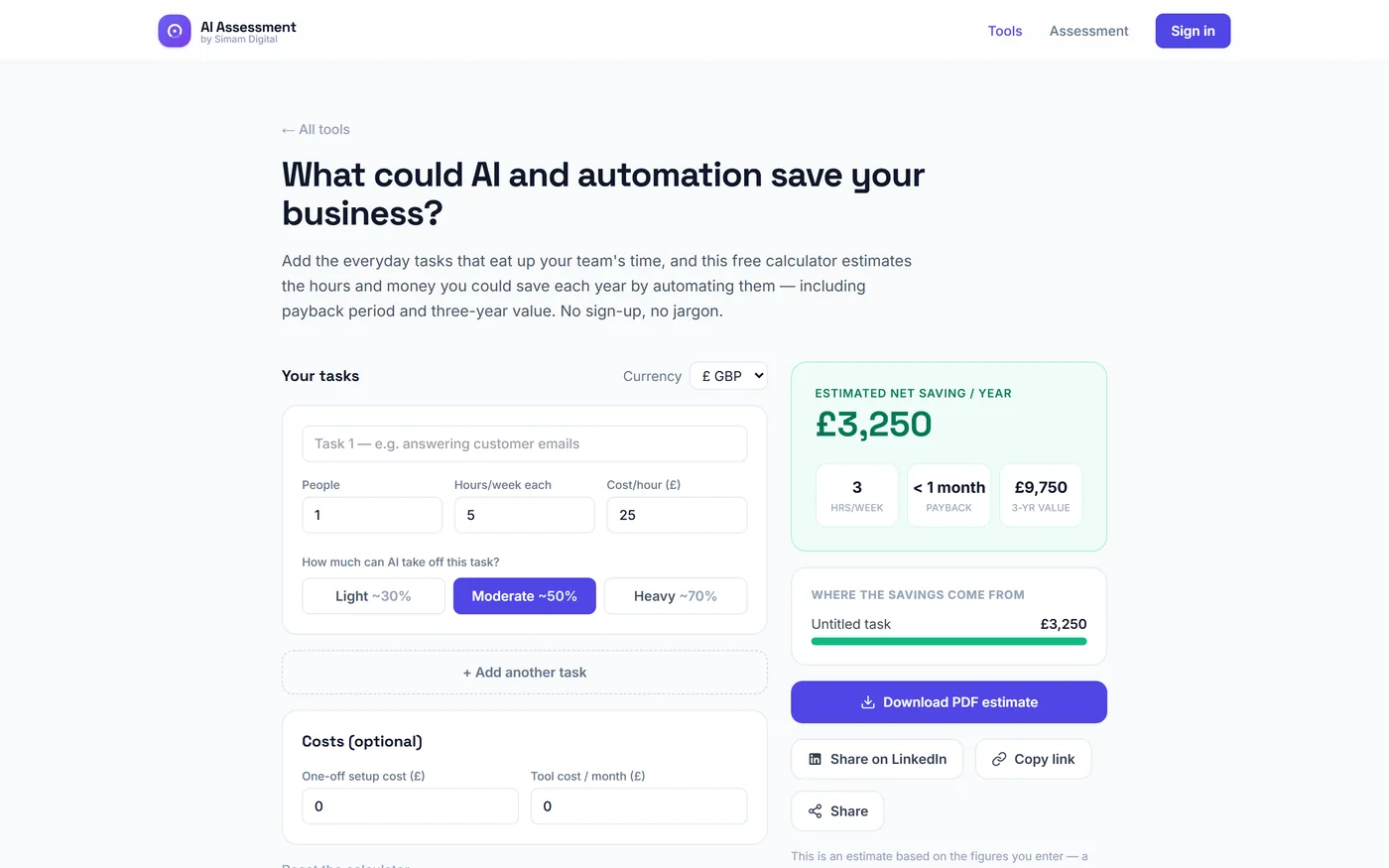
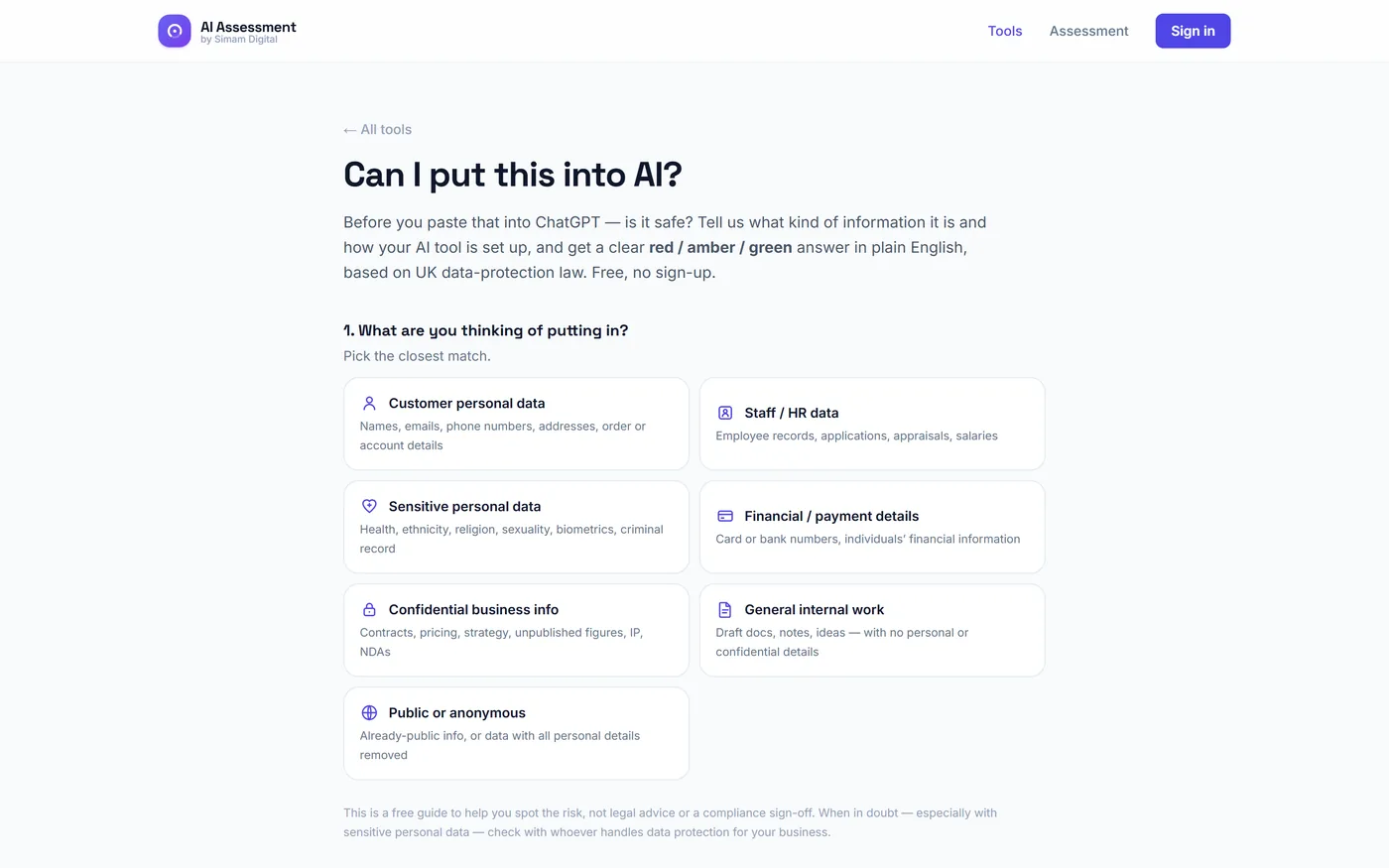
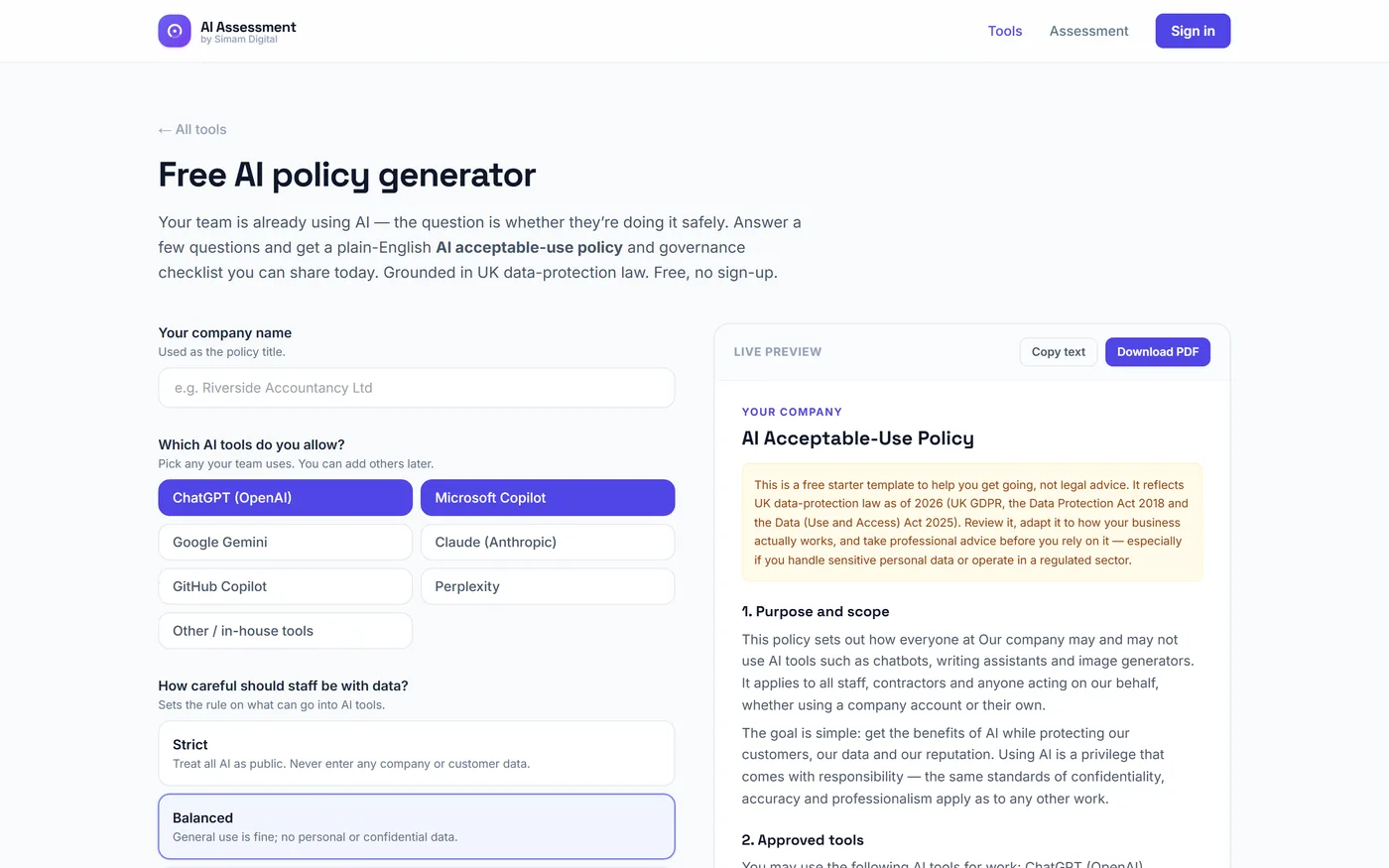
What this proves: a lead magnet does not have to trade usefulness for reach. Removing the form wall means far more people reach the value — and the value is where trust is actually built.
UK SMEs know AI matters. Very few know where they stand, what it is worth, or whether what they are about to do is legal.
“Are we behind?” is a feeling, not a starting point. Without a score against named areas there is nothing to prioritise and nothing to argue about at a management meeting.
Most agency lead magnets put a thin PDF behind an email form. The form filters out most of the people who would have found the value, which is exactly backwards.
The question business owners actually ask is whether pasting a customer list into a chatbot will get them in trouble. Almost nothing answers that in plain English against UK law.
Each one is written for a non-technical business owner: no jargon that is not immediately unpacked, and every screen ends with something concrete to do next.
Twenty plain-English questions produce a score across six areas — strategy, data, tools, skills, process and governance — then a prioritised action plan with concrete next steps per area.
Add the tasks that eat your team’s week and get an estimated annual saving, payback period and three-year value, exportable as a PDF estimate.
Pick an industry and the team you want to help, and get a ranked shortlist of opportunities scored on impact against effort.
A searchable glossary across six categories, each term carrying a plain analogy and a line on why it matters to your business rather than a dictionary definition.
A goal-picker that tallies to a best-fit recommendation across the four types, with what to watch for and a concrete first step.
Answer a few questions and generate a starter acceptable-use policy and governance checklist you can circulate to your team.
Before anyone pastes customer data or staff records into a chatbot: a plain-English verdict grounded in UK GDPR, with what to do instead.
Pick the tools under consideration and a team size for an indicative monthly and yearly cost, with per-seat, usage-based and bring-your-own-key pricing explained plainly.
Ready-to-use prompts for everyday business tasks — job ads, customer replies, social posts, meeting notes.
Four decisions do most of the work here, and each one is the reason a later problem never happened.
Adding a tool is a data entry, a component and a route. Nothing else.
Every tool inherits the same page shape: an SEO hero, the interactive body, share buttons, cross-links to the other tools and one consistent call to action. That is why nine tools feel like one product rather than nine microsites — and why the tenth will ship faster than the ninth. The brief for this project described five tools; nine are live, which is the spine doing its job.
Everything runs client-side. There are no model calls at runtime.
That makes the suite fast, free to operate at any traffic level, and private — a user’s answers never leave their browser. A lead magnet that costs nothing per visitor is one you can promote without watching a meter. It also means the privacy claim on the GDPR checker is structurally true rather than a policy promise.
Per-tool metadata, a hub that interlinks everything, and copy written as the questions people actually type.
The tools are named after the question, not the technology: “Where should you start with AI?” rather than “capability matrix”. Each tool page is a landing page in its own right and links laterally to the others, so arriving on any one of them leads to the rest.
One visual through-line: the readiness gauge.
The score ring, the six area bars and the progress meter all fill up, so the assessment visibly calibrates as you answer and the result screen completes a gesture the form already started. It reads as polished rather than templated, and it respects reduced-motion preferences completely.
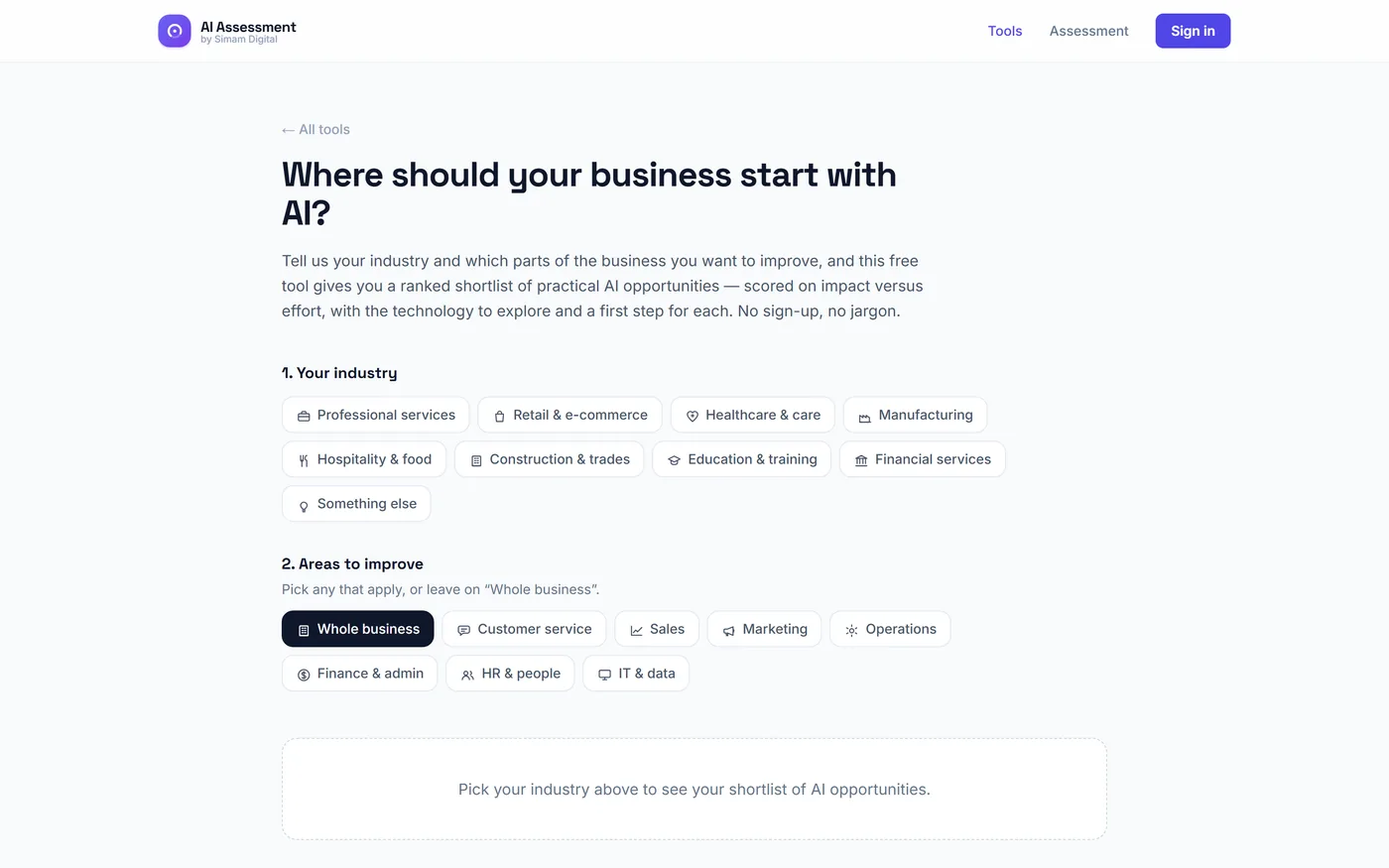
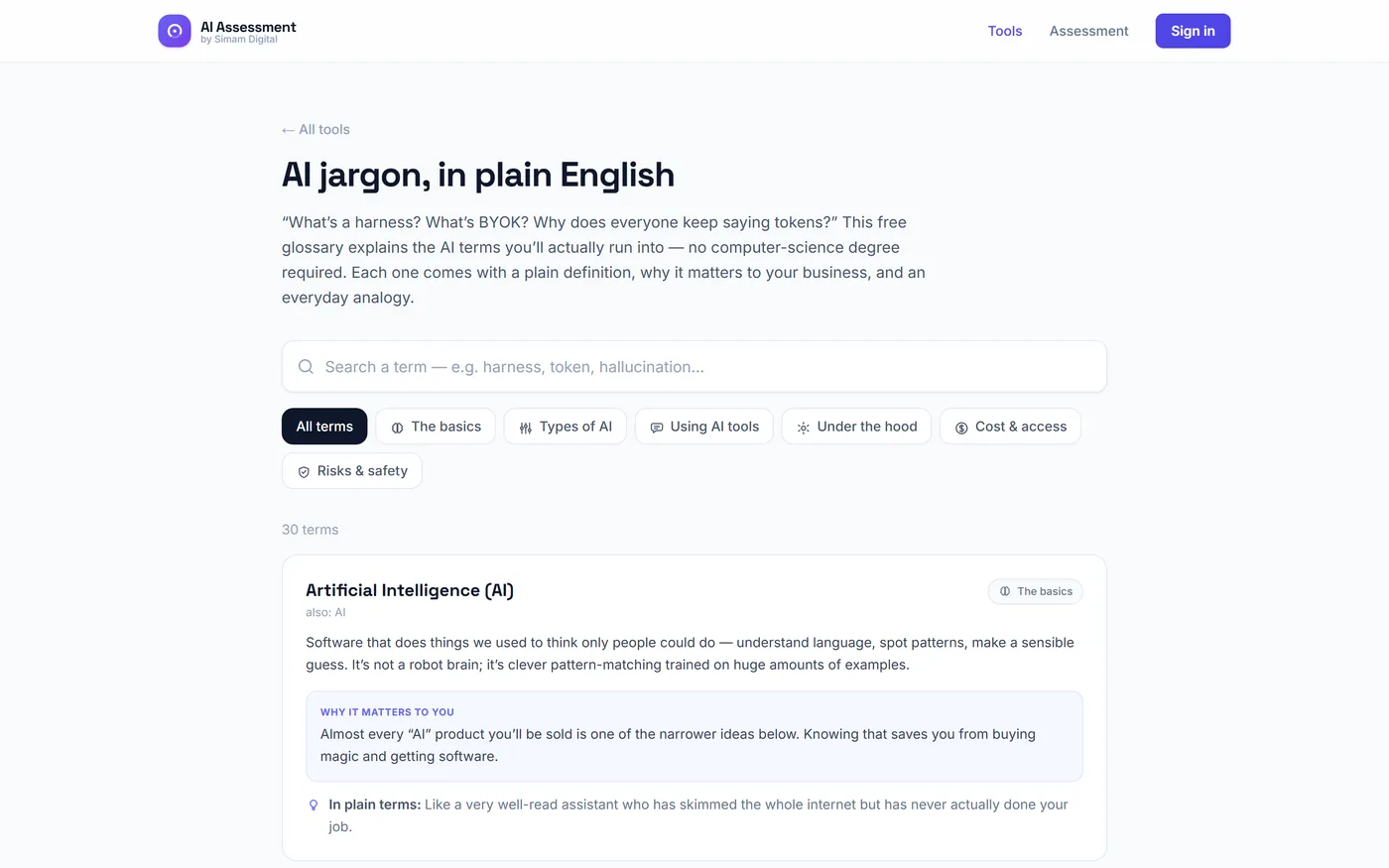
The commercial argument is not that the tools are free. It is that free, ungated and genuinely useful changes who arrives and what they already know.
Far more people reach the value, and the value is where trust is built. A visitor who never got past a form learned nothing about whether we are any good.
People send these to a colleague and come back to them, so the suite keeps working without ad spend. That is only true if the tool is worth the send.
Someone who completes the readiness assessment and reads their action plan has already articulated their gaps and priorities. The soft call to action lands on a warm, informed reader — and hands them on to the deeper strategy platform.
These are decision aids, not advice, and the difference matters enough to say plainly.
The ROI and cost tools produce an estimate from the figures you enter. That is not financial, legal or tax advice, and it is not a quotation. No investment or hiring decision should rest on a tool result alone.
The red, amber and green verdict is a plain-English starting point grounded in UK GDPR. It is designed to stop an obvious mistake, not to replace your DPO or your solicitor on a genuinely borderline case.
We can evidence what the tools do and how they are built. We are not publishing traffic, completion or conversion numbers, and we would rather say so than imply figures we have not shown you.
Someone who has run the readiness assessment and wants to plan a whole transformation programme needs more than a score. The Simam AI Strategy Hub is the deeper platform: regional market data across eight markets, grant routes, roadmap and architecture tooling, and token cost modelling. It is also free, and it is where the free tools deliberately hand off.
A concise record of what the project set out to prove, the evidence available today, and the next responsible investment step.
The pattern transfers. A small set of genuinely useful, ungated tools built on a shared spine will outperform a gated PDF, and will keep working without ad spend. We can scope the three worth building for your sector.