Your venue, turned into something people play.
We capture your building in 3D, then build a visitor experience on top of it. It opens in a browser, on a phone or on a screen at your entrance. There is nothing to install and nothing to lend out.
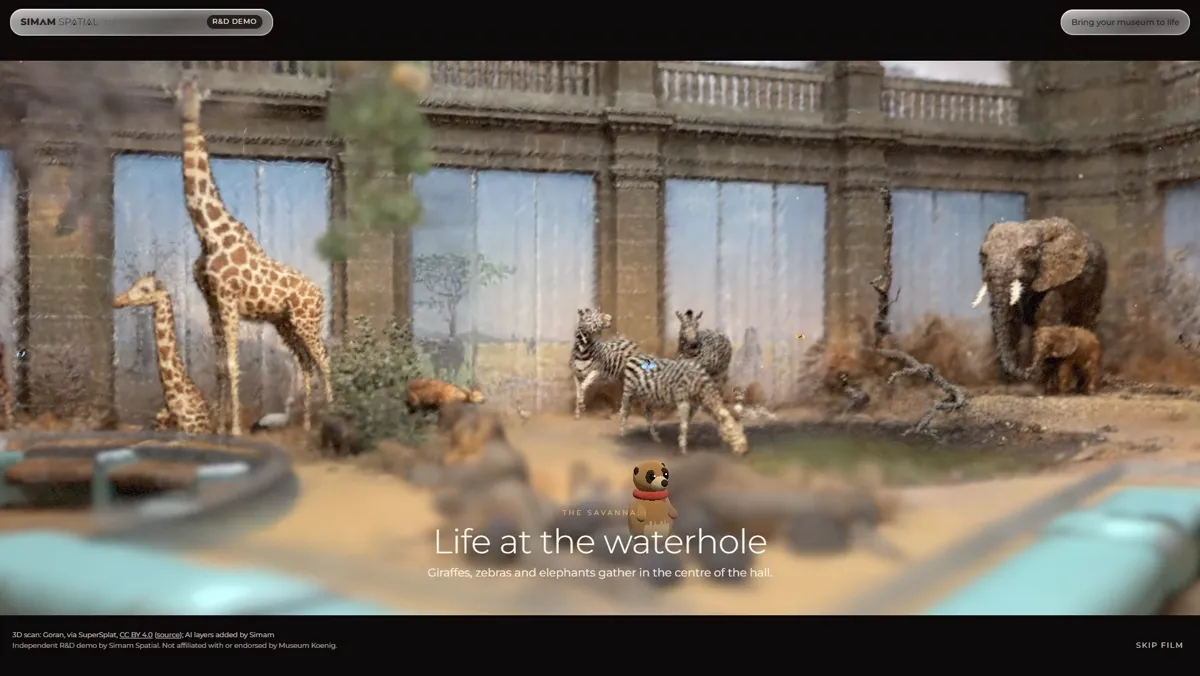
Four reasons, and they are all about your visitors.
They stay longer, and they come back
A visit becomes something to finish rather than something to walk past. The film, the cards and the trail give a family a reason to keep going, and a reason to return with somebody else.
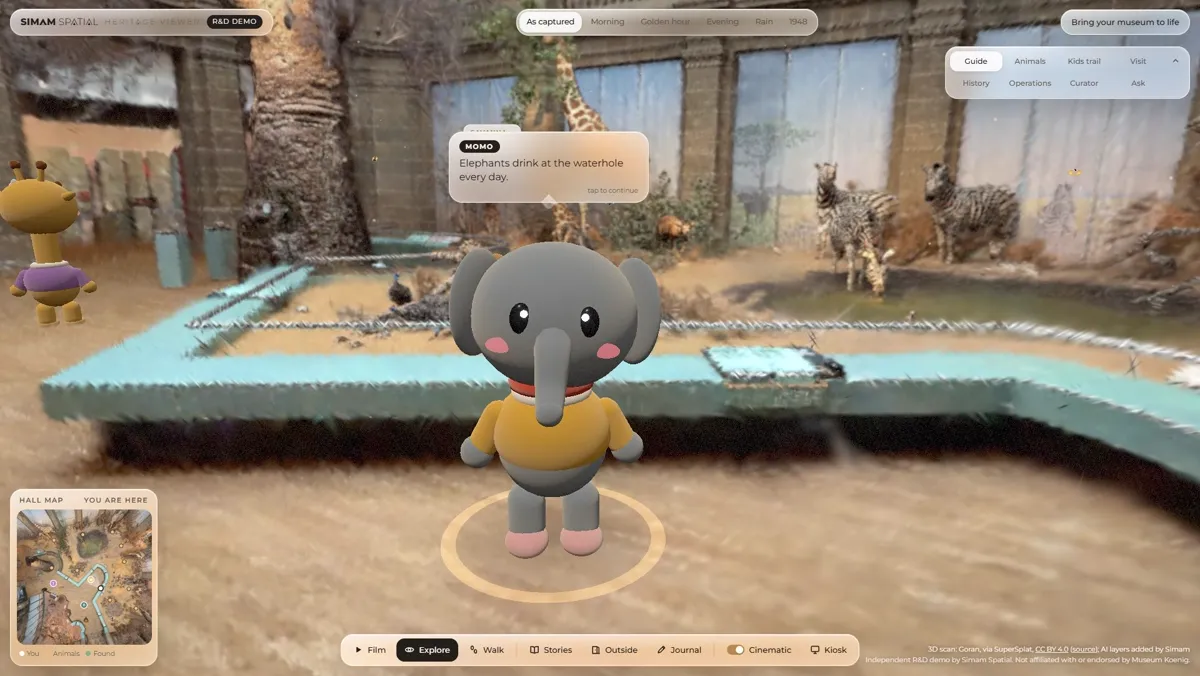
It travels on its own
A link works in a post, a story, a newsletter or a QR code on a poster. People who have never been to your venue can look round it from a phone, then come.
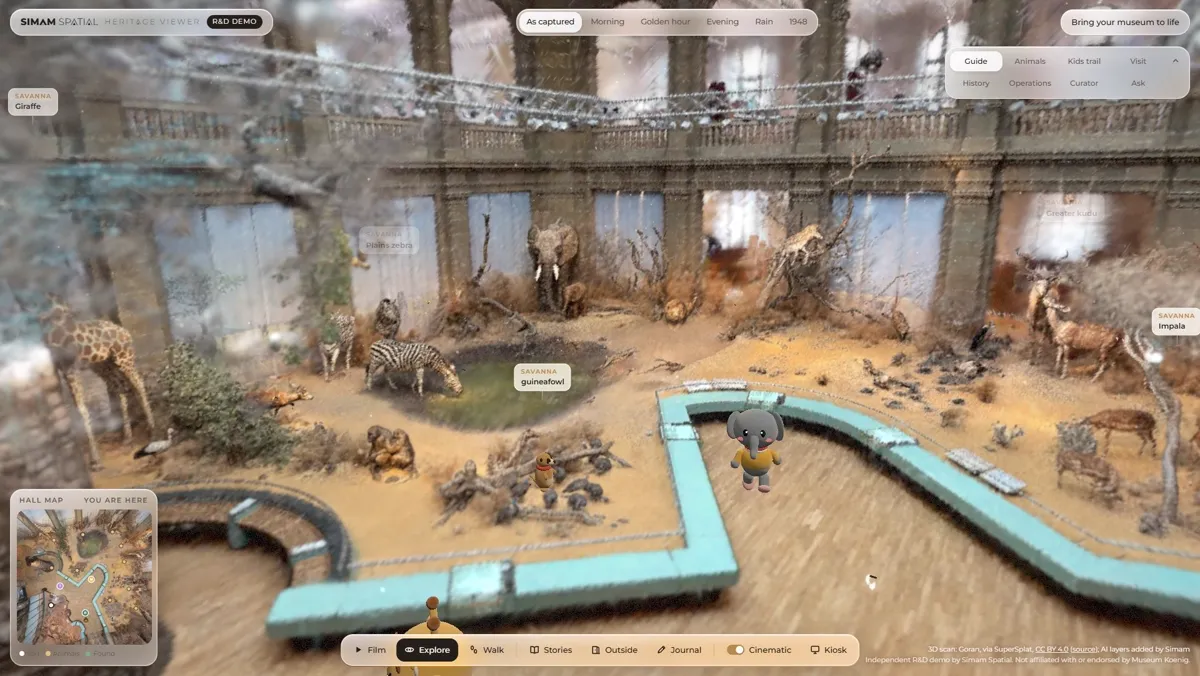
A screen on your floor, not an app on theirs
Kiosk mode puts the whole thing on a touchscreen at the entrance or beside an exhibit. No app to install, no leaflet to reprint, and you change the words yourself.
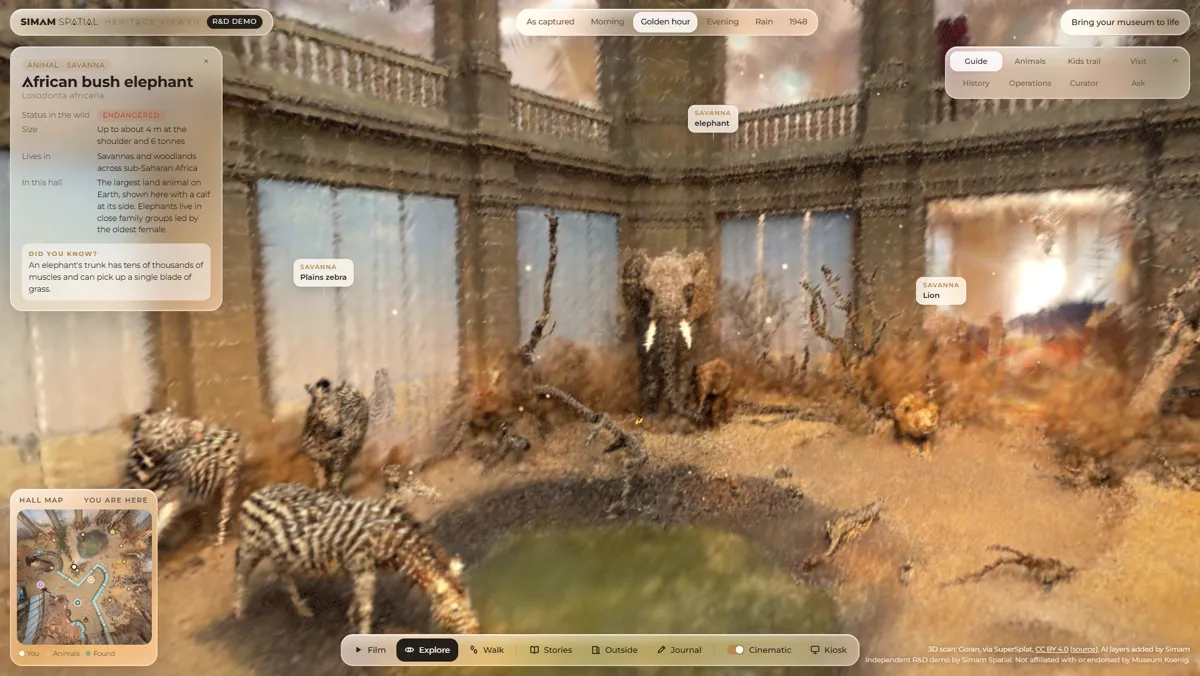
Children play, and adults get to read
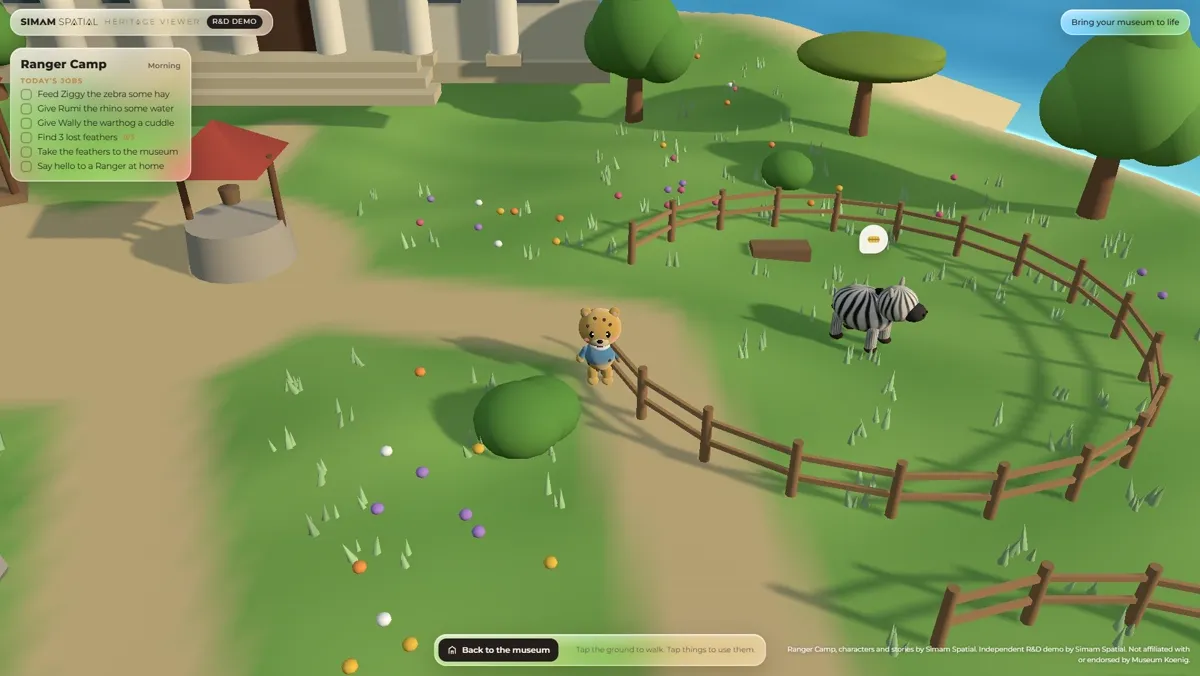
A trail with quizzes, a journal, a colouring page, a hide and seek game and an outdoor camp where children look after animals. The youngest visitor is occupied, so the oldest one gets to look.
One capture. Everything below runs on it.
- A cinematic film that introduces the place
- Pop-up cards on the exhibits, in your own words
- Guide characters who walk through the space and talk
- A children's trail with quizzes, a journal and colouring
- A hide and seek game through the hall
- A pop-up storybook built from the scan
- An outdoor camp where children look after animals
- Kiosk mode for a touchscreen on your floor
- A lighter 3D chosen automatically on phones
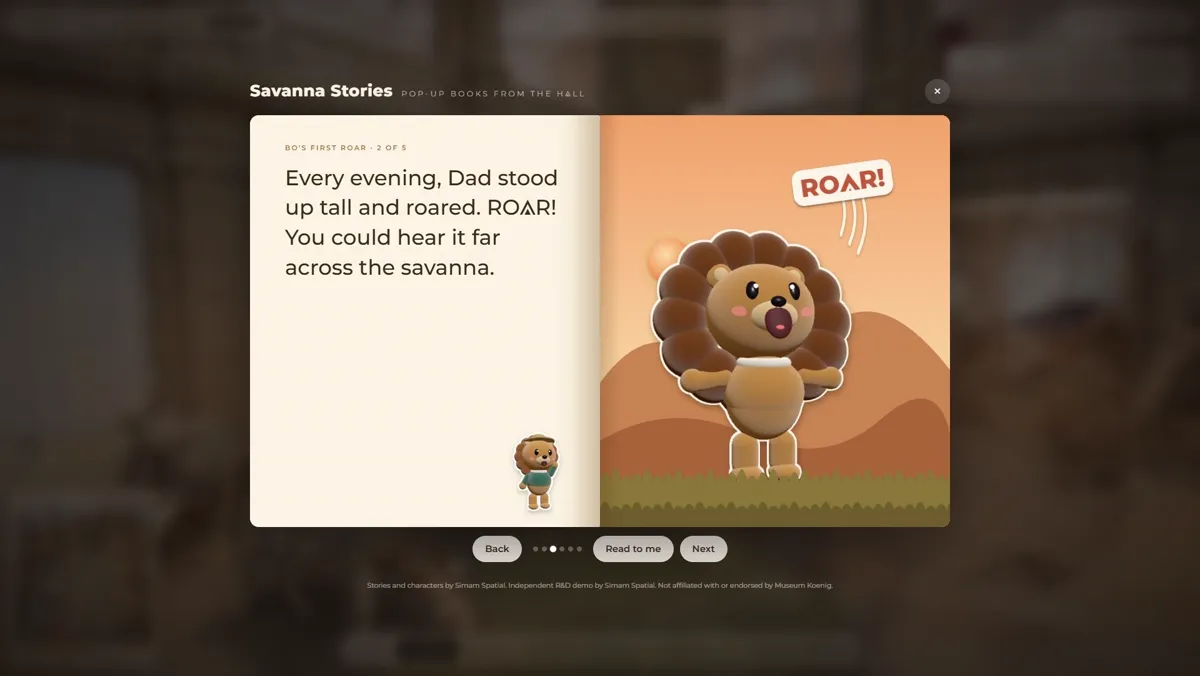
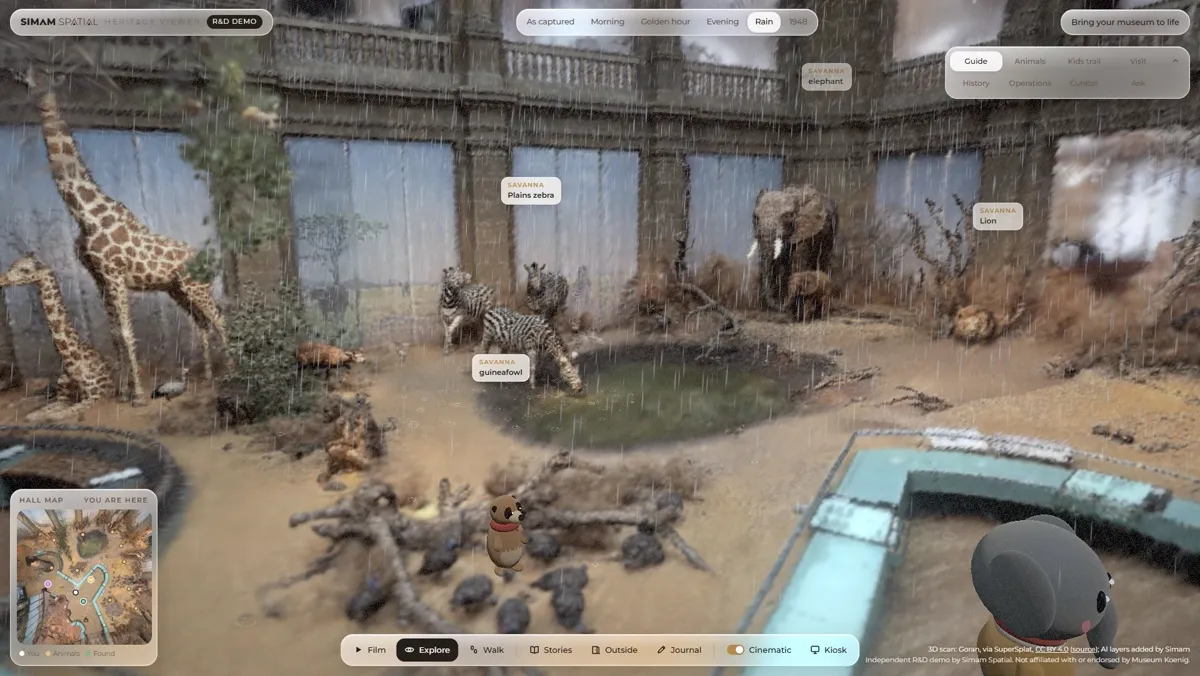
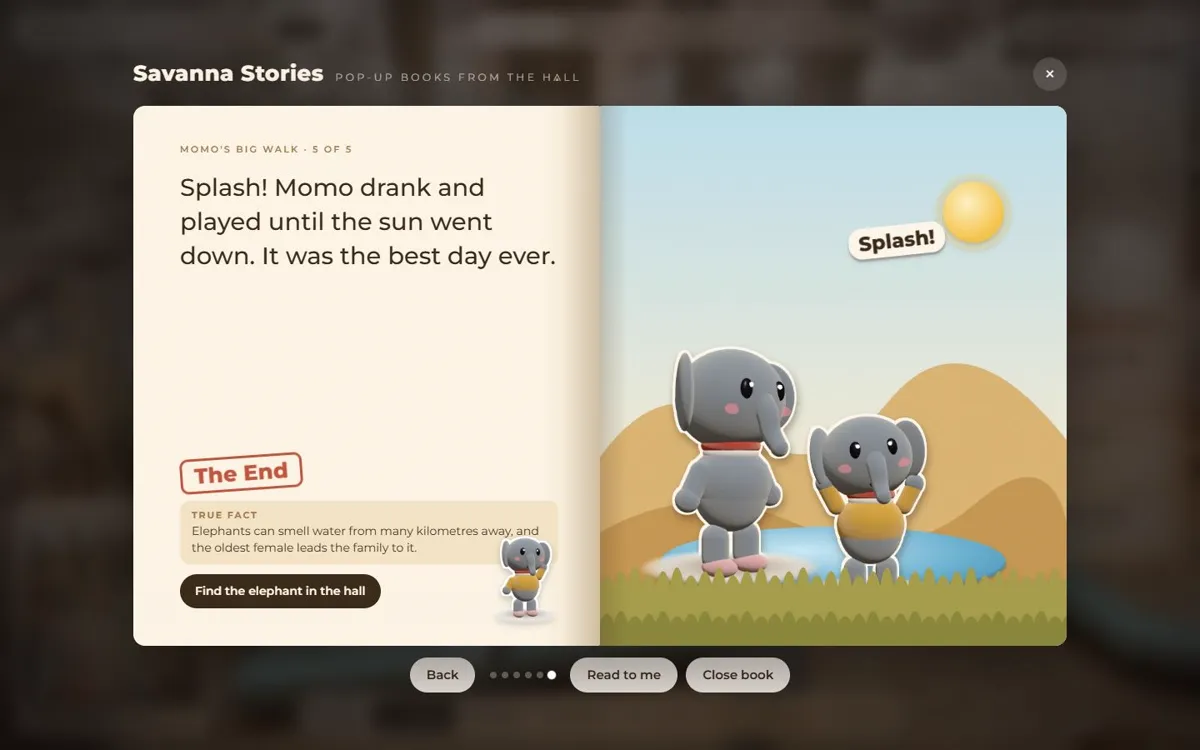
Your scan, your exhibits, your words.
The demo on this page runs on an openly licensed scan of a natural history hall. Yours runs on a capture of your own venue, with your exhibits, your text and your branding. We fly or walk the space, process it, and build the experience on it.
Our own R&D demo, not a client project. 3D scan by Goran, published on SuperSplat under CC BY 4.0. Original scan. Changed by Simam Spatial: the AI layers, characters, stories and effects are ours. Independent R&D demo, not affiliated with or endorsed by the museum whose hall was scanned.