The ground as it is
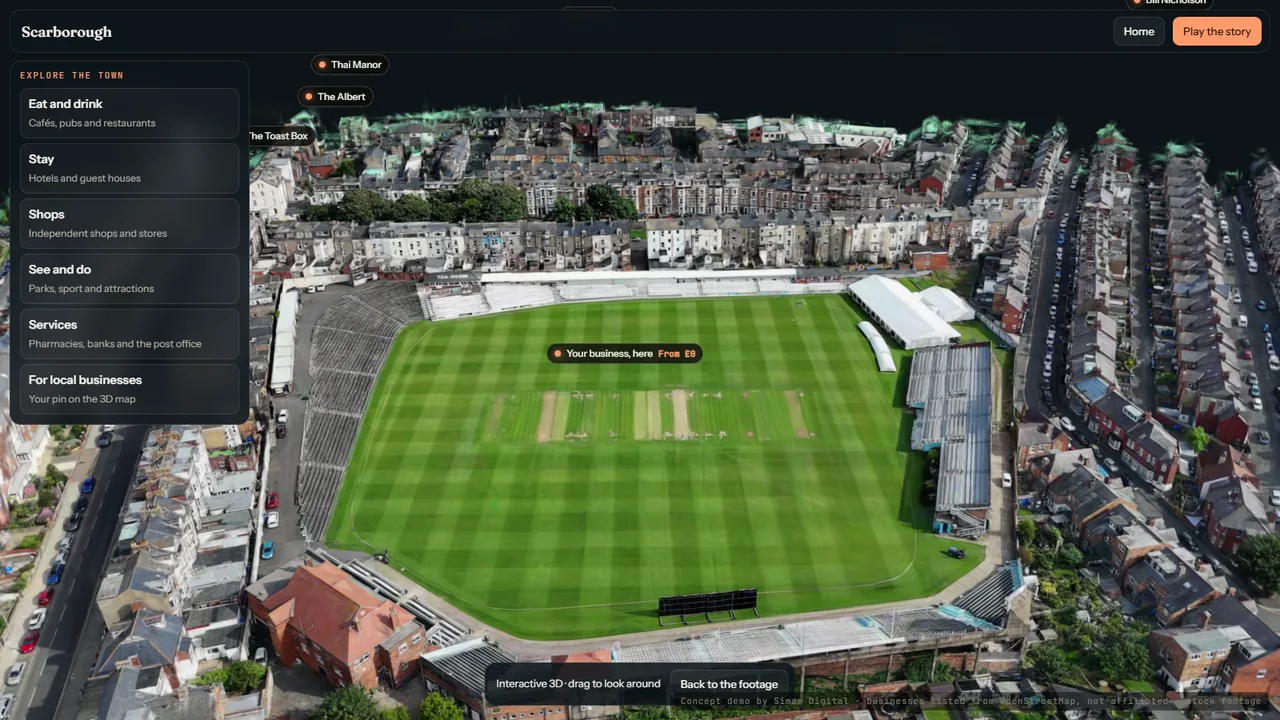
The district rebuilt from the air, so the starting point is the real place rather than a massing block on a white background.
Objections arrive late because a drawing is not a thing most people can read. This is the real ground, with the proposal placed on it, seen from the viewpoint somebody actually has, opened from a phone without an account.
The people who take part in a consultation are the people who already know how to. Everybody else sees a notice on a lamp post, a plan they cannot read, and a deadline, and the first time they really understand the scheme is when it is being built.
Four things, and a client can open all of them from one link.
The district rebuilt from the air, so the starting point is the real place rather than a massing block on a white background.
What is being proposed, placed on that ground, seen from the pavement, the park or the window somebody actually looks out of.
A QR code on the site notice and a link in the letter, arriving in a browser with no app and no account to make.
The same capture is a dated record of the district, which keeps its value long after the consultation closes.
It carries the authority’s own branding and sits where residents already expect to find planning material. Where a developer or a consultant is running the engagement we work behind them, and the caption says which part is whose.
Every figure here is published somewhere you can open and check. Where we have no figure, we say that instead.
Start where the engagement is hardest rather than where it is easiest, because the easy one proves nothing.
The district from the air, the proposal on it, and the viewpoints that residents actually raise.
A QR code and a link, under your branding, with the responses arriving where they already arrive.
Nothing here asks for a budget. Planning and councils, with the evidence.
Neither. It opens in a browser from a QR code or a link, which is the only way the people who do not already engage will ever open it.
No. It is for understanding and engagement. The determination runs exactly as it runs now.
Yes, and it should. It needs to look like the authority’s own material rather than a supplier’s.
Good to a few per cent, which is right for understanding a scheme in its setting. Where a figure has to be exact, the surveyed figure rules and we say so.
Yes, and that is often how it happens. We work behind whoever is running the engagement.
Partner terms are agreed per relationship rather than off a rate card. Where we quote a starting figure it sits on the page for that service, and that is where a conversation about yours begins.
We will walk you through one that is already built, on a real district, before anybody writes a brief.