Height changes everything
The ninth floor and the twenty-ninth are sold off the same plan and the same photographs, and they are not the same home.
One slow arc past a block beside a park, filmed by somebody else and bought off the shelf. Nine minutes and thirty seven seconds later there was a 3D of that block in a browser, with every flat in it on its own floor and its own side of the building, and a search that could pick out the trees. This was the first apartment finder we built and it is still the one people understand fastest.
Photographs are taken in the best flat on the best morning, and a floor plan prints the same rectangle whichever way it faces. Neither answers what somebody actually wants to know before they commit, which is what this home, on this floor, on this side, will be like to stand in and look out of.
The ninth floor and the twenty-ninth are sold off the same plan and the same photographs, and they are not the same home.
Light, noise and what fills the window are set by which way the flat faces, and that is the one thing a plan cannot print.
Buyers want to know what they will hear and what they will look at, and that lives outside the building rather than inside it.
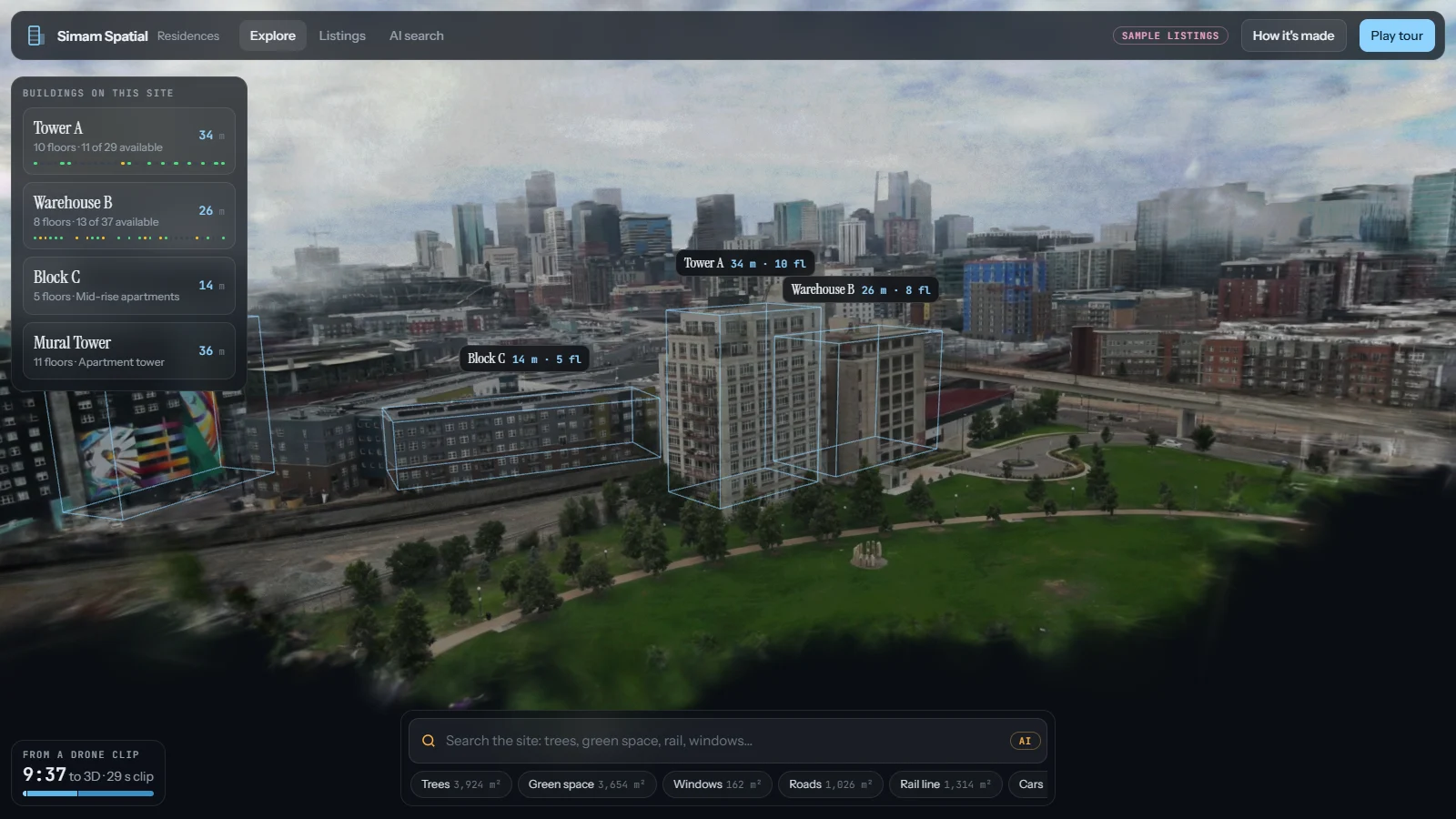
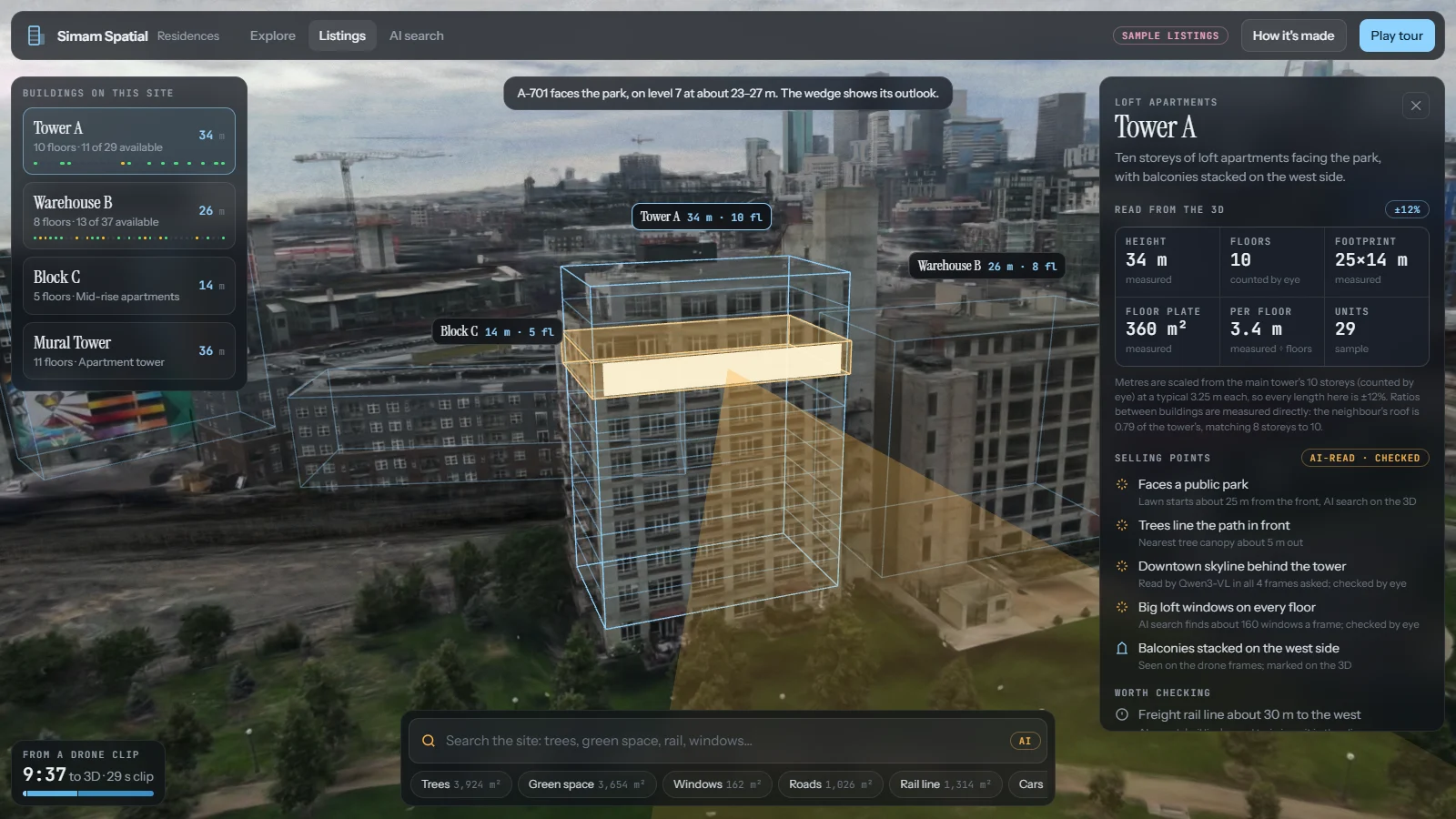
Each of the 112 sample homes sits on its real floor and its real side of the building, with its type, its aspect and what it looks out on.
A buyer who picks a flat in the 3D can step into the layout that matches it rather than reading a dimension off a drawing.
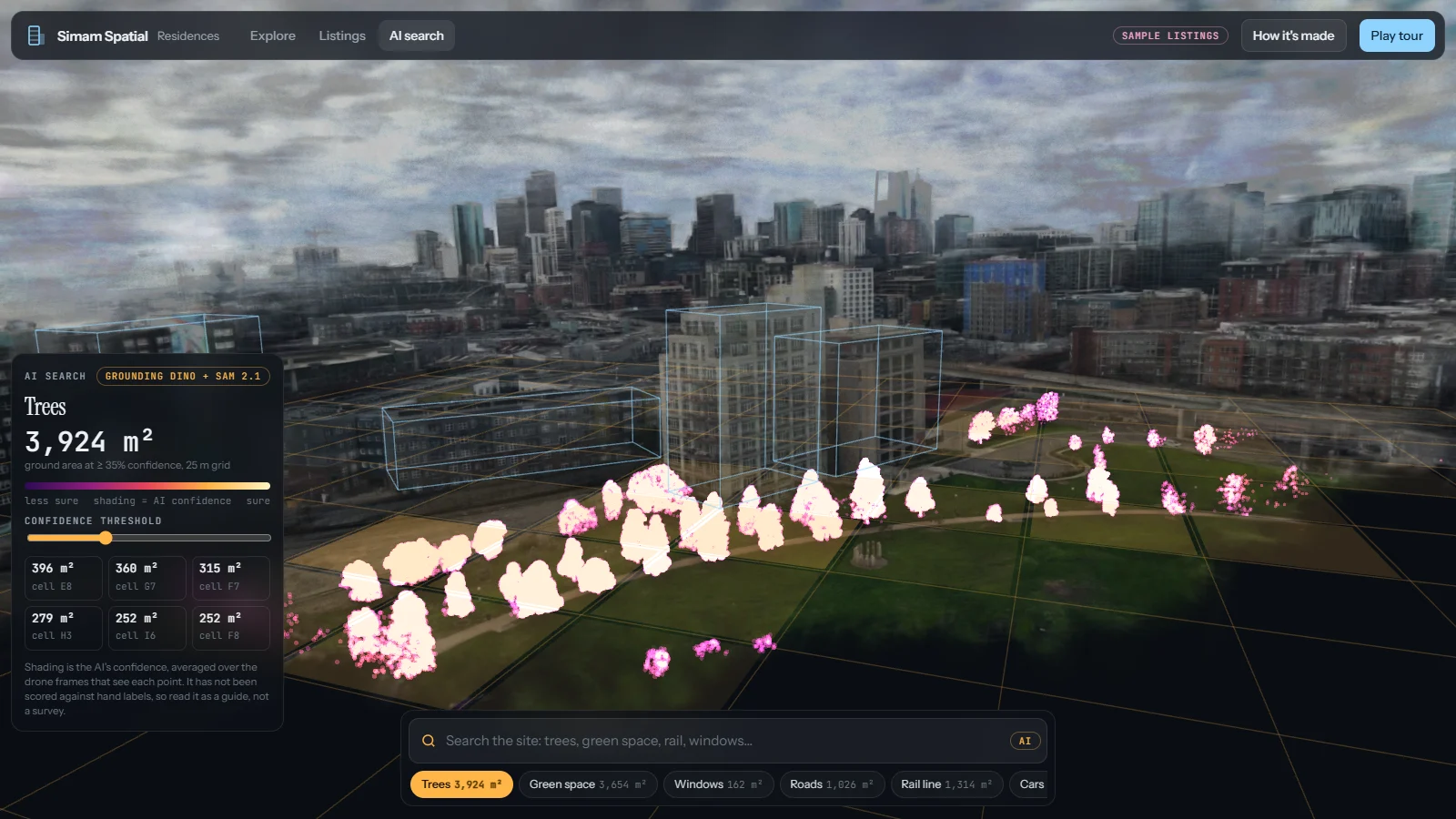
Ask for what you care about and the 3D shades where it thinks that thing is, so a buyer can find the quiet side without walking it.
It opens in a browser on a phone, a laptop or a screen in the office, and it sends as a link rather than a download.
The clip was twenty nine seconds long and nobody flew it for us. Three steps run between that clip and a 3D somebody can open, and all three were timed.
In a separate build from a single straight line flight past a tower, all 159 frames placed and the picture match came out at 33.2 dB, which is a good score. The 3D was still flat. The drone had only swung 1.9 degrees around the building, so nothing had ever seen round its sides, and no score can tell you that.
The measurement compares rebuilt pictures against the originals. It rewards a 3D that looks right from where the camera already was, which is exactly the thing a straight line flight gives you and exactly the thing a buyer does not want. We now check how far a flight travels around its subject before accepting footage at all. That one check has saved more rebuilds than any change we have made to the method.
The 112 homes, with their prices, their availability and their owners, are invented for the demonstration and say so on screen. No listing data of any kind went into it and none of these homes is for sale.
Heights are scaled by counting ten storeys on the main tower at about 3.25 metres each, which makes them good to about ±12%. A capture is a record rather than a survey. Where a figure matters commercially or legally the surveyed number rules, and nothing here replaces an inspection.
The search finds things by name and has never been scored against hand labels. Treat what it highlights as somewhere to look, not as a count you can rely on.
The footage is licensed stock. No client commissioned this, the building is not named, and the timings above are ours on one ordinary desktop rather than a promise about your site.
The useful part was never the 3D. It was the route from a few minutes of ordinary footage to a buyer on a phone opening the exact home they are being sold. Tell us what people need to understand and we will tell you honestly whether footage can carry it.
Tell us where the place is, or send us a clip you already have, and we will come back with what it would take and what it would cost, in the same reply. There is nothing to pay to find out.