Campaigns needed active participation
The client needed a more engaging format than a landing page, video, or static campaign asset. The experience had to give users something to do, explore, collect, complete, or share.
Interactive commissions for client campaigns where the goal was to create playable engagement, branded worlds, and simple game loops that audiences could explore rather than passively watch.
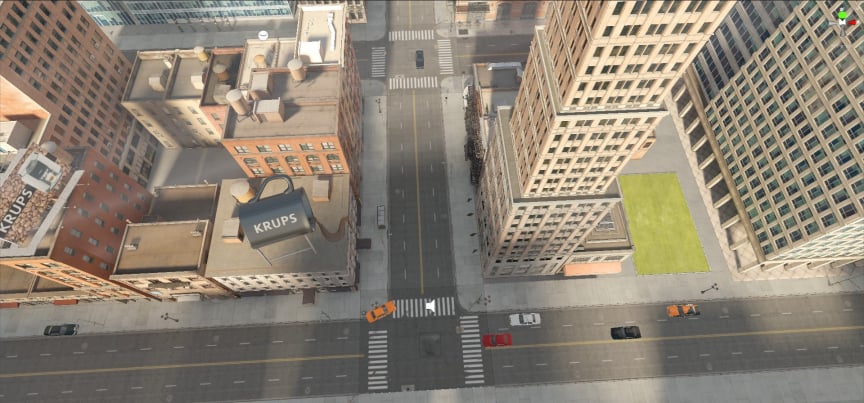
This case study is written to protect confidential client details while still showing the type of commercial problem, product thinking, and delivery contribution involved.
The client needed a more engaging format than a landing page, video, or static campaign asset. The experience had to give users something to do, explore, collect, complete, or share.
Created playable spaces and interaction flows around branded objectives, navigation, collection, discovery, and lightweight progression suitable for campaign-style use.
Worked across scene setup, gameplay logic, UI flow, environment interaction, performance considerations, and the practical delivery details needed for client review.
The commission translated a brand or campaign idea into a working interactive format that could be tested, demonstrated, and refined around audience behaviour.
The hard part of a gamified brand commission is not building the world. It is giving people a reason to stay in it for more than forty seconds, and making sure the brand is the reason rather than an obstacle.
Attention is lost at the entrance, not in the middle. There has to be an obvious, low-effort first action — something to pick up, walk towards, or trigger — before any explanation, menu or brand message.
A single repeatable loop that is genuinely satisfying beats a scattering of mini-games. Collect, complete, unlock, repeat — the shape matters less than the fact that finishing it makes you want to go round again.
Logos placed on walls get ignored. Brand works when it is the material of the experience: the product is the thing you collect, the space is the store, the objective is the campaign idea. That decision is made in scoping, not in art pass.
These experiences run on whatever hardware the audience has, often a phone or a low-end laptop. Polygon budgets, draw calls, texture memory and load time are creative constraints from day one rather than an optimisation phase at the end.
Campaign reach comes from what people capture and send on. A moment worth screenshotting, a score worth arguing about, or something visibly rare does more for a campaign than a wider feature set.
Brand and agency work runs to a campaign date, which means scope has to be shaped around a fixed deadline rather than the other way round. These are the questions that decide the shape of the build.
Time in experience, completions, shares and returns all pull the design in different directions. Picking one primary measure early stops the build drifting towards whatever is most fun to make.
A platform-native teenage audience and a corporate stakeholder audience want almost opposite things. Most commissions have to satisfy both, and being explicit about which parts serve which is what prevents a muddle.
A launch tied to a campaign, an event or a product drop is immovable. That decides how much scope is safe, and it is the reason the loop gets built before the environment is finished.
A branded world built as a one-off costs the same as one built to be re-skinned for the next campaign. Deciding which you are buying at the start changes the architecture and usually saves money by the second activation.
Four failure modes turn up often enough to be worth naming, and all four are decided long before anything is built.
Campaign thinking often arrives as a story to be told. Interactive work has to be a thing to be done. Translating one into the other is the first job, and skipping it produces an expensive cutscene.
Every stakeholder review costs days. On a fixed campaign date those days come out of production, so the review schedule has to be agreed at the same time as the scope.
A world that runs beautifully on the developer machine and badly on the audience’s phone has failed. Target hardware is a creative constraint, not a QA item.
Getting an experience live, discoverable and promoted is separate work from building it. Commissions that treat launch as an afterthought reach a fraction of the audience they were scoped for.
What buyers usually want to know before commissioning this kind of work.
The commissions were delivered under NDA for brand and agency clients, so the client, campaign and commercial detail cannot be published. Screenshots can be swapped in when client-approved assets are available.
No. Roblox-style playable environments are one route; the same thinking applies to Unity builds, WebGL experiences that run in a browser with no install, and VR activations. The platform should follow the audience rather than lead the brief.
Campaign work is normally scoped to a fixed launch date rather than an open timeline. An interactive prototype or proof of concept starts from £2,800, and a branded, polished activation is closer to the £9,000 band upwards depending on world size and how much is bespoke.
Only if it was built that way. Re-skinnable architecture costs a little more up front and considerably less by the second activation, so it is worth deciding before the build rather than after.
Usually the agency or brand team, but it needs to be somebody’s job from the start. Discovery and promotion are separate work from development, and they are the most common reason a good experience underperforms.
For buyers, these projects show how Simam Digital turns unclear digital ambitions into testable software, interactive prototypes, and practical delivery paths. The focus is not novelty for its own sake; it is making a complex product, process, or experience easier to understand and act on.