Operational work was spread across tools
Teams needed to see tracking, status, incidents, assets, and planning context without jumping between disconnected systems or relying on static reporting.
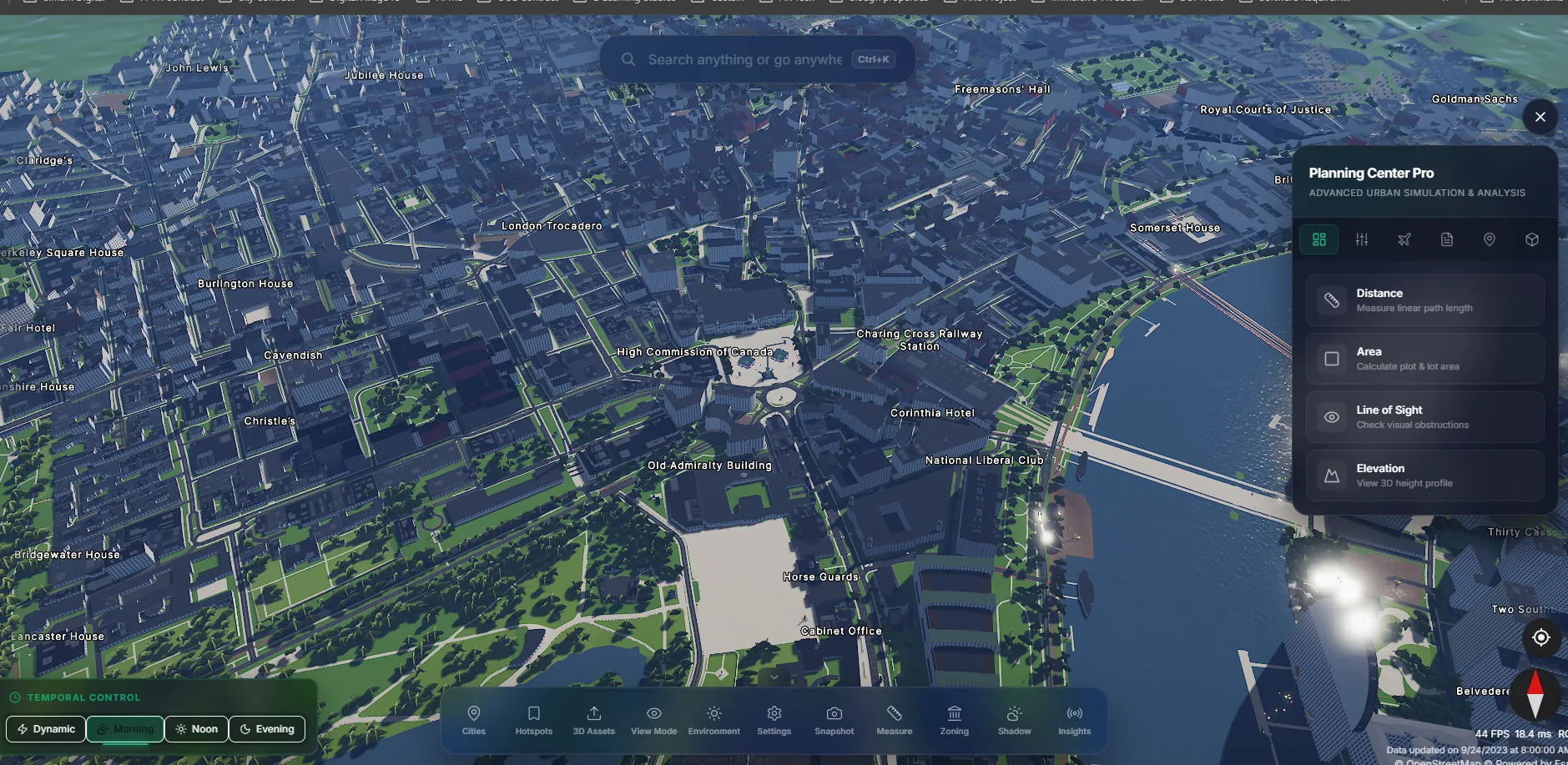
Focused software prototypes for operations teams that needed dashboards, alerting, planning views, and workflow clarity across complex real-world processes.
This case study is written to protect confidential client details while still showing the type of commercial problem, product thinking, and delivery contribution involved.
Teams needed to see tracking, status, incidents, assets, and planning context without jumping between disconnected systems or relying on static reporting.
Designed and implemented platform-style interfaces for visibility, monitoring, alerting, and planning support. Each prototype focused on the decisions users needed to make, not just the screens they needed to see.
Contributed across product scoping, interface architecture, workflow mapping, component delivery, integration assumptions, and data model planning.
The work gave stakeholders something tangible to test, discuss, and refine before larger engineering budgets or platform commitments were made.
Operations software is judged in a specific way: not on how impressive it looks in a demo, but on whether someone under pressure reaches for it instead of the spreadsheet and the phone. That shapes every decision in the prototype.
The first screen should answer the question the team actually opens the tool to ask — what needs attention right now. A landing page full of charts nobody acts on is the most common failure mode in operations software, and it is invisible until real users arrive.
Operations users scan before they read. Colour, position and grouping carry more of the meaning than labels do, and the difference between fine, watch this, and act now has to survive being seen from across a room on a wall display.
An alert that fires too often gets muted, and a muted alert is worse than no alert because everyone believes it is still working. Thresholds, grouping, acknowledgement and escalation belong in the prototype, not in a later phase.
Maps are useful when the question is genuinely spatial — where the vessel is, which section of road, which stand at the airport. Where the question is about status or sequence, a map is decoration that costs load time and mobile performance.
The data model has to survive fields that are sometimes null, timestamps in two zones, identifiers that do not match between systems, and a feed that goes quiet for an hour. Designing for that from the start is far cheaper than retrofitting it once a pilot exposes it.
Across airport, logistics, maritime and infrastructure work, the same small set of views does most of the work. Getting these right matters more than breadth of features.
One screen showing what is happening now, ordered by what needs a human. This is the view people leave open, so it has to stay readable and stay fast when the data volume grows.
The list of things that are not normal, with enough context attached that someone can act without opening another system. Acknowledgement and ownership matter as much as detection.
Everything known about one vessel, vehicle, stand, pump or site, including its recent history. This is where users go to answer “why”, and it is usually where the integration work concentrates.
The forward-looking and backward-looking views: what is scheduled, what happened last week, and the numbers someone has to present on Monday. Often the least glamorous view and the one that justifies the budget.
A prototype earns its speed by being honest about what it is not. On this kind of commission the following are usually stubbed, faked or postponed on purpose — and saying so up front is what keeps the timeline real.
A prototype can run with fixed roles. Real permission models are a serious piece of work and they are not what the stakeholder review is testing.
One or two live connections prove the approach. The rest can be realistic sample data, provided everyone knows which is which.
Settings screens absorb a surprising share of a build and answer no open question. They belong in the production phase.
Performance work should target the volumes the pilot will actually see. Optimising for a load nobody has measured yet is guessing with a budget attached.
What buyers usually want to know before commissioning this kind of work.
The commissions were delivered under NDA, so the client, sector specifics and commercial detail cannot be published. What can be described is the class of problem, the product thinking and the delivery contribution — which is what a prospective buyer is actually assessing.
Yes. Several of our own operations platforms are live and open to explore, including the World Twin app, an airport operations SaaS, a logistics app and a maritime twin. They are built on the same thinking and are linked from the Products menu.
A focused operations prototype is typically a two-week Rapid MVP Sprint from £2,995, or a proof of concept from £2,800 where the risk is technical rather than commercial. A production platform is a different band, from £28,000.
A description of the decision the team is trying to make, a sample of the real data even if it is a spreadsheet export, and one person who can answer questions about how the process actually runs rather than how it is documented.
Yes, that is the normal arrangement for this kind of commission. Where a project cannot be shown at all, it simply does not appear in the portfolio — which is why several of the entries here are written this way.
For buyers, these projects show how Simam Digital turns unclear digital ambitions into testable software, interactive prototypes, and practical delivery paths. The focus is not novelty for its own sake; it is making a complex product, process, or experience easier to understand and act on.