Context lived across separate tools
Asset records, KPIs, locations, incidents, plans, and reports were spread across dashboards, documents, maps, and conversations.
Across factory, maritime, oil and gas, and infrastructure contexts, the recurring problem was the same: important operational information existed, but stakeholders could not see assets, status, location, risk, and workflow in one coherent product.
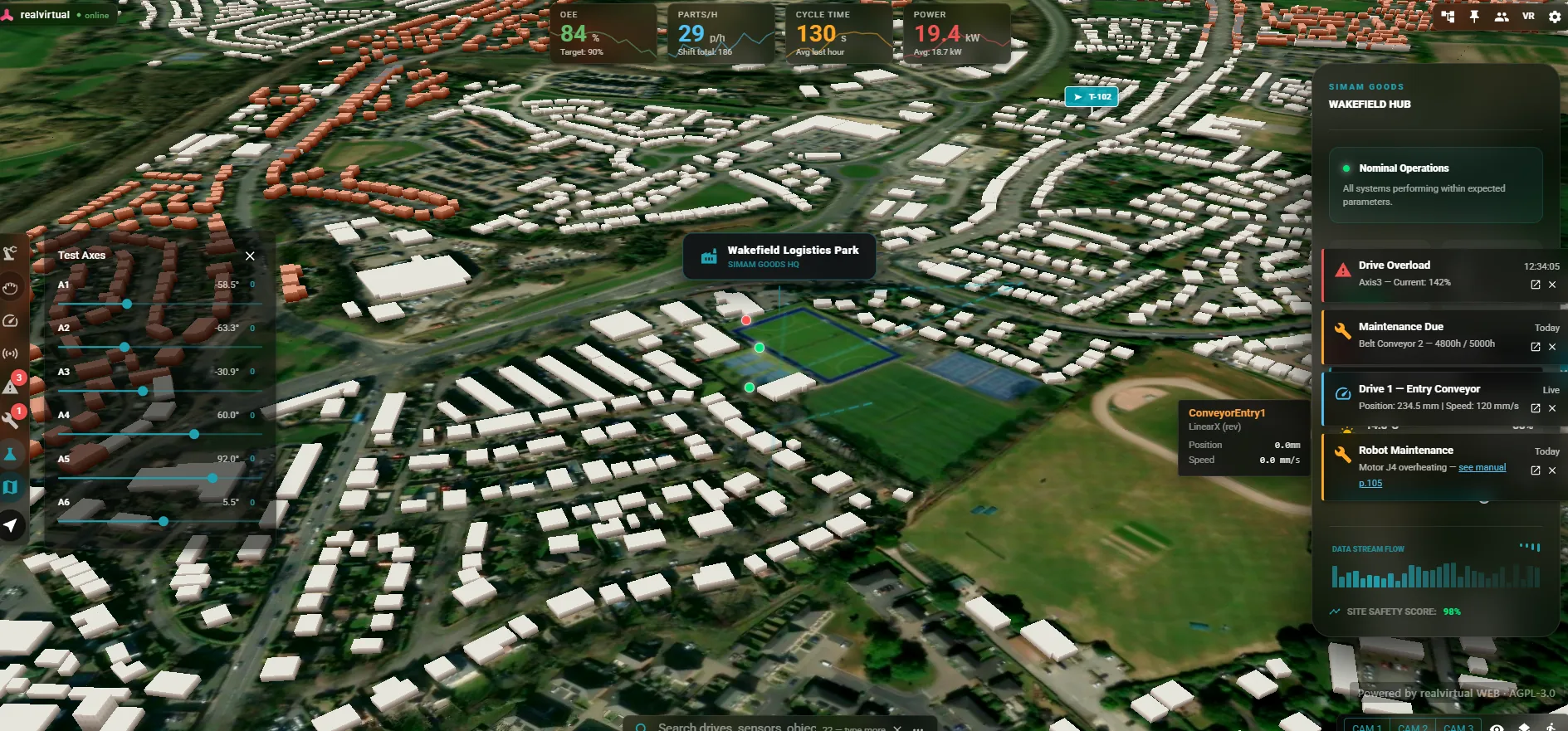
Industrial teams rarely need another impressive 3D scene by itself. They need a clearer way to plan, monitor, review, and explain real operations to people with different responsibilities.
Asset records, KPIs, locations, incidents, plans, and reports were spread across dashboards, documents, maps, and conversations.
Without a working visual reference, operations, leadership, commercial, and technical teams could agree in words while expecting different outcomes.
Authentication, data pipelines, IoT, GIS, reporting, permissions, and 3D could create a large budget before the first useful workflow was proven.
Use spatial context only where it makes the operational decision clearer, then surround it with the dashboards, alerts, controls, and workflows the user actually needs.
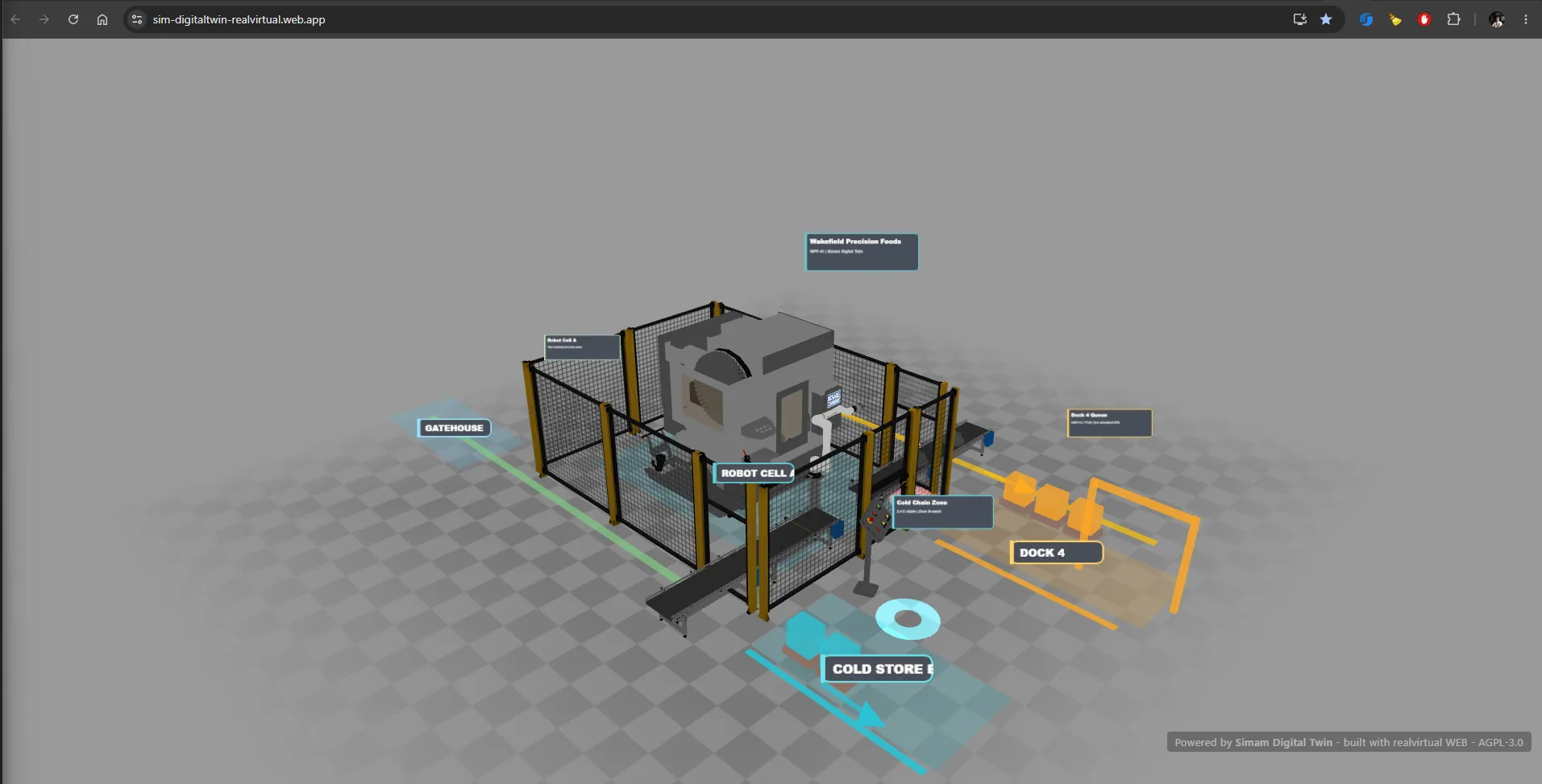
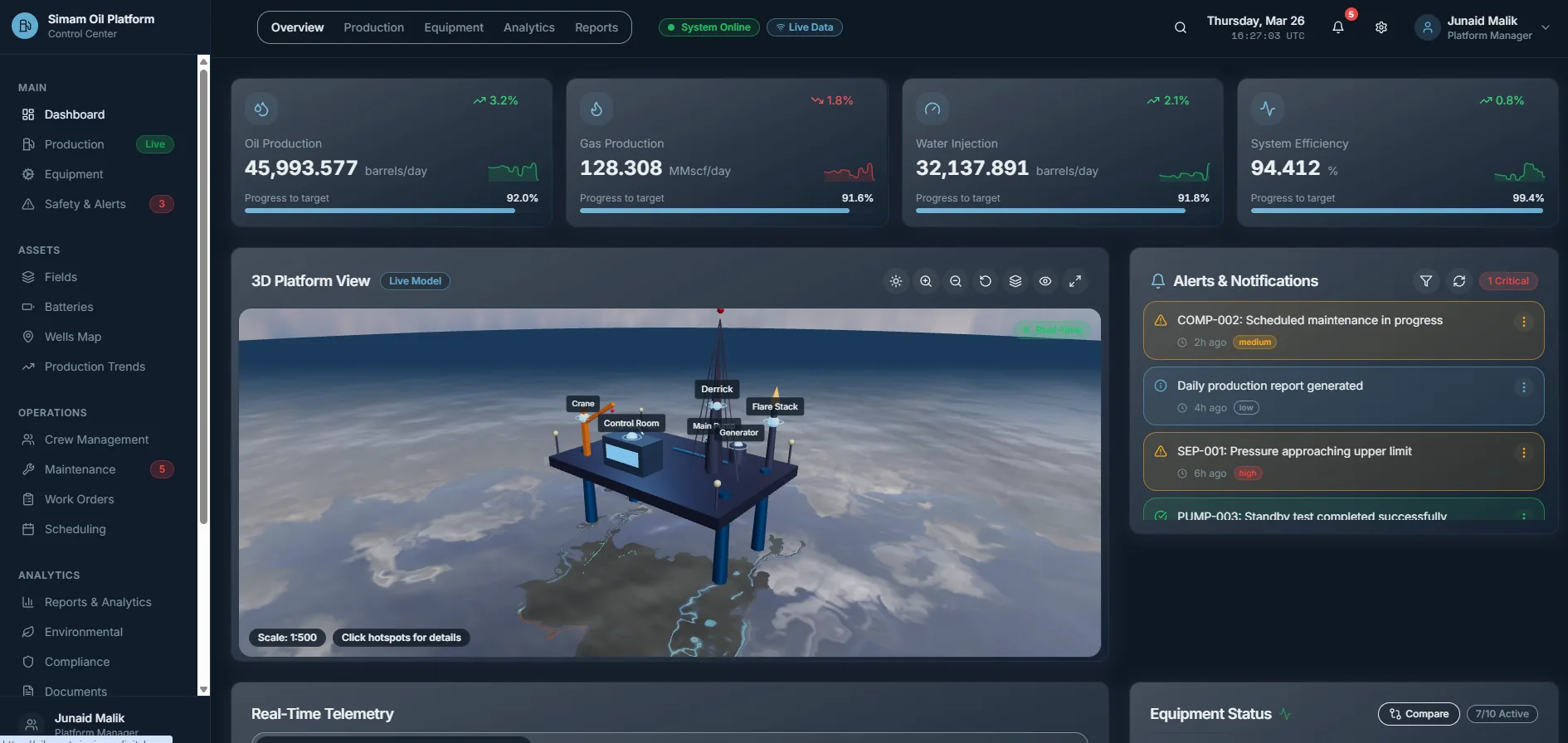
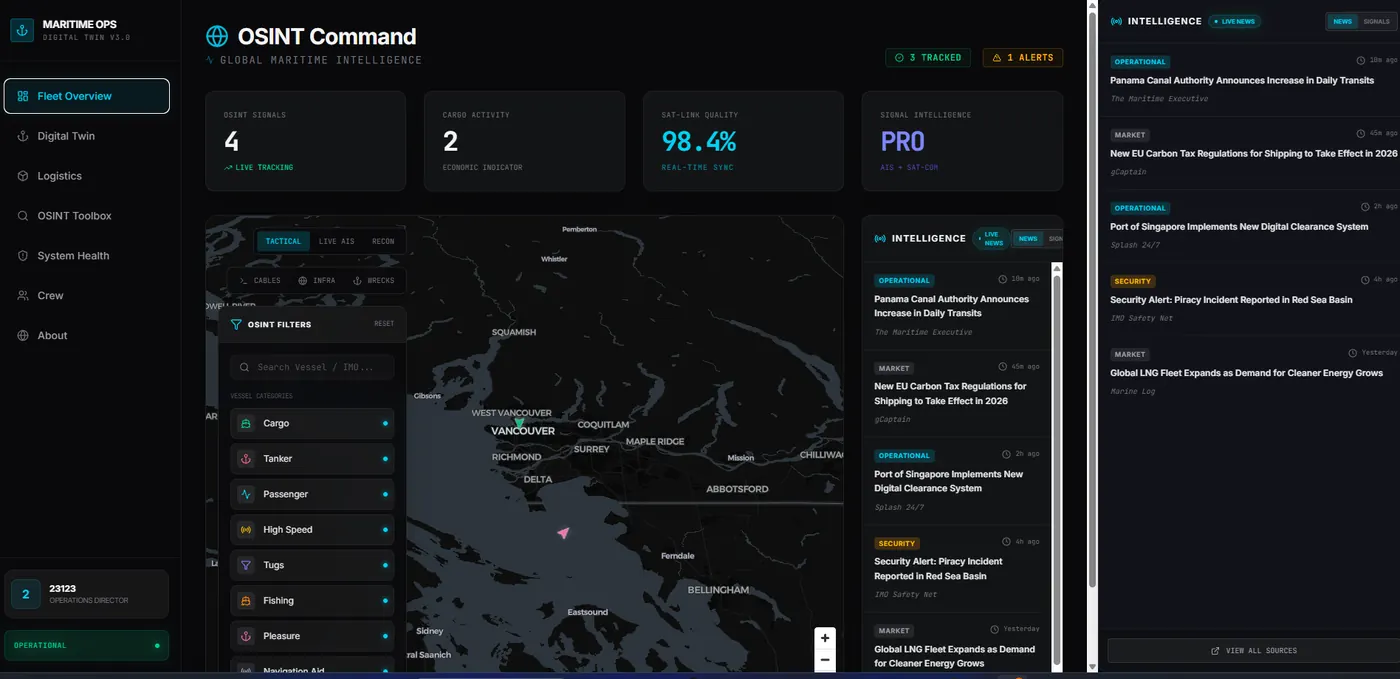
What these prototypes prove: buyers can test the operating view, vocabulary, data model, and highest-value workflow before connecting a new platform to live enterprise systems.
The first scope is anchored to a practical task: monitor a site, review an incident, plan a phase, understand asset status, or communicate operational context.
Assets, locations, states, alerts, users, and actions are mapped before designing a large platform around assumptions.
Maps, 3D views, dashboards, and workflow controls are composed around the decision rather than displayed as separate feature demonstrations.
A reviewable prototype makes feedback specific: what is useful, what is missing, what data exists, and what should move into the pilot.
The work sits between early consultancy and production engineering: enough product strategy to find the right problem, and enough hands-on delivery to make the proposed solution tangible.
Convert broad digital twin ambitions into specific users, decisions, screens, data entities, and review criteria.
Shape the frontend, dashboard, API, spatial, and integration boundaries needed for a credible path beyond the prototype.
Make complex data scannable for non-technical stakeholders without reducing the operational depth required by specialists.
Deliver deployable web, dashboard, real-time 3D, and integration foundations that can support a pilot conversation.
Industrial software cost is driven by integration, permissions, security, live data, reporting, and support. A useful prototype deliberately separates those production concerns from the first product decision.
One priority workflow, representative data, visual operating view, and stakeholder-ready review build.
A deployed product with authentication, dashboard logic, sample or limited live integrations, and feedback cycles.
Secure data pipelines, permissions, auditability, reporting, maintained architecture, QA, launch, and support.
Bring the workflow, stakeholder problem, or fragmented system. We can define the first useful operating view and build a prototype people can review properly.