Fans cannot explore the venue before arrival
A stadium has atmosphere, history, commercial spaces, wayfinding, hospitality zones, and emotional value. Most digital touchpoints fail to communicate that richness.
The 3D Stadium Viewer was developed as a private innovation project to show how stadiums, clubs, leagues, and venue owners can move beyond flat pages and static media into a branded, explorable, commercial digital product.
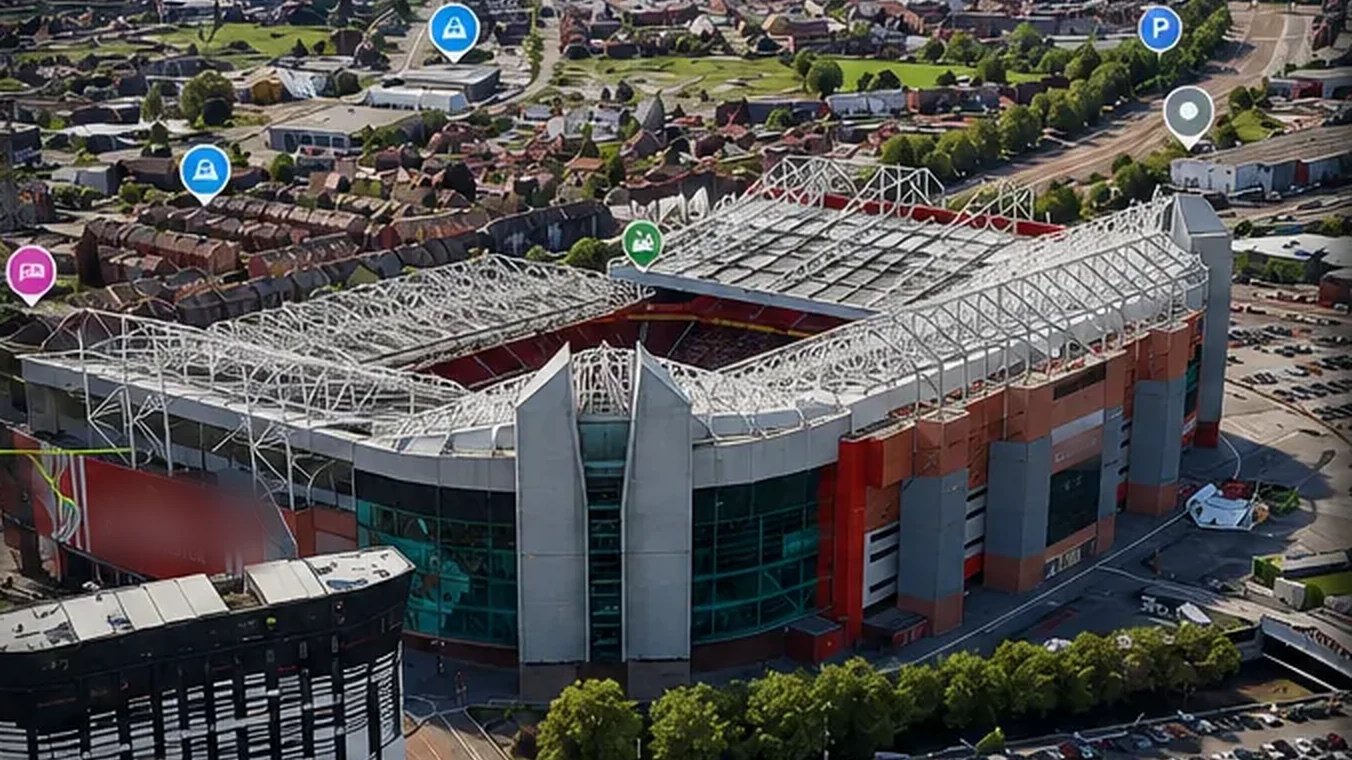
The screens show a system designed around discovery: stadium selection, guided movement, venue facts, fan content, and commercial modules all share one visual language.
What this proves: a sports organisation can validate fan interest, sponsor inventory, hospitality previews, and content structure with one convincing prototype before funding a multi-venue production platform.
Sports venues are valuable physical assets, but online they are often reduced to ticketing pages, seating charts, photos, and short videos. This concept explores what happens when a venue becomes a navigable digital product.
A stadium has atmosphere, history, commercial spaces, wayfinding, hospitality zones, and emotional value. Most digital touchpoints fail to communicate that richness.
A 3D viewer can support guided tours, sponsorship activations, premium seating previews, matchday education, destination marketing, and fan engagement.
The platform direction shows how a sports venue can be presented as an interactive experience with league filters, venue cards, guided orbits, story layers, and fan content.
A full venue platform can involve 3D capture, GIS/location logic, CMS tooling, ticketing integrations, analytics, sponsorship placements, and mobile optimisation. A prototype lets the buyer test the emotional and commercial value before committing to a large build.
Stakeholders can see whether the 3D interface actually improves understanding, excitement, and commercial storytelling before investing in a complete platform.
A visual prototype gives commercial teams a stronger asset for sponsorship, venue partnership, tourism, and fan engagement conversations.
The sprint can test venue navigation, guided orbits, content cards, quizzes, matchday modules, and monetisation ideas without overbuilding.
A first sprint can sit in the £5,000 to £20,000 range depending on depth, while a full multi-venue product with CMS, analytics, 3D workflows, and integrations would be scoped separately.
The viewer needed to prove that a stadium could feel like a modern product interface, not just a gallery. The screen had to tell a story quickly and make the next interaction obvious.
The interface leads with a large, cinematic stadium scene and keeps the brand, league, venue facts, and fan actions visible without overwhelming the user.
Guided orbit, fly-here moments, cards, and hotspots make the product feel purposeful. The user is not just looking at a render; they are exploring a place.
The structure leaves room for sponsor zones, hospitality previews, matchday content, quizzes, venue history, and location-based storytelling.
The concept can grow into a SaaS-like venue product: multiple stadiums, content management, analytics, user accounts, fan rewards, and white-label club experiences.
The cost is driven by how real the 3D environment needs to be, whether assets already exist, how many venues are included, and whether the platform needs accounts, CMS, analytics, payments, or integrations.
Best for one stadium, one guided flow, a pitch-ready demo, and a clear product narrative for internal or commercial validation.
Best for a richer WebGL or web app experience with multiple sections, content modules, responsive UI, and a deployable public demo.
Best when the product needs a CMS, analytics, multiple venues, user accounts, sponsor modules, ongoing content workflow, and launch support.
For this type of product, Simam Digital combines product architecture, interface design, real-time 3D thinking, frontend delivery, and commercial storytelling so the result feels useful to both technical and non-technical stakeholders.
Translate a vague idea into a clear product direction, user journey, feature set, and commercial demo story.
Design dashboard, map, spatial, simulation, or 3D product flows that non-technical stakeholders can understand quickly.
Create clickable or working prototypes with modern web, AI workflow, real-time 3D, API, and deployment foundations.
Package the work so it can support client workshops, funding conversations, sales demos, internal buy-in, or pilot proposals.
A concise record of what the project was intended to prove, the evidence available today, and the next responsible investment step.
Start with a fixed-scope sprint. We can help validate the product story, design the first experience, and build a demo that stakeholders can actually use.